TODDLER
Early Autism Signs Parents Need to Know
Dr. Harvey Karp shares some of the early autism signs that show up in young children—and what to do next.

Written by
Dr. Harvey Karp

These days, autism is a well-known neurological disorder that virtually all American parents have heard of. And many may have wondered about their own child’s development at one point or another. After all, any parent who’s been to a playgroup, has more than one child, or has the internet has probably compared their child’s development to others…whether they want to or not! Though we all know that kids develop at their own pace, spotting differences—Why doesn’t my baby vocalize more? Shouldn’t they be pointing? How come my tot hates wearing socks?—can cause stress.
While no pediatrician—including myself—wants to create unnecessary worry, it is important to pay attention to your baby’s milestones, especially their social and language milestones. Some of your bub’s so-called quirks or late-bloomer tendencies may be in the range of typical development...but some may be early signs of autism spectrum disorder (ASD). What many parents might not realize is, characteristics of autism often start in infancy and autism can be diagnosed as young as 18 months of age. Research shows that early diagnosis and early intervention for autism have major long-term positive effects on symptoms and later skills, but too often early warning signs are overlooked until a child reaches 2 or 3 years (or older). Plus, a new study shows that when people learn they’re autistic when they’re young, they appear to have improved quality of life and sense of well-being as grownups. All good things!
So, if you have any questions about your tyke’s development, keep reading. Here, I’ve outlined some social, communication, and behavioral differences that may possibly point to autism spectrum disorder (ASD)—and details surrounding what to do next. However, only a doctor can make that call! Take note of anything that concerns you, and bring it up with your child’s provider, who will be able to evaluate your child.
Early Autism Signs: Communication Differences
Communication challenges often tip off parents to a potential autism spectrum disorder diagnosis. That’s because children with ASD often struggle with not only understanding communication (verbal and non-verbal communication, like facial expression and body language), but expressing themselves, too (sharing thoughts, feelings, needs, and wants to others). Some of these differences may include:
- Not nodding or using hand gestures, such as pointing to an object they want
- Not reacting to their name, but responding to other sounds, like a doorbell ringing
- Not engaging in pretend play
- Not saying their first word by 15 months
- Not saying two-word phrases by 24 months
- Losing language or other social milestones between 15 months and 2 years old
- Copycatting what others say without understanding the meaning
- Making repetitive noises
- Using pronouns incorrectly, like referring to themselves as “you”
Early Autism Signs: Social Differences
It can be difficult for children with autism to recognize and understand certain social cues. That means your kiddo may not intuitively know how to react to others in some social situations. Social differences may show up in the following ways:
- Not responding when you smile at them
- Not following your pointed finger to see what you’re referring to
- Not bringing objects of interest to show you, like a cool rock they found
- Using inappropriate facial expressions, such as smiling when someone’s upset
- Difficulty making or maintaining eye contact
- Showing a lack of concern/empathy for others
- Difficulty making and keeping friends
Early Autism Signs: Behavioral Differences
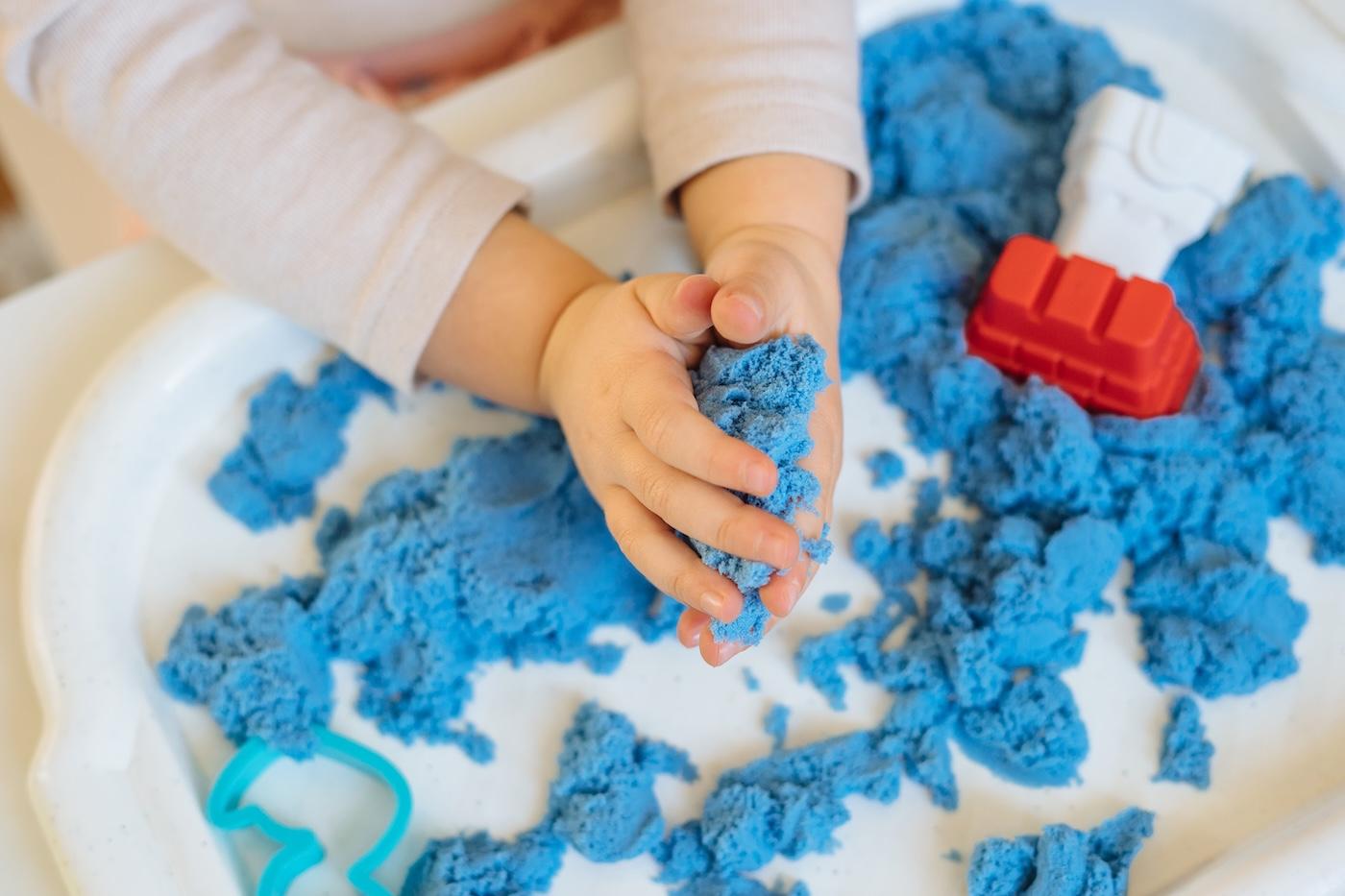
Certain behaviors—like repetitive actions and sensory processing issues—can raise a red flag that your child may need to be evaluated for autism. Having very strong interests that are super narrow and intense may be a warning sign, too. For example, a recent report found that 44% of autistic youth have an intense interest in bright or vividly colored objects, spinning objects, soft or textured objects. Some behavioral differences to look for include:
- Being ultra-sensitive (or not sensitive at all) to certain sounds, smells, textures, light, and touch
- Looking at objects from unusual angles
- Engaging in repetitive behaviors, such as rocking, spinning, twirling fingers, or flapping hands
- Playing with parts of toys instead of the whole toy, like zeroing on spinning wheels, not the toy truck
- Not crying when in pain
- Walking on toes for an extended period
- Rigidity over routines and rituals
- Difficulty transitioning from one activity to another—or with other changes
- Being super-focused on a few or unusual activities
- Difficulty managing emotions and/or having frequent, extended tantrums
- Pulling you by the hand and pointing to show you something without making eye contact
What do early autism signs mean?
Please remember that no two children with autism spectrum disorder will have the same exact early signs—the number (and severity) of symptoms can vary immensely. And of course, some of the traits above show up in neurotypical kids, too! That said, if you spot what you suspect may be any early signs of autism—or have any questions about your little one’s development—don’t hesitate to see your doctor. While a potential diagnosis might seem scary, catching autism at a young age allows your tot to get the intervention they need…when it benefits them most.
How is autism diagnosed?
Diagnosing autism spectrum disorder can be a bit tricky. After all, there are no blood tests or imaging screeners that can offer a definitive diagnosis! But your child’s pediatrician should be able to help flag developmental issues. The American Academy of Pediatrics (AAP) recommends developmental and behavioral screening (questionnaires and checklists) for all kiddos during their well visits at 9 months, 18 months, and 30 months. Plus, they go on to recommend all children be screened specifically for autism during their 18-month and 24-month well-child appointments. If your child’s doc does not periodically check your child—ask!
While these screening tools are helpful, they don't yield an autism diagnosis. Instead, they indicate whether your child may benefit from seeing a specialist—or a team of specialists—such as a developmental pediatrician and/or a child psychologist—for a formal developmental evaluation, which is a more in-depth screening process involving structured testing and more questionnaires for you and others in your child's everyday life.
What causes autism?
The truth is, we know very little about the specific causes of autism. Instead, we know that there are many factors that may make a child more likely to be diagnosed with autism. That means, these factors alone are unlikely to cause ASD, but they may increase a child’s risk for developing autism when combined with genetic factors. This risk factors include:
- Having sibling with autism
- Certain genetic or chromosomal conditions, like fragile X syndrome or tuberous sclerosis
- Complications at birth
- Older parents
- Prenatal exposure to air pollution or certain pesticides
- A birthing parent with diabetes, immune system disorders, or obesity
Do vaccines cause autism?
No. Vaccines do not cause autism. A steady chorus has accused vaccines of being the culprit behind autism: “Too many ingredients.” “Too many shots.” “Too many given at the one time.” But often, this assumption is based on the fact that as the number of baby vaccinations have increased, so has the number of autism cases. But so has cell phone use and wireless internet use! My point: This type of correlation in no way proves causation. For example, years ago, some said mercury in vaccines was the autism trigger. It was a fair hunch…but totally wrong. In 2002, over 95% of vaccine mercury was removed. Yet, autism rates did not plummet. Instead, they marched even higher! To date, dozens of studies—examining over 1 million children—have failed to find any credible association between vaccines and autism…none.
Does chemical exposure cause autism?
According to the National Institutes of Health, if someone is susceptible to autism because of certain genetic mutations, then some environmental factors, including chemical exposures, may spark autism in that individual. However, not every child who’s genetically susceptible to ASD will develop autism…even if they’re exposed to the same chemical triggers as another. With that, the AAP notes that it’s “highly likely that the interplay of gene variants and environmental factors contributes to a substantial proportion of autism.” Because of this, it’s a very good idea to limit your exposure to toxic chemicals, including phthalates, pesticides, and air pollution while pregnant—and limit your baby’s exposure, too. (Here’s some help avoiding common toxic chemicals in plastic.)
Autism and Sleep Problems
Children on the autistic spectrum frequently have problems with sleep. In fact, numerous studies suggest that between 50 and 80% of children with autism have disrupted sleep. Interestingly, these children often instinctively use some of the 5 S’s to calm themselves—and to help them get to sleep. They may hum, spin, or make repetitive motions. And many teachers and parents notice that their children calm faster with rocking, white noise, and—for older children—the use of weighted blankets.
How to Help Children With Autism Sleep Better
Consider these calming sleep routines for children with autism:
- If your child is over 4 years old, consider using a weighted vest or blanket.
- Gently brush your child’s skin with a hairbrush or backscratcher.
- Snugly swaddle their upper body.
- Use a very silky blanket as a comforting lovey.
- Spray a little lavender mist into the air as a signal that it’s time to sleep.
- Dim or block all lights, including the TV, clocks, hall lights, streetlights outside the window, and more. At the same time, a dim nightlight may reduce some of your child’s anxiety. (How to select a nightlight.)
- Some children with ASD may benefit from an extra-sturdy crib that can withstand bouncing. Many medical supply stores carry these types of cribs, with some built low to the ground and others featuring a safety enclosure.
Your doctor may also recommend giving a magnesium supplement to your child. (Magnesium may help regulate neurotransmitters related to sleep.) Another possible recommendation: 3 to 10 milligrams of melatonin 30 minutes before bedtime. Research has shown that melatonin can be a safe and effective option for children with autism who suffer from insomnia.) Finally, some health care providers may even suggest a prescription sleep medicine.
What interventions are there for autism spectrum disorder?
Children who are diagnosed with autism today have many intervention options available. And those interventions can make a world of difference. For example, researchers found that when toddlers received early one-on-one intervention (15 hours a week for one year) their receptive language, expressive communication, nonverbal ability, and other autism symptoms all improved. Here’s a basic rundown of interventions:
- For all children: Your child will likely be referred to a speech, behavioral, and/or occupational therapist for support. There, specific therapies will come into play. For example, behavior and communication therapies may focus on reducing problem behaviors and teaching new skills. Others focus on teaching kids how to act in various social situations or how to communicate more effectively with others. At the same time, parents learn how to play and interact with their children in ways that help promote social skills and manage problem behaviors.
- For children under 3 years old: Your child should be referred to your state’s Early Intervention program.
- For children 3 years old or older: Your child should be evaluated, and likely enrolled, in your school’s special education services.
- For children between 3 and 5 years old: Your little one may be eligible to attend a developmental preschool program for children in need of more support. Your local school district will be able to offer you more info.
For more information about autism—early signs, diagnosis, and treatment—please reach out to your child’s doctor.
More on child development:
- How Babies Learn to Talk
- The Developmental Leap From 4 Days Old to 4 Months
- Foster Creativity in Your Child
- How Kids Learn to Play
Disclaimer: The information on our site is NOT medical advice for any specific person or condition. It is only meant as general information. If you have any medical questions and concerns about your child or yourself, please contact your health provider.
SHARE THIS ARTICLE
MOST LOVED
Sleepytime Sidekicks