PREGNANCY
Is Turmeric Juice Safe to Drink During Pregnancy?
Craving that golden glow in your smoothie? Here's what to know before you sip.

Written by
Happiest Baby Staff
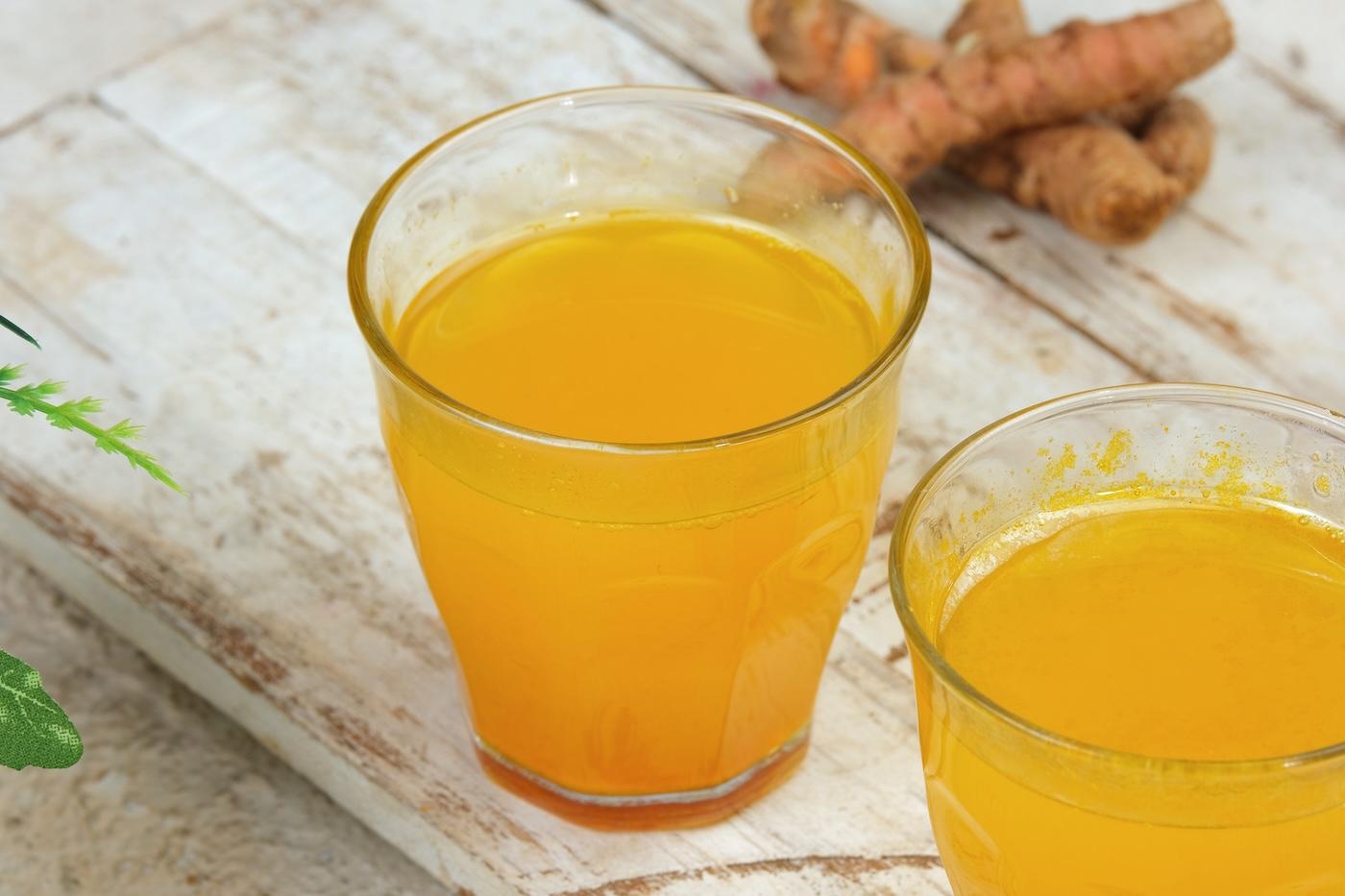
That vibrant, golden-hued juice at the smoothie bar is hard to resist—but if you're expecting, you might be wondering: Is turmeric juice safe during pregnancy?
The short answer? Yes, turmeric juice is generally fine in small, food-level amounts, like what you'd find in a smoothie, a golden milk latte, or a home juiced blend. The bigger question mark is around high-potency turmeric shots, extracts, and supplements, which deliver far more curcumin (turmeric's active compound) than food naturally does—and haven't been well studied in pregnancy.
Is turmeric juice safe to drink while pregnant?
Turmeric (Curcuma longa) is a bright yellow spice that's "generally recognized as safe" (GRAS) as a food ingredient by the U.S. Food and Drug Administration, and it's typically well tolerated even at fairly high intakes. Turmeric juice made with modest, culinary-style amounts of turmeric—the kind you'd blend into a smoothie or stir into golden milk—falls into that same food-safe category.
The caveat is dose. Researchers haven't studied concentrated turmeric or curcumin supplementation in pregnant people, largely because of the ethical challenges of testing supplements on pregnant participants. A research review on curcumin and pregnancy notes that while curcumin's anti-inflammatory and antioxidant properties are appealing given the immune and metabolic shifts of pregnancy, most of what we know still comes from cell and animal studies—not human pregnancy data. That evidence gap is why many clinicians recommend sticking to food amounts and skipping high-dose turmeric shots, extracts, or capsules unless a healthcare provider has specifically greenlit them.
Benefits of Drinking Turmeric Juice During Pregnancy
In small, food level quantities, turmeric juice offers:
- Antioxidant support: Curcumin, turmeric's main active compound, has antioxidant properties that may offer general cellular support.
- Anti-inflammatory potential: Curcumin is well known for anti-inflammatory activity in non-pregnant adults, and researchers have theorized this could be relevant to pregnancy-related inflammation—though this hasn't been confirmed in pregnant people specifically.
- Digestive support: Turmeric has traditionally been used to support gentle digestion, which may be welcome if pregnancy has your stomach feeling off.
- Flavor and color: A little turmeric adds warmth, color, and a mild earthy flavor to juices, smoothies, and golden milk.
Risks or Considerations
- Concentrated doses: Turmeric supplements may be unsafe during pregnancy, according to the National Center for Complementary and Integrative Health (NCCIH)—a caution that applies to concentrated capsules, extracts, and high-potency shots rather than the amounts used in cooking or a typical juice blend.
- Uterine and hormonal effects: A peer-reviewed safety review on turmeric and curcumin notes that curcumin has been shown to cause uterine stimulation, and states that turmeric use isn't recommended during pregnancy or breastfeeding due to a lack of clinical studies in pregnant people. This caution applies to concentrated curcumin exposure rather than the small amounts used to flavor food.
- Digestive upset: In higher amounts, turmeric can cause nausea, reflux, or diarrhea in some people.
- Bleeding risk: High intakes of curcumin may have mild blood-thinning effects, which is worth mentioning to your provider if you're on blood thinners or have a bleeding disorder.
- Heavy metal contamination: Ground turmeric has occasionally been found to contain lead, particularly in products sourced or hand-carried from overseas. The CDC has documented lead contamination in turmeric samples collected in the U.S., and there's no U.S. federal limit specifically for lead in spices. Choosing turmeric (or turmeric juice) from reputable, established brands can help lower this risk.
- Supplement confusion: Liquid turmeric "shots" and extracts often deliver supplement-level curcumin doses, even though they're sold in the beverage aisle. Read labels carefully so you know whether you're sipping a food-level product or a concentrated one.
How to Safely Drink Turmeric Juice While Pregnant
- Stick to small, culinary amounts of turmeric in smoothies, juices, or golden milk, not high-potency turmeric shots or extracts.
- Choose turmeric juice or powder from established, reputable brands, which are less likely to carry heavy-metal contamination.
- If juicing at home, use modest amounts of fresh or ground turmeric rather than large quantities.
- Check labels on store-bought turmeric blends for other added ingredients, like ginger, black pepper, or additional herbal concentrates, and mention any medical conditions or medications to your healthcare provider before adding these regularly.
- Skip turmeric supplements, capsules, or high-dose extracts unless your OB/GYN or midwife has specifically recommended them.
When to Avoid Turmeric Juice
- If it's a high-dose turmeric shot, extract, or supplement rather than a food-level juice or smoothie.
- If you notice nausea, heartburn, or digestive discomfort after drinking it.
- If you're on blood-thinning medication or have a clotting disorder.
- If your healthcare provider has advised you to avoid turmeric or other concentrated herbal preparations.
Bottom Line
Turmeric juice made with small, food-level amounts of turmeric is generally considered safe during pregnancy and can be a flavorful, antioxidant-rich addition to smoothies or golden milk. The real caution flag is for high-dose turmeric shots, extracts, and supplements, which haven't been studied in pregnancy and may carry more theoretical risk. When in doubt, keep it to culinary amounts, choose reputable brands, and loop in your healthcare provider about anything more concentrated.
More on Drink Safety During Pregnancy:
- Is Matcha Safe During Pregnancy?
- Can I Drink Chamomile Tea During Pregnancy?
- Is Beet Juice Safe to Drink During Pregnancy?
- Why Food Poisoning During Pregnancy Is Such Risky Business
***
REFERENCES- National Institutes of Health, National Library of Medicine, Drugs and Lactation Database: Turmeric
- Curcumin: Could This Compound Be Useful in Pregnancy and Pregnancy-Related Complications?, International Journal of Molecular Sciences, Oct 2020
- Antioxidant and Anti-Inflammatory Effects of Curcumin/Turmeric Supplementation in Adults: A GRADE-Assessed Systematic Review and Dose–Response Meta-Analysis of Randomized Controlled Trials, Cytokine, Apr 2023
- Turmeric for Treatment of Irritable Bowel Syndrome: A Systematic Review of Population-Based Evidence, Iranian Journal of Public Health, Jun 2022
- National Center for Complementary and Integrative Health: Turmeric: Usefulness and Safety
- Turmeric and Its Major Compound Curcumin on Health: Bioactive Effects and Safety Profiles for Food, Pharmaceutical, Biotechnological and Medicinal Applications, Frontiers in Pharmacology, Sep 2020
- Centers for Disease Control and Prevention, MMWR: Lead in Spices, Herbal Remedies, and Ceremonial Powders Sampled from Home Investigations for Children with Elevated Blood Lead Levels — North Carolina, 2011–2018
- American College of Obstetricians and Gynecologists: Healthy Eating During Pregnancy
Disclaimer: The information on our site is NOT medical advice for any specific person or condition. It is only meant as general information. If you have any medical questions and concerns about your child or yourself, please contact your health provider.






SHARE THIS ARTICLE