PREGNANCY
Can I Use Retinol During Pregnancy?
Here's what to know about this skincare workhorse.

Written by
Happiest Baby Staff
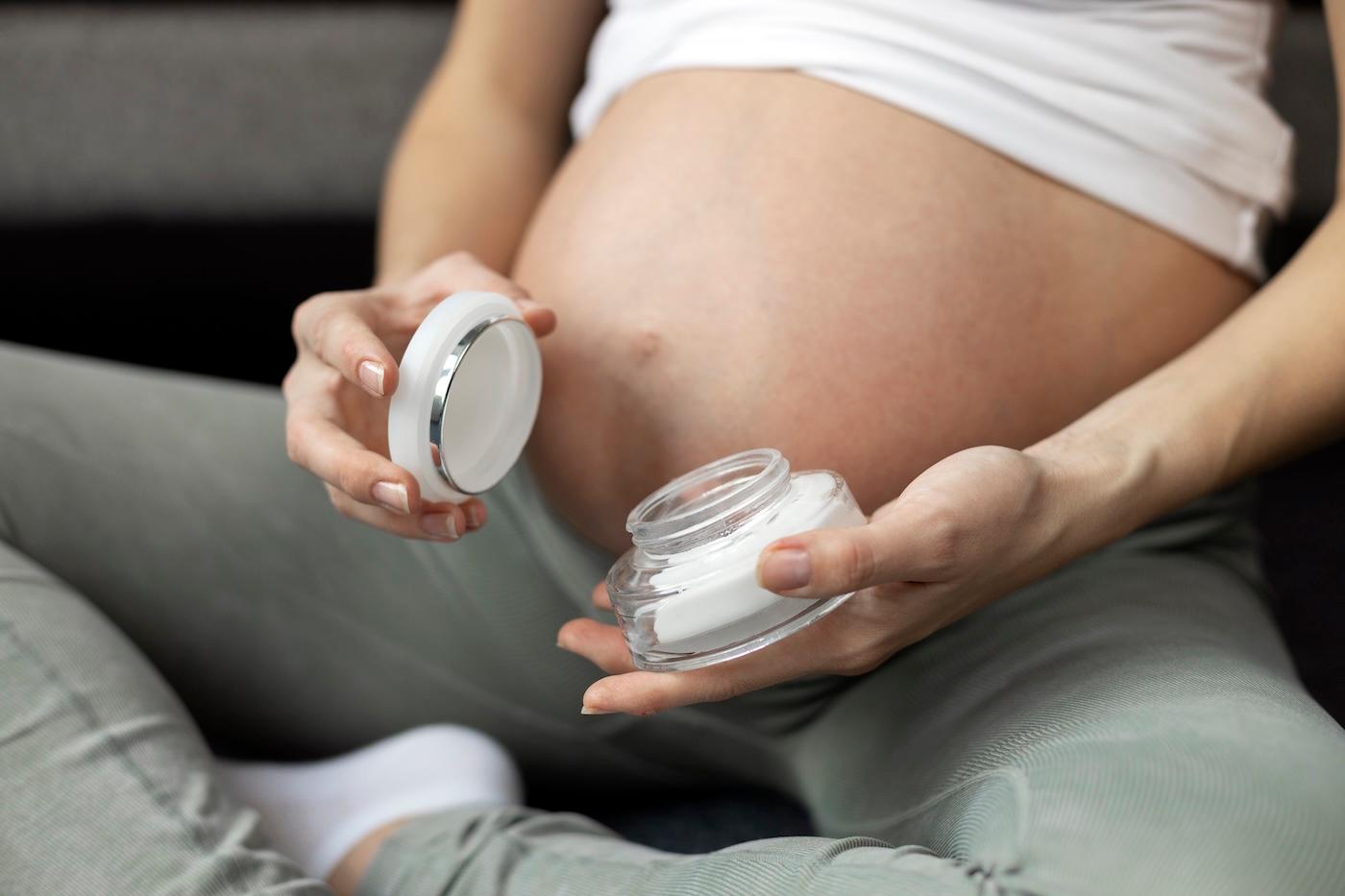
The short answer: No. Retinol and other retinoids—including prescription options like tretinoin and, especially, oral isotretinoin—should not be used during pregnancy. Absorption through the skin is low, but because retinoids are chemically related to a well-established class of birth-defect-causing medications, major medical organizations advise avoiding them as a precaution. Safer swaps like azelaic acid can cover a lot of the same ground.
Retinol has a permanent spot on a lot of vanities—it's one of the few skincare ingredients with genuine research behind it for smoothing fine lines and clearing breakouts. So, if you're expecting, it's natural to wonder whether your favorite serum needs to go on hiatus. Here's what the evidence shows, and what to reach for instead.
Is retinol safe to use during pregnancy?
Retinol belongs to a family of vitamin A derivatives called retinoids, which also includes prescription-strength tretinoin (Retin-A, Renova), adapalene (Differin), and oral isotretinoin (Accutane). All of them work by speeding up skin cell turnover, which is why they're so good at fading fine lines and unclogging pores.
The concern in pregnancy isn't just about the OTC retinol serum in your bathroom cabinet, it's about the whole retinoid family. Oral isotretinoin is one of the most clearly documented human teratogens (substances known to cause birth defects) in medicine, and topical retinoids share the same basic chemistry. Skin serves as a fairly good barrier, so only a small amount of topical tretinoin is typically absorbed when it's used as directed, but because some absorption is possible, the safest approach is to avoid it during pregnancy altogether. That’s why the American College of Obstetricians and Gynecologists (ACOG) says to steer clear during pregnancy.
Dermatologists take the same stance. Board-certified dermatologists interviewed by the American Academy of Dermatology (AAD) advise against retinoids—including prescription options like isotretinoin, tretinoin, and tazarotene, along with OTC retinol and adapalene—throughout pregnancy.
Why are retinoids a concern during pregnancy?
Retinoids are forms of vitamin A, and vitamin A is a nutrient where "more" is not better when you're expecting. In fact, too much of it has been linked to birth defects.
That link is clearest with oral isotretinoin, which affects development of the face, ears, heart, and central nervous system when taken during pregnancy. Topical retinoids like tretinoin are absorbed at far lower levels than the oral drug, and large studies haven't found a clear pattern of birth defects tied to properly applied topical use. But a handful of case reports over the years have described malformations in babies exposed to topical tretinoin that resembled those seen with oral isotretinoin, which is part of why caution is generally recommended. And because tretinoin and isotretinoin are related, it's possible they could affect a pregnancy in similar ways, even though the overall chance of an issue from topical use alone appears low.
There's a separate, but related, reason vitamin A gets extra scrutiny in pregnancy: Very high doses of preformed vitamin A (the kind found in animal products, fortified foods, and some supplements—as opposed to the beta-carotene in fruits and vegetables) have themselves been linked to birth defects.
A widely cited 1995 study in the New England Journal of Medicine found that women who took more than 10,000 IU of preformed vitamin A per day from supplements had a higher rate of certain birth defects than women who consumed less. Based on this kind of research, the NIH Office of Dietary Supplements advises people who are or might become pregnant not to take more than 3,000 mcg RAE (10,000 IU) of preformed vitamin A per day from supplements. This is a different exposure than skincare, but it's part of the same underlying reason retinoids get a wide berth in pregnancy: the developing fetus is unusually sensitive to vitamin A signaling in the first trimester, when major organs are forming.
What about prescription retinoids like tretinoin and Accutane?
Oral Isotretinoin
Drugs like Accutane and generics are in a different category entirely. Oral isotretinoin is one of the most tightly regulated medications in the U.S. specifically because of its pregnancy risk. It’s been shown to cause birth defects in 35% or more of babies exposed during pregnancy—most often affecting the ears, eyes, heart, and brain—and it can raise the chance of miscarriage as high as 40% when used in early pregnancy.
That's why anyone prescribed isotretinoin must enroll in a federal risk-management program called iPLEDGE, which requires negative pregnancy tests before and during treatment, two forms of birth control, and monthly check-ins. If you're taking isotretinoin and think you might be pregnant, stop the medication right away and call your prescriber and your OB/GYN or midwife immediately.
Topical Tretinoin
Topical treatments (like Retin-A, Renova, and similar) are lower-dose, lower-absorption relatives of isotretinoin. The research picture is more reassuring, though not entirely settled. Several cohort studies haven't found a higher rate of birth defects among babies whose mothers used topical tretinoin properly during pregnancy, and it hasn't been linked to a higher chance of miscarriage or preterm birth.
Still, because a small amount of the drug is absorbed—more if it's applied to broken or irritated skin, in larger amounts, or over a large area—and because of the handful of case reports mentioned above, the general recommendation remains to avoid it during pregnancy.
Over-the-counter retinol works the same way tretinoin does, just at a lower potency, so the same reasoning applies to it (and to other retinoids you'll see on ingredient labels, including retinaldehyde, retinyl palmitate, and adapalene).
Does it matter which trimester I'm in?
Not really. The guidance is to avoid retinoids for the whole pregnancy. The first trimester is when a baby's major organs are forming, so it's the period of greatest theoretical concern, but since research on later-pregnancy use is still limited, it’s best to avoid topical retinoids throughout pregnancy.
What if I used retinol before I knew I was pregnant?
Many people don't find out they're pregnant until 4 to 6 weeks in, and a short window of low-dose topical exposure before that point is unlikely to have caused harm. Only a small amount of topical tretinoin is absorbed into the bloodstream in the first place, which is part of why the overall chance of an issue from early, brief exposure is considered low.
The best next step is simple: Stop using the product now, and mention it at your next prenatal visit (or call sooner if you're worried) so your provider has the full picture. There's no test that can tell you in advance whether any exposure caused an issue, but routine prenatal ultrasounds do screen for structural differences as your pregnancy progresses.
Pregnancy-Safe Skincare Alternatives
You don't have to totally abandon your skincare routine for 9 months! A few ingredients cover a lot of the same territory as retinol without the same pregnancy dangers attached.
As always, loop in your dermatologist or OB/GYN before starting a new active ingredient, especially if you're managing a stubborn skin condition. They can help you weigh options based on your history.
Acne
Experts agree that azelaic acid is a safe-for-pregnancy skincare pick. A recent pharmacological review in the journal Pharmaceuticals notes that azelaic acid causes minimal systemic absorption. To boot, it performs on par with some prescription retinoids and antibiotics in clinical trials for acne and rosacea.
Topical prescription antibiotics, like clindamycin or erythromycin, also generally get the greenlight during pregnancy. Due to limited skin absorption, they’re safer than an oral antibiotic, but you should get your provider's blessing first (especially because they require a prescription!), as we can’t say they carry zero risk.
Some dermatologists may recommend benzoyl peroxide for acne, as well. However, the American Academy of Dermatology suggests using it sparingly during pregnancy—and only after discussing with your own doctor.
Dark Spots, Melasma, or Dullness
Vitamin C and niacinamide are generally well tolerated in pregnancy and can help even out tone. The AAD recommends applying vitamin C in the morning and using a gentle exfoliating acid, like glycolic acid, in the evening to help manage pregnancy-related pigmentation changes. While you’re at it, don’t skimp on sun protection! Sun exposure can make dark spots and melasma worse. Before heading out, slather on a mineral sunscreen with zinc oxide or titanium dioxide.
The Bottom Line
Retinol and other retinoids are on the short list of skincare ingredients that pregnancy guidelines consistently flag—not because your favorite serum is a proven danger, but because it's chemically related to medications with a well-documented risk, and the safest available data still comes with caveats. Pausing your retinoid routine for a few months, leaning on alternatives like azelaic acid and vitamin C, and picking things back up postpartum (talk to your provider about breastfeeding, too) is the path most obstetricians and dermatologists recommend.
FAQ About Retinol and Pregnancy
I used retinol before I knew I was pregnant—should I worry?
Most likely not. The amount absorbed through the skin is small, and a brief exposure before you knew you were pregnant is unlikely to have caused harm. Stop using it now and mention it to your provider at your next visit.
How do I know if there’s retinol in a product?
In addition to ‘retinol,’ look for these words in your product’s ingredients list: retinyl palmitate, retinaldehyde, retinoic acid, tretinoin, adapalene, and tazarotene.
Is the retinol in my moisturizer a problem if I use it occasionally?
It's best to stop using any product containing retinol or other retinoids for the duration of your pregnancy, per ACOG and the AAD, and switch to a pregnancy-safe alternative instead.
What about the vitamin A in my prenatal vitamin?
Standard prenatal vitamins are formulated with vitamin A levels considered safe for pregnancy. The concern discussed above is specifically about high-dose vitamin A supplements (more than 3,000 mcg RAE, or 10,000 IU, per day) and retinoid medications—not the amount in a typical prenatal.
Can I use retinol once I'm breastfeeding?
Ask your provider. Topical tretinoin hasn't been well studied during breastfeeding, but since very little is absorbed into the body when applied to the skin, the amount that could pass into breast milk is expected to be small. Learn more about using retinol while breastfeeding.
More on Pregnancy Safety:
- Your Guide to Pregnancy-Safe Skincare
- Is Hyaluronic Acid Safe During Pregnancy?
- Hair Care During Pregnancy: Safety Dos and Don'ts
- Can I Get a Gel Manicure While Pregnant?
***
REFERENCES- American College of Obstetricians and Gynecologists: Skin Conditions During Pregnancy
- National Library of Medicine MotherToBaby Fact Sheet: Topical Tretinoin
- American Academy of Dermatology: Dermatologist-Approved Pregnancy Skin Care
- Teratogenicity of High Vitamin A Intake, New England Journal of Medicine, Nov 1995
- National Institutes of Health, Office of Dietary Supplements: Vitamin A and Carotenoids — Health Professional Fact Sheet
- National Library of Medicine MotherToBaby Fact Sheet: Isotretinoin (Accutane®)
- U.S. Food and Drug Administration: iPLEDGE Risk Evaluation and Mitigation Strategy
- A Comprehensive Review of Azelaic Acid Pharmacological Properties, Clinical Applications, and Innovative Topical Formulations, Pharmaceuticals, Aug 2025
- Mayo Clinic: Antibiotics and Pregnancy: What’s Safe?
- Topical Antibiotics in Pregnancy: A Review of Safety Profiles, Dermatologic Therapy, May 2019
- American Academy of Dermatology: Dermatologist-Approved Pregnancy Skin Care
- Mayo Clinic: Pregnancy Acne — What's the Best Treatment?
Disclaimer: The information on our site is NOT medical advice for any specific person or condition. It is only meant as general information. If you have any medical questions and concerns about your child or yourself, please contact your health provider.






SHARE THIS ARTICLE
MOST LOVED
Sleepytime Sidekicks