PREGNANCY
Can I Get a Gel Manicure While Pregnant?
What to know before you get a fresh set.

Written by
Happiest Baby Staff
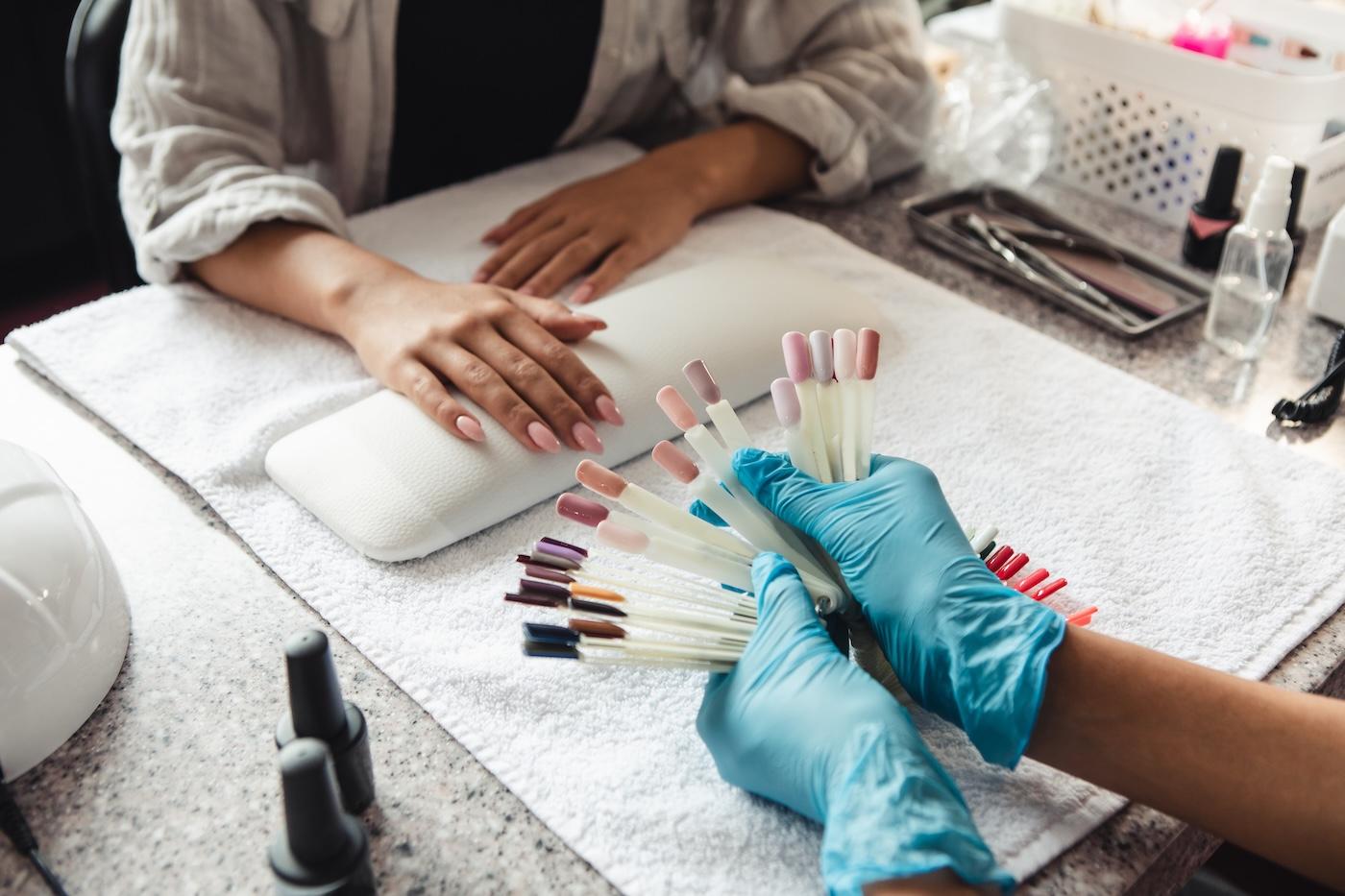
A gel manicure is one of the easiest ways to feel a little more put-together when everything else about your body seems to be transforming daily. Fortunately, for the average expecting parent, getting a manicure every few weeks, gel nails are considered a low-risk way to treat yourself.
Is it safe to get a gel manicure while pregnant?
Yes—for most pregnant people, an occasional gel manicure is considered a low-risk way to enjoy a little self-care. Nail polish and gel products are applied externally, in small amounts, and there's no strong evidence linking the occasional client visit to pregnancy complications.
Most of what we know about nail-product safety in pregnancy comes from research on nail technicians, who are exposed to these chemicals for hours a day, five or six days a week. MotherToBaby, a service of the nonprofit Organization of Teratology Information Specialists (OTIS), reviewed the research on this occupational exposure and found some reassuring patterns: Studies on nail salon workers haven't shown a higher chance of miscarriage or birth defects, and most research hasn't found an increased risk of preterm birth or low birth weight, either. If working in a salon full time doesn't clearly raise those risks, an occasional manicure or two is a much smaller exposure by comparison.
That said, "low risk" isn't the same as "zero risk!" And it’s not a bad idea to get a general understanding of what's in the polish, what those curing lamps do, and how to sidestep the risk of salon-related infection.
What's in gel polish, and should I worry?
Gel polish is a mix of pigments, resins, and solvents, several of which show up on lists of ingredients people try to avoid in pregnancy. According to the FDA, common nail-product ingredients include:
- Toluene: This is a solvent that helps polish go on smoothly. The FDA's Cosmetic Ingredient Review has found toluene safe for use in nail products at the concentrations typically used, and the number of polishes containing it has dropped sharply in recent years.
- Formaldehyde or formaldehyde-releasing resins (like toluenesulfonamide/formaldehyde resin) are used in some nail hardeners and polishes to add durability. These can cause skin irritation or allergic reactions in sensitive people.
- Dibutyl phthalate (DBP): This plasticizer keeps polish flexible so it's less likely to crack.
- Methacrylate monomers are used in some gel and acrylic systems, which can trigger an allergic reaction in people who've become sensitized to them.
These ingredients are regulated as cosmetics, and nail products are required by law to be safe when used as directed. The concern in the research isn't really about a once-a-month client appointment—it's about repeated, high-level occupational exposure. Most of these chemicals haven't been well studied specifically in pregnancy, and the amount of exposure depends heavily on how much product is used, how often, and how well-ventilated the space is. For someone sitting at a manicure table for 45 minutes, absorption and inhalation are a small fraction of what a technician encounters over an 8-hour shift, 40 hours a week.
If you'd like extra reassurance, ask your salon whether they carry "3-free," "5-free," or "10-free" polish formulas, which are made without some or all of the ingredients above. And whatever polish you choose, good ventilation—an open door, a window, or a salon with working exhaust fans—cuts down on fume exposure for everyone in the room.
Are the UV or LED curing lamps safe during pregnancy?
The lamps used to cure gel polish emit ultraviolet A (UVA) light, the same type of UV ray involved in skin aging and, at high doses, skin cancer—which understandably, raises a lot of eyebrows. So how concerned should you be?
A 2014 study that tested 17 nail-drying lamps across 16 salons found that UVA output varied a lot from lamp to lamp, but that a single manicure visit didn't produce enough exposure to cause meaningful skin damage. Researchers estimated it would take many repeated visits before UV exposure became a concern, and even then, the added risk was small. A 2020 literature review on skin cancer in the hands and nails of adults under 40 similarly concluded there's little to no carcinogenic risk from typical UV gel manicure use.
While the UV related risks are lower than, say, a tanning bed, dermatologists still recommend a couple of easy precautions, especially if you're a frequent salon-goer. Apply a broad-spectrum sunscreen to your hands before your manicure, or ask for fingerless UV-protective gloves so only your nails are exposed to the light.
None of the research on UV nail lamps is specific to pregnancy, but pregnancy doesn't appear to change how this particular exposure works—the lamp affects skin, not the pregnancy itself. If you're a regular gel manicure fan, this is a good precaution to build into your routine, whether or not you're expecting.
What other risks should I know about?
The most likely way to run into trouble at a nail salon during pregnancy isn't chemical exposure or UV light—it's infection:
- Bacterial and fungal infections: OSHA notes that nail salon tools and equipment can spread fungal infections of the nails and feet, and bloodborne pathogens like hepatitis B and C, if tools aren't properly cleaned between clients or if a technician comes into contact with a client's blood (for instance, from a cuticle nick).
- Whirlpool footbath infections: This is more of a pedicure issue, but it's worth knowing: An outbreak investigation published by the CDC found Mycobacterium fortuitum, a bacteria that can cause skin boils, in nearly all of the whirlpool footbaths it tested across California nail salons.
- Nicked skin: Aggressive cuticle trimming or filing can create small breaks in the skin, which is how most salon-related infections get started in the first place.
None of this is unique to pregnancy, but pregnancy hormones can also change your nails in ways that make them feel more delicate. A survey of pregnant patients published in the journal Skin Appendage Disorders found that about a third of pregnant participants noticed some kind of nail change, most commonly ingrown nails (onychocryptosis) and white spots or streaks (leukonychia)—both considered common and benign.
Some people also notice their nails growing faster, or becoming softer and more prone to splitting, thanks to pregnancy hormones. None of this means you need to skip the salon, it just means being a little gentler with your cuticles. And skip overly aggressive filing for now!
Does it matter what trimester I'm in?
Not especially. There's no research suggesting gel manicures carry a different level of risk in the first, second, or third trimester. The same general practices—good ventilation, gentle cuticle care, sun protection for your hands, and a clean salon—apply throughout pregnancy.
The one practical note: As your due date gets closer, sitting at a manicure table for an extended appointment (like a full set of acrylics or an intricate design) may simply be less comfortable. Plenty of people find manicures to be a welcome, easy-to-reach form of self-care later in pregnancy, when other treatments feel harder to justify.
How to Get a Safer Gel Manicure While Pregnant
- Choose a clean, well-ventilated salon: Open windows, working exhaust fans, and a general lack of overwhelming chemical smell are good signs.
- Ask about "free-from" polish: Many brands now offer 3-free, 5-free, or 10-free formulas that skip some of the ingredients mentioned above.
- Protect your skin from the lamp: Apply a broad-spectrum sunscreen to your hands before your manicure, or ask for fingerless UV-protective gloves.
- Skip the aggressive cuticle work: Ask your technician to be gentle, or opt out of cuticle trimming altogether.
- Confirm tools are sterilized: Or bring your own nail file and buffer.
- Let your technician know you're pregnant: Most are happy to make small adjustments, like extra ventilation or gentler filing.
When to Call Your Doctor or Midwife
Reach out to your provider if you notice:
- Redness, warmth, swelling, or pus around a nail (possible infection)
- A new rash, hives, or skin reaction after a manicure
- A nail change that looks unusual to you or doesn't resolve
FAQ About Gel Manicures During Pregnancy
Are the UV lamps used for gel manicures safe during pregnancy?
There's no evidence that pregnancy changes how UV nail lamps affect the skin. Research on the general population has found the skin cancer risk from typical gel manicures to be low, and applying sunscreen to your hands or wearing fingerless UV gloves adds an extra layer of protection.
Is regular (non-gel) nail polish safer than gel during pregnancy?
Both are considered low-risk for occasional use. Gel polish adds the extra step of UV or LED curing. However, it allows you to sidestep the stronger-smelling acetone soak typically needed to remove it, since gel is usually removed by soaking in acetone as well—so the removal process is similar either way.
What about acrylic nails?
Acrylics involve additional chemicals, including methacrylate monomers, and tend to require a stronger-smelling application process. They're not considered unsafe in pregnancy, but good ventilation matters even more with acrylics.
Can I get a manicure right up until my due date?
Yes. There's no research suggesting a "cutoff" point in pregnancy after which manicures become riskier.
The Bottom Line
A gel manicure is a small, externally applied cosmetic treatment, and the research on nail salon workers—who face far higher exposure than an occasional client—hasn't turned up a clear link to pregnancy complications. The most practical precautions are the ones dermatologists recommend for anyone. Pick a clean, ventilated salon, protect your hands from the UV lamp, and be gentle with your cuticles. Beyond that, there's no reason to feel guilty about treating yourself to fresh nails.
More on Pregnancy Safety:
- Can I Get a Pedicure While Pregnant?
- Your Guide to Pregnancy-Safe Skincare
- Hair Care During Pregnancy: Safety Dos and Don'ts
- Can I Use a Hot Tub While Pregnant?
***
REFERENCES- Organization of Teratology Information Specialists, MotherToBaby: Working in a Nail Salon
- Food and Drug Administration: Nail Care Products
- Further Investigation Into the Risk of Skin Cancer Associated With the Use of UV Nail Lamps, JAMA Dermatology, Jul 2014
- Ultraviolet Light Gel Manicures: Is There a Risk of Skin Cancer on the Hands and Nails of Young Adults?, Journal of Clinical and Aesthetic Dermatology, Jul 2020
- Occupational Safety and Health Administration: Health Hazards in Nail Salons—Biological Hazards
- Mycobacteria in Nail Salon Whirlpool Footbaths, California, Emerging Infectious Diseases, Apr 2005
- Nail Changes during Pregnancy: A Cross-Sectional Survey of Patients at an Academic Center, Skin Appendage Disorders, Jan 2023
Disclaimer: The information on our site is NOT medical advice for any specific person or condition. It is only meant as general information. If you have any medical questions and concerns about your child or yourself, please contact your health provider.





SHARE THIS ARTICLE