PARENTS
After PCOS Led to Infertility, One Mom Found Solace in Others’ Stories
Connecting with the infertility community can be instrumental in moving forward. Learn how sharing stories helped one mom struggling with secondary infertility.

Written by
Happiest Baby Staff
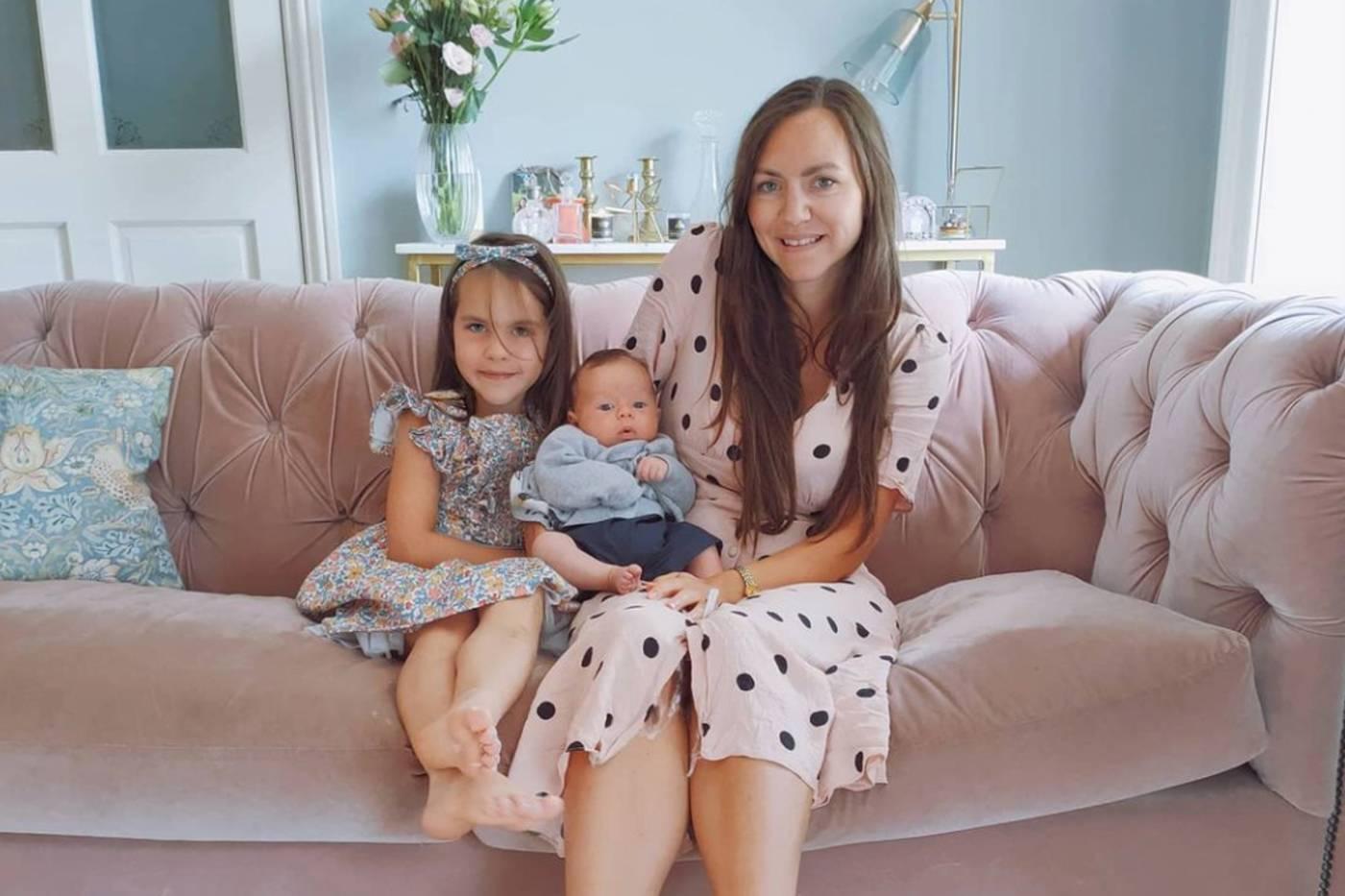
Today, 1 in 5 women in America are unable to get pregnant after one year of trying. And among those women, more than 3 million experience what’s called secondary infertility, which is difficulty getting pregnant again or difficulty carrying another baby to term. And while these numbers are startling, what’s even more startling is that those stats only account for cis heterosexual women, leaving out the fertility struggles of queer, trans, nonbinary folks, and men. (About 10% of males in the U.S. deal with infertility issues.) What that means is, there are a lot of folks out there struggling to conceive.
So, in honor of those individuals—and National Infertility Awareness Week (NIAW)—we at Happiest Baby have asked those who’ve contended with infertility themselves to share their stories. Among them is Erin Willock, a mom of two in East Sussex, UK. Here, she talks about her struggles with polycystic ovarian syndrome, secondary infertility, and how our collective voices may be the most important tool when it comes to infertility.
Happiest Baby: How did your fertility journey start?
Erin Willock: When I was 18, I came to the realization that my period should definitely have started by then, so I went to the doctor. I had a series of blood tests and a scan of my ovaries. Some of my blood test results indicated that I had polycystic ovarian syndrome. [PCOS is a reproductive hormone disorder that can affect overall health, including infrequent, irregular, or prolonged menstrual cycles. PCOS is a common cause of infertility.] Obviously, I was still young at the time, but the doctor did say that if I wanted children, I would need to think about it “early.” I was lucky enough to fall pregnant at 25 naturally with my daughter. Though after two years of trying for a second baby, I went back to the doctor. I was referred to a specialist who prescribed Clomid to assist with ovulation. [Clomid is an estrogen modulator drug that’s used to treat infertility.]
HB: Before you were faced with your own fertility challenges, what were some of your assumptions about infertility?
EW: Being the eldest of four siblings, I had never really given it too much thought. I always imagined that I would have a big family, without realizing that it actually isn’t a choice for many people.
HB: What did the path to parenthood look like for you?
EW: I managed to get pregnant twice using Clomid, but both of those pregnancies ended in miscarriage. [Those with PCOS are three times as likely to miscarry than those without the condition.] After my second first miscarriage, I was advised that IVF would be my only option. I had been trying for a baby for over five years by that stage, so I wanted to try as quickly as possible. While we did have further delays and issues, in October 2020 I finally became pregnant as a result of IVF and a frozen embryo transfer. [A frozen embryo transfer, or FET, is the process of thawing and transferring a previously frozen embryo into the uterus.]
HB: Infertility is sometimes considered too personal to talk about. Did you struggle with that?
EW: I really struggled with it for a long time. Since I already had a child, it didn’t occur to people that I might have fertility issues, so countless people would ask me when I was having a second baby. The worst was when people would continue to push it and say things like “you don’t want an only child” or “think about the age gap.” I used to laugh it off with a “maybe one day,” or “one is quite a handful” while feeling so upset inside. I felt like I was in this downward spiral where trying to have a baby had taken over my life, yet I couldn’t talk about it. I struggled so much seeing pretty much everyone around me get pregnant and everyone else be happy for them. Part of me wanted to scream “I want a baby, too!”
Then after my first miscarriage, I became a lot more open and connected with people online who had been through similar experiences, which really helped me feel less alone.
HB: How did hearing other people’s stories affect you?
EW: I honestly think hearing and reading about other people’s stories was what got me through. Infertility is such a lonely experience and as each month goes by and you hear of more and more people having babies, you end up feeling so alone. I follow lots of pages on social media offering support to women with fertility issues and ended up speaking to some other women online, too. After opening up about my own experiences, I was surprised that so many people I knew—old acquaintances, friends of friends, and more—made contact with me and were either going through or had been through something similar.
HB: What do you wish someone had said to you when you started this journey?
EW: Although I found out about my PCOS early, I still wish I had taken more active steps early on. Knowledge is power. We are fortunate to live in an era where fertility treatment is available, but don’t bury your head in the sand. The earlier you start looking into things and trying treatments, the better your chances of success are. I would also remind anyone facing fertility issues that they are definitely not alone.
HB: It’s been said that our voices are our most powerful tool when it comes to infertility. Do you believe that?
EW: I do! Reading about other people’s struggles and experiences is what really helped me through some of my lowest points. It’s so important that people realize that they aren’t alone and that there is help out there. Hearing other people’s experiences also gave me knowledge about what questions I should be asking and what options were out there, too.
HB: Why do we need National Infertility Awareness Week?
EW: I think it is a brilliant initiative, supporting those struggling with fertility issues themselves and letting them know that support is out there. Equally importantly is raising awareness of the fact that the path to parenthood is not easy for so many people, which will hopefully lead to more sensitivity from those who have been fortunate enough not to have experienced struggles themselves. It might make people think twice before asking people when they will be having children and give more insight to those trying to support friends that they know are going through fertility struggles or treatment.
More on Fertility:
- Making Sense of Secondary Infertility
- What It’s Really Like to Go Through IVF
- It’s About Time: A Children’s Book for IVF Kids!
- What This Embryologist Wants You to Know About IVF
Disclaimer: The information on our site is NOT medical advice for any specific person or condition. It is only meant as general information. If you have any medical questions and concerns about your child or yourself, please contact your health provider.
SHARE THIS ARTICLE
MOST LOVED
Sleepytime Sidekicks