PREGNANCY
Everything You Need to Know About Getting a New Job While Pregnant
Learn your rights, whether to tell a potential employer, how to handle interviews, and what to negotiate in your offer.
Written by
Happiest Baby Staff
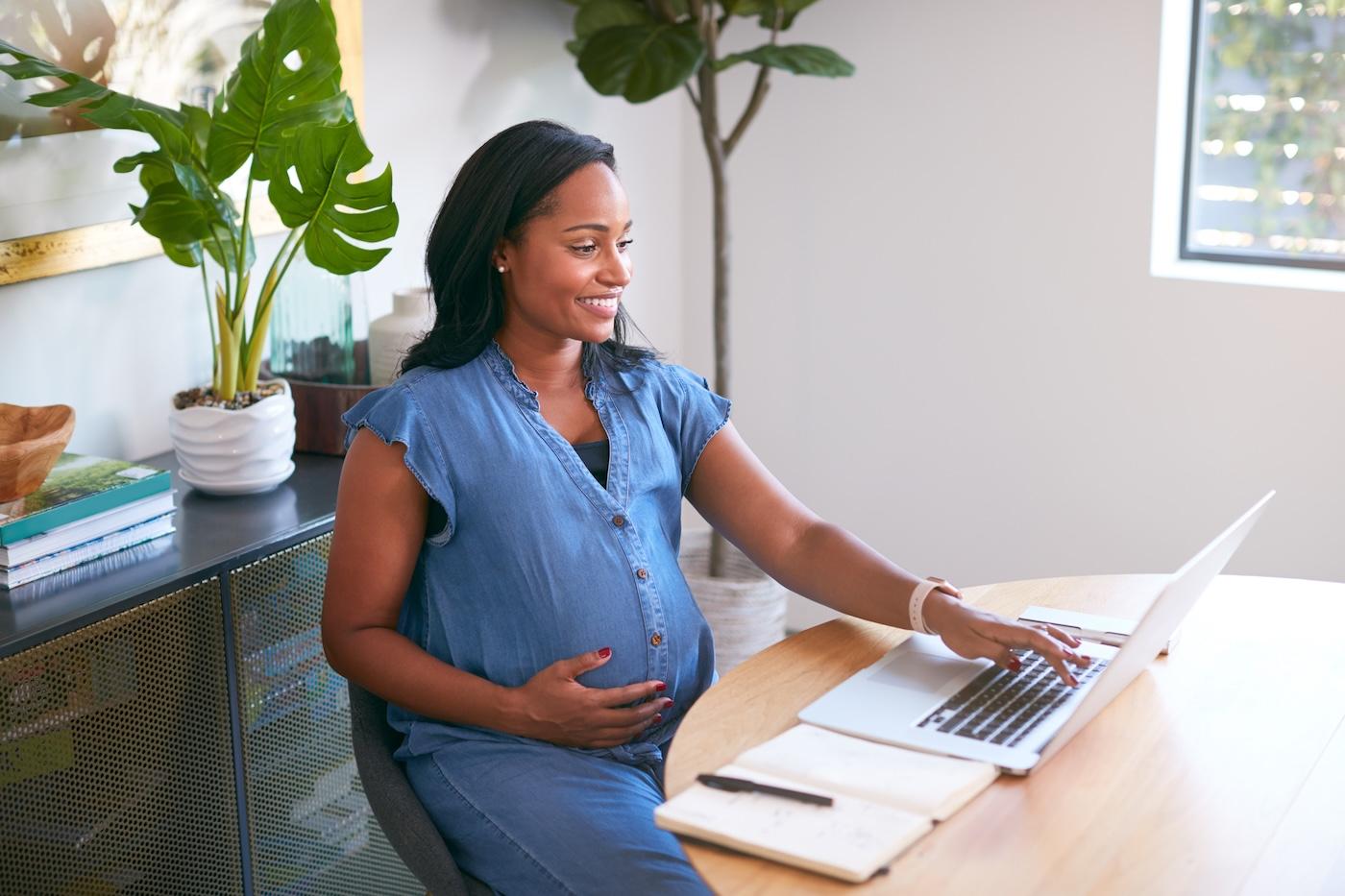
Maybe you were laid off right after that positive test. Maybe your dream role popped up on LinkedIn at 24 weeks. Or maybe you've simply realized your current job won't work once baby arrives. Whatever brought you here, job hunting while pregnant can feel like a lot—you're juggling prenatal appointments, pregnancy fatigue, and cover letters. But getting a job while pregnant is not only possible, it's legally protected. Here's how to approach every stage, from submitting your first application to signing on the dotted line.
Can you get a job while pregnant?
Yes! Lots of pregnant people apply for, interview for, and accept new jobs. Federal law makes it illegal for most employers to factor your pregnancy into hiring decisions, and you get to decide if and when to share your news. That said, starting a new job while pregnant does take some extra planning, mostly around leave, health insurance, and timing. Knowing your rights up front makes the whole process a lot less stressful.
Your Rights as a Pregnant Job Applicant
Employment protections come from federal law, state law, and your future employer's own policies. Here are the federal basics to know before you start applying.
- Title VII of the Civil Rights Act (as amended by the Pregnancy Discrimination Act): This law prohibits pregnancy discrimination, and it protects job applicants as well as employees. It covers every part of employment, including hiring and the job application and selection process. It applies to employers with 15 or more employees.
- The Pregnant Workers Fairness Act (PWFA): The PWFA requires covered employers to provide reasonable accommodations to qualified employees and applicants with known limitations related to pregnancy, childbirth, or related medical conditions, unless doing so would cause an "undue hardship." Employers also can't deny a job to a qualified applicant based on their need for a reasonable accommodation. Like Title VII, the PWFA applies to private and public employers with 15 or more employees.
- The Americans with Disabilities Act (ADA): Pregnancy itself isn't a disability, but some pregnancy-related conditions, such as gestational diabetes, may qualify for ADA protections. The ADA also requires employers to keep your medical information, including pregnancy-related info, confidential.
- The Family and Medical Leave Act (FMLA): The FMLA offers eligible employees up to 12 weeks of unpaid, job-protected leave for the birth of a child. However, to be eligible, you must have worked for your employer for at least 12 months and logged at least 1,250 hours in the year before your leave starts—and your employer must have at least 50 employees within 75 miles of your worksite.
Your state may offer more protection. Federal law is the floor, not the ceiling. Many states have their own laws covering pregnancy discrimination, accommodations, job-protected leave, and pumping at work—and some apply to smaller employers that federal law doesn't reach. Because protections vary so much from place to place, look up your state on A Better Balance's state-by-state Workplace Rights Hub before you start your search.
Should you tell a potential employer you're pregnant?
You are not required to disclose your pregnancy while applying or interviewing. Whether (and when) you share is a personal decision—and there's no wrong answer. Some things to weigh:
Reasons you might not disclose your pregnancy during the hiring process:
- You want to be evaluated purely on your skills and experience.
- You're early in your pregnancy and not ready to share with anyone outside your inner circle.
- Even though pregnancy discrimination is illegal, you're worried about unconscious bias.
Reasons you might share your pregnancy earlier:
- You're visibly pregnant and would rather address it head-on than wonder what the interviewer is thinking.
- You need an accommodation to participate in the interview itself.
- You want to gauge how a company responds. An enthusiastic "Congratulations!" and an easy conversation about leave can tell you a lot about workplace culture.
- Your due date is close to your likely start date, and you'd rather work out leave timing openly from the beginning.
Many people choose a middle path: They keep the focus on their qualifications during interviews, then share their news after receiving an offer but before accepting it. That way, the hiring decision is already made and you can negotiate leave, start date, and benefits with all the facts on the table.
Tips for Applying for Jobs While Pregnant
- Map out your timeline: Before you hit "apply," jot down your due date, the realistic hiring timeline for your field, and when you'd likely start. Then count forward 12 months from your potential start date. If your baby is likely to arrive before that mark, assume you won't be FMLA-eligible and plan accordingly.
- Research family-friendly employers: Look for employers that publicly share their parental leave, flexible work, and family benefits on their careers page. According to the Bureau of Labor Statistics, 27% of civilians had access to paid parental leave and 90% had access to unpaid leave—so it's worth seeking out the companies that do offer parental leave.
- Check company size: Federal pregnancy discrimination and accommodation protections apply to employers with 15 or more employees, and FMLA kicks in at 50. If you're eyeing a small startup or family business, find out which state protections may apply instead.
- Know your state's paid leave program: Thirteen states and the District of Columbia have laws creating paid family and medical leave programs for eligible workers. (You can check eligibility rules on the Department of Labor’s interactive map). Because these programs have their own requirements, it's worth understanding how a job switch could affect your benefits.
- Pace yourself: Pregnancy is tiring! Batch applications on the days you feel your best, and try to schedule interviews during the time of day you typically have the most energy.
Tips for Interviewing While Pregnant
Know which questions are off-limits.
The Equal Employment Opportunity Commission (EEOC) warns that asking applicants whether they're pregnant, about future childbearing plans, or about childcare arrangements may be regarded as evidence of intent to discriminate. If an interviewer asks one of these questions anyway, you have options:
- Redirect to the job: "I'm fully committed to this role. I'd love to tell you more about how I led [project] at my last company."
- Address the underlying concern: "If you're asking about my availability, I can absolutely meet the requirements of this role."
- Answer, if you're comfortable: "I am expecting! I'm excited about this role and happy to talk through timing if we move forward."
It's also smart to jot down the date, the interviewer's name, and the exact question afterward, just in case.
Ask for accommodations if you need them.
Because the PWFA protects applicants, you can request reasonable adjustments to the interview process if you have a pregnancy-related limitation. Examples of possible accommodations include extra breaks to rest, eat, drink water, or use the restroom; a stool or seat; and leave for healthcare appointments. In interview terms, that might mean asking for a seat during an on-site tour, a short break during a back-to-back interview loop, or a different time slot so you don't have to miss a prenatal visit. You don't need to use any special legal language, either. Something like, "Because of my pregnancy, I'll need a short break between sessions" is enough to start the conversation.
Ask smart questions about the company.
Interviews are your chance to interview them, too. You can learn a lot about how family-friendly a workplace is without ever mentioning your pregnancy:
- "How would you describe the team's approach to flexibility and work-life balance?"
- "Can you tell me about the benefits package, including your health insurance and leave offerings?"
- "How does the team handle coverage when someone is out for an extended period?"
- "What does success look like in the first six months?"
Plan for comfort.
Interviews are stressful at any stage, and pregnancy adds a few wrinkles. Pack water and a snack, find a professional outfit that you can comfortably sit in for an hour, and, for virtual interviews, set up a supportive chair. If you're dealing with morning sickness, try to book interviews for the time of day you tend to feel best.
How to Navigate a Job Offer While Pregnant
Congrats—you got the offer! This is where planning really pays off. If you haven't shared your pregnancy yet, this is often a good time to do it, since you'll need to discuss leave and start dates. And remember, the same anti-discrimination protections that apply to hiring decisions mean an employer can't lawfully treat you differently because of your pregnancy at this stage either.
Ask about parental leave eligibility.
Because FMLA requires 12 months of service, you probably won't have federally protected leave if your baby arrives within your first year. Many company leave policies have tenure requirements, too. Before accepting, ask:
- Does your parental leave policy have a waiting period? Could it be waived or prorated?
- If I'm not FMLA-eligible, what time off will I have after giving birth, and will my job be protected?
- Can I use paid time off, sick days, or short-term disability during recovery? When do I become eligible for each?
Remember that under the PWFA, leave to recover from childbirth can be a reasonable accommodation, unless it causes the employer an undue hardship. And your state's paid leave program or job-protected leave law may fill in some gaps. Whatever you agree to, get it in writing as part of your offer letter.
Nail down health insurance timing.
Health coverage during pregnancy and delivery is essential, so ask exactly when your new coverage begins. Federal rules generally prohibit group health plans from imposing a waiting period longer than 90 days. The good news? Under the Affordable Care Act, health insurers can't deny coverage or charge you more because of a pre-existing condition, including pregnancy. (One exception: "grandfathered" plans don't have to cover pre-existing conditions, so confirm your new plan's status with HR.)
If you're leaving a job with health benefits and there's a gap before your new coverage kicks in, ask your current employer about COBRA continuation coverage, which may let you temporarily keep your existing group health plan (though you may have to pay the full premium). Also, check whether switching plans mid-pregnancy means changing your OB/GYN or midwife, and talk with your healthcare provider about how to keep your prenatal care on track.
Negotiate your start date.
You may have more flexibility than you think. Depending on your due date, you might negotiate an earlier start date to get settled in before baby arrives, or a later start date that begins after your recovery. Either way, frame it around setting yourself up for success in the role.
Ask about flexibility and family benefits.
Beyond leave, ask about remote or hybrid options, flexible schedules, and support for your return to work. If you plan to pump, know that under the federal PUMP Act, most nursing employees are entitled to reasonable break time and a private, non-bathroom space to express breast milk for one year after their child's birth.
It's also worth asking HR which family benefits they offer. Some employers provide perks like childcare stipends, backup care, lactation support, or a free SNOO rental through Happiest Baby's Employee Benefit Program. These benefits can make a real difference in those exhausting early months.
Get everything in writing.
Once you agree on leave, start date, flexibility, or any other special arrangements, ask for them to be reflected in your offer letter or in a follow-up email from HR. Memories fade and managers change—but documentation doesn't!
Scripts for Telling Your New Employer You're Pregnant
There's no need to memorize these word-for-word! Tweak them to fit your situation and workplace vibe.
- "Thank you so much for the offer—I'm thrilled! Before I accept, I want to share that I'm expecting a baby in [month]. I'm fully committed to this role, and I'd love to talk through timing for my start date and leave so we can plan together."
- "I'm excited to move forward! I also have some personal news: I'm pregnant and due in [month]. Could we set up a quick call with HR to go over parental leave and benefits eligibility?"
- "I'm so happy to accept! I wanted to let you know I'm expecting in [month]. I've already started thinking about how to ramp up quickly and set up coverage while I'm out, and I'd love to share my ideas."
Already started your new job? Our guide on how to tell your boss you're pregnant has more scripts and timing tips.
What to Do If You Suspect Pregnancy Discrimination
If you believe a company didn't hire you, rescinded an offer, or treated you unfairly because of your pregnancy:
- Write everything down: Note dates, names, what was said, and save any emails or texts.
- Know your deadline: You generally have 180 days to file a charge with the EEOC, though that window may be extended by state law.
- File a charge: You can learn how to file a charge of employment discrimination on the EEOC's website.
- Get free help: A Better Balance offers a free, confidential legal helpline for workers navigating pregnancy and caregiving issues.
Final Thoughts on Getting a Job While Pregnant
Searching for a job while pregnant takes some extra planning, but you have more rights—and more options—than you might think. Know the laws that protect you, decide on your own terms when to share your news, and use the offer stage to lock in the leave, coverage, and flexibility you'll need. You're building a career and a family. You can absolutely do both.
Getting a Job While Pregnant FAQs
Can an employer refuse to hire me because I'm pregnant?
Not legally, if the employer has 15 or more employees. Title VII prohibits pregnancy discrimination in hiring, and the PWFA bars employers from denying a job to a qualified applicant because they need a pregnancy-related accommodation. Many states have similar laws, and some cover smaller employers.
Do I have to tell a potential employer that I'm pregnant?
No. You're not required to disclose your pregnancy during the application or interview process. Many people share their news after receiving an offer, but before accepting it, so they can negotiate leave and start dates.
Can an interviewer ask if I'm pregnant?
The EEOC says that asking an applicant whether they're pregnant—or about plans to have children or childcare arrangements—may be regarded as evidence of intent to discriminate. You don't have to answer. You can redirect the conversation to your qualifications.
Will I get maternity leave if I start a new job while pregnant?
It depends. You likely won't qualify for FMLA leave until you've worked for your employer for 12 months. You may still have leave through your employer's policy, your state's paid or job-protected leave laws, or as a reasonable accommodation under the PWFA. Ask HR about eligibility before you accept the offer.
Will my new health insurance cover my pregnancy?
Under the Affordable Care Act, insurers can't deny coverage or charge you more because of a pre-existing condition, including pregnancy (grandfathered plans are an exception). Ask HR when your coverage begins, since group plans can have a waiting period of up to 90 days.
More for working parents and parents-to-be:
- Create Your Perfect Parental Leave Plan
- What to Write in Your Maternity Leave Out-of-Office Email
- 5 Benefits That Go a Long Way to Support Working Parents
- How to Get a Free SNOO at Work
- Returning to Work After Parental Leave? Here's Your Game Plan
***
REFERENCES- U.S. Equal Employment Opportunity Commission: Pregnancy Discrimination and Pregnancy-Related Disability Discrimination
- U.S. Equal Employment Opportunity Commission: What You Should Know About the Pregnant Workers Fairness Act
- U.S. Department of Labor, Women's Bureau: Employment Issues Related to Pregnancy, Birth and Nursing
- A Better Balance: Workplace Rights Hub
- U.S. Equal Employment Opportunity Commission: Pre-Employment Inquiries and Marital Status or Number of Children
- U.S. Bureau of Labor Statistics: Employee Benefits
- U.S. Department of Labor, Women's Bureau: Paid Leave
- U.S. Department of Labor: Final Rule Regarding Affordable Care Act 90-Day Waiting Period Limitation
- U.S. Department of Health and Human Services: Pre-Existing Conditions
- U.S. Department of Labor: Continuation of Health Coverage (COBRA)
- U.S. Equal Employment Opportunity Commission: How to File a Charge of Employment Discrimination
- U.S. Department of Labor, Wage and Hour Division: Fact Sheet #28Q: Taking Leave from Work for Birth, Placement, and Bonding with a Child under the FMLA
- A Better Balance: Get Help
Disclaimer: The information on our site is NOT medical advice for any specific person or condition. It is only meant as general information. If you have any medical questions and concerns about your child or yourself, please contact your health provider.
SHARE THIS ARTICLE
MOST LOVED
Sleepytime Sidekicks