PREGNANCY
Can I Go to the Dentist While Pregnant?
Your pearly whites may be the last thing on your mind, but here’s what to know about caring for your chompers.

Written by
Happiest Baby Staff
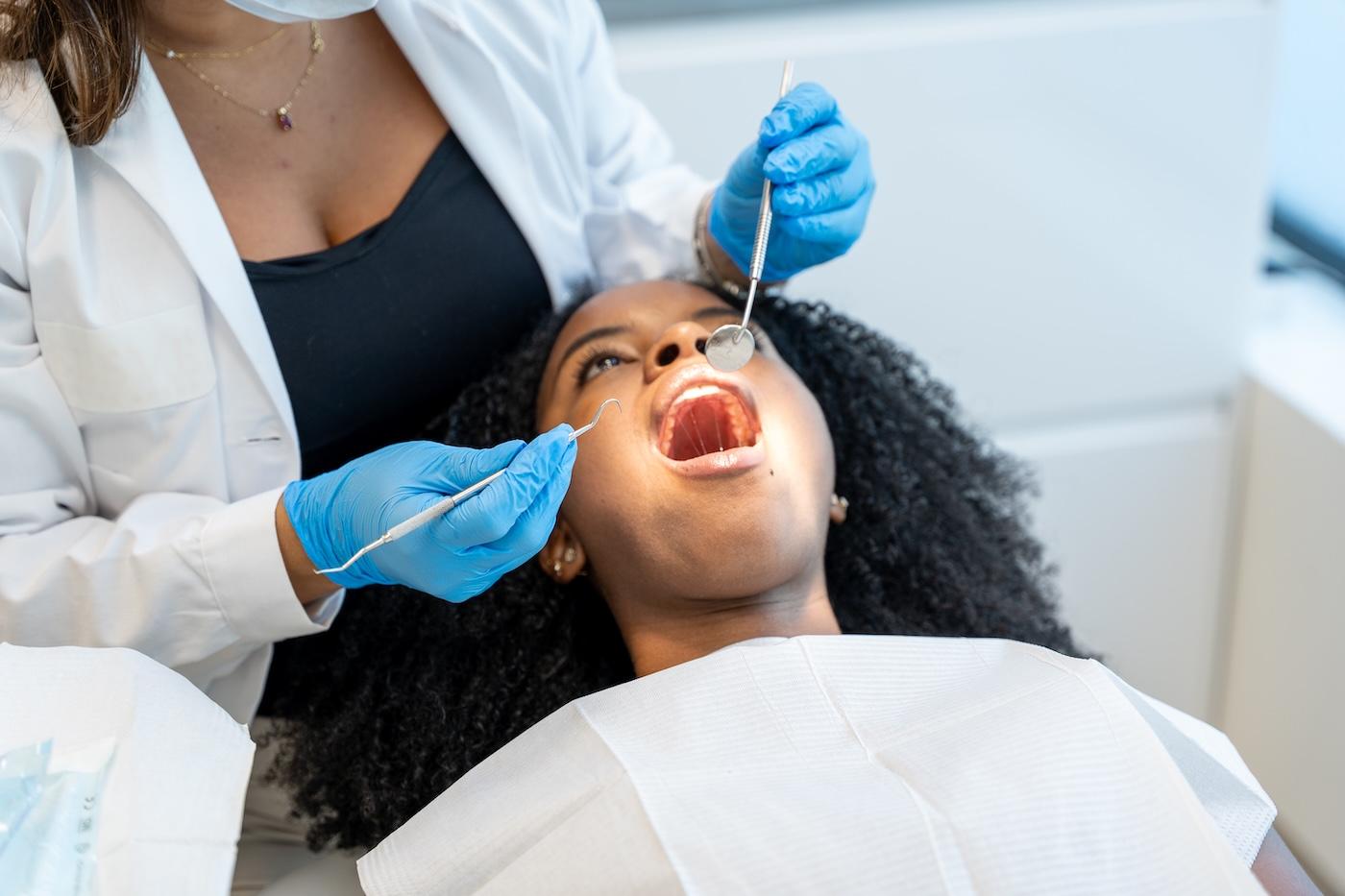
The short answer: Yes—and you should. Routine checkups, cleanings, X-rays, numbing shots, and needed treatments like fillings and root canals are all considered safe throughout pregnancy, according to the American College of Obstetricians and Gynecologists (ACOG) and the CDC. Pregnancy hormones can make your gums more prone to inflammation, so keeping up with dental care matters even more now. Just tell your dentist you're pregnant and how far along you are.
Between the prenatal appointments, the ultrasounds, and the never-ending list of baby gear to research, a dental cleaning might be the last thing on your mind. Or maybe it is on your mind—because you've heard that X-rays, numbing shots, or dental work could somehow harm your baby-to-be. You're not alone in wondering: In one large survey cited by ACOG, 56% of U.S. women didn't see a dentist at all during their pregnancy.
But here’s some news that’ll help you unclench your jaw: Today's medical and dental experts agree that going to the dentist while pregnant isn't just safe, it's a smart part of taking care of yourself (and your growing baby). Here's what you need to know before you lean back in that dentist's chair.
Is it safe to go to the dentist while pregnant?
Yes! According to the CDC, both regular and emergency dental care are safe at any stage of pregnancy, and pregnant people are encouraged to keep up with routine dental visits. ACOG agrees, noting that there's ample evidence that oral health care during pregnancy is safe and should be recommended.
That guidance is echoed in Oral Health Care During Pregnancy: A National Consensus Statement, developed by an expert workgroup convened by the federal Health Resources and Services Administration in collaboration with ACOG and the American Dental Association (ADA). The statement concludes that preventive, diagnostic, and restorative dental treatment is safe throughout pregnancy. It also offers a simple reminder: If it's been more than 6 months since your last dental visit, or you're having any problems with your teeth or gums, book an appointment as soon as you can.
Why Dental Care Matters More During Pregnancy
Pregnancy changes almost everything about your body…and your mouth is no exception. During pregnancy you may be more prone to gum disease and cavities. Here are some of the most common pregnancy-related mouth changes:
- Pregnancy gingivitis: Pregnancy ramps up your body's inflammatory response to plaque, which causes gums to swell and bleed more easily in most pregnant people. Pregnancy gingivitis typically peaks in the third trimester, and it's more likely to flare if you had gingivitis before you got pregnant. A warm saltwater rinse (1 teaspoon of salt in 1 cup of warm water) may help soothe irritated gums.
- Gum disease: About 40% of pregnant women have some form of periodontal (gum) disease. Untreated gingivitis can progress to periodontitis, a deeper infection of the gums and bone that can loosen teeth.
- "Pregnancy tumors:” Despite the scary name, these are harmless, swollen growths on the gums that appear in about 5% of pregnancies. They usually shrink on their own after birth.
- Loose teeth: The ligaments and bone that hold your teeth in place can temporarily loosen during pregnancy. Tooth loss isn't typical unless there are other complications.
- Enamel erosion: Frequent vomiting from morning sickness, hyperemesis gravidarum, or late-pregnancy reflux exposes your teeth to stomach acid, which can wear down enamel.
- Cavities: A more acidic mouth, more frequent snacking on sweets (hello, cravings!), and less attention to brushing can all set the stage for tooth decay.
Does gum disease affect your baby?
Researchers have spotted a possible association between gum disease and preterm birth, but treating gum disease during pregnancy hasn't been shown to lower the rate of preterm birth or low birth weight. Importantly, those same studies found that gum treatment during pregnancy is not linked to any harmful outcomes for parent or baby—and it does improve the pregnant person's oral health.
Your oral health may also shape your baby's future smile. The bacteria that cause cavities can be passed from parent to baby through everyday habits, like sharing spoons. Keeping your own mouth healthy may help delay or prevent those bacteria from taking hold in your little one's mouth, lowering their risk of cavities down the road.
Are dental X-rays safe during pregnancy?
Yes. ACOG, the CDC-cited national consensus statement, and the ADA all consider dental X-rays safe during pregnancy. That said, dental X-rays shouldn't be routine just for the sake of it: New ADA recommendations published in 2026 say dentists should order X-rays only when they're clinically necessary—for everyone, pregnant or not. The ADA also points out that some dental X-rays deliver less radiation than a single day of the natural background radiation we're all exposed to just by living on Earth.
What about the lead apron?
You might expect your dentist to drape you in a heavy lead apron before taking X-rays. But in 2024, an ADA expert panel concluded that lead abdominal aprons and thyroid collars are no longer necessary—and that recommendation explicitly applies to pregnant patients, too. Here's why: Modern digital X-ray equipment and tightly focused X-ray beams do a better job of protecting the rest of your body, while aprons can actually block the image the dentist needs, leading to more X-rays. (The full recommendations were published in The Journal of the American Dental Association.)
If your dental office still offers an apron, that's okay, too—some states may still require certain shielding equipment, and dentists must follow local rules.
Is it safe to get numbed at the dentist while pregnant?
Yes. ACOG specifically notes that local anesthesia—lidocaine with or without epinephrine—is safe during pregnancy. The national consensus statement also lists common dental anesthetics, including lidocaine, bupivacaine, and mepivacaine with epinephrine, as safe to use during pregnancy.
Research backs that up. A 2015 study published in The Journal of the American Dental Association followed 210 pregnancies exposed to dental local anesthetics—more than half of them in the first trimester—and compared them with 794 unexposed pregnancies. Researchers found that dental numbing and dental treatment during pregnancy do not represent a major risk for birth defects and concluded that there's no reason to keep pregnant people from getting needed dental care.
A couple of other numbing and sedation notes:
- Laughing gas (nitrous oxide) may be used during pregnancy when local anesthetics aren't enough—but your dentist should consult your prenatal care provider first.
- IV sedation or general anesthesia also requires a conversation between your dentist and your OB or midwife before treatment.
Can I get a filling, root canal, or tooth pulled while pregnant?
Yes. conditions that need prompt treatment—like extractions, root canals, and fillings for cavities—can be handled at any point during pregnancy. In fact, putting off needed treatment may lead to bigger problems. Delaying necessary dental care could pose a significant risk to you and your baby—for example, a bad tooth infection could spread throughout your body.
One large analysis from the Obstetrics and Periodontal Therapy (OPT) trial looked at pregnant people who received essential dental treatment—such as care for moderate-to-severe cavities or fractured or abscessed teeth—between 13 and 21 weeks of pregnancy. Researchers found that this treatment was not associated with an increased risk of serious medical problems or adverse pregnancy outcomes.
Should I avoid silver (amalgam) fillings while pregnant?
When you need a filling, ask your dentist about tooth-colored, mercury-free options. In 2020, the U.S. Food and Drug Administration (FDA) recommended that certain higher-risk groups—including pregnant people, people planning a pregnancy, and nursing parents—avoid getting new dental amalgam fillings whenever possible and appropriate. Amalgam fillings contain mercury and release small amounts of mercury vapor, especially when they're placed or removed. Alternatives include composite resin and glass ionomer cement fillings.
Already have silver fillings? No need to rush to have them replaced. The FDA does not recommend removing amalgam fillings that are in good condition, since taking them out can temporarily increase mercury vapor exposure and remove healthy tooth structure.
What dental treatments can wait until after baby arrives?
Truly elective, cosmetic procedures—like teeth whitening—are the main things you might choose to put off. The ingredients in most teeth whitening products haven't been well studied in pregnancy. When whitening products are used as directed (and not swallowed), it's unlikely that a significant amount would get into your system. Still, because whitening is purely cosmetic, many expecting parents simply decide to wait. If you do want to brighten your smile, talk with your dentist first and choose an alcohol-free product. (Learn more about pregnancy-safe skin care and beauty products.)
Does it matter which trimester you're in?
Not when it comes to safety. Dental care is safe throughout pregnancy, and emergency care should be provided whenever it's needed. That said, comfort counts! If you're planning a longer, non-urgent procedure, the second trimester often hits the sweet spot: First-trimester nausea has often eased, and your belly isn't yet big enough to make reclining in the dentist's chair uncomfortable.
Tips for a Comfortable Dental Visit During Pregnancy
A few simple steps can make your appointment easier on you and your bump:
- Tell the dental office you're pregnant—and your due date: This helps your dental team tailor your care, from imaging to medication choices.
- Share your medical history: Let your dentist know about any pregnancy complications or health conditions, like high blood pressure, diabetes, or preeclampsia. Your dentist may want to coordinate with your OB or midwife.
- Ask about positioning: Later in pregnancy, lying flat on your back can make you feel dizzy or nauseous because of a drop in blood pressure. Ask to sit semi-reclined with your head higher than your feet, take breaks to change position, and place a small pillow under your right hip (or turn slightly to the left). (Learn more about back-sleeping during pregnancy.)
- Double-check any prescriptions: Many common dental medications are fine in pregnancy—the consensus statement lists antibiotics like amoxicillin, penicillin, cephalosporins, and clindamycin as options, for example—but some are not. Tetracycline, for one, should never be used during pregnancy. Before you take any pain reliever after a procedure, check with your healthcare provider about which one is right for you. (Here's what to know about Tylenol during pregnancy.)
- Check your coverage: Pregnancy is sometimes a time when people gain access to dental coverage—some state Medicaid programs include dental benefits during pregnancy, though coverage varies considerably from state to state.
How to Care for Your Teeth at Home While Pregnant
Good at-home habits are your first line of defense against pregnancy gingivitis and cavities:
- Brush twice a day with fluoride toothpaste, and replace your toothbrush every 3 or 4 months (or sooner, if the bristles are frayed).
- Floss once a day or use another interdental cleaner.
- Rinse with an alcohol-free fluoride mouthwash each night.
- Rinse after vomiting. If morning sickness or reflux has you throwing up, swish with a mix of 1 teaspoon of baking soda in 1 cup of water to help neutralize the acid.
- Try xylitol gum or mints after eating, which can help reduce cavity-causing bacteria.
- Go easy on sugary snacks and drinks. Reach for fruit, veggies, cheese, or unsweetened yogurt when cravings strike, and sip water or milk instead of juice or soda.
- Keep up with checkups, ideally twice a year.
When to Call Your Dentist or Healthcare Provider
Reach out promptly if you notice:
- Tooth pain or sensitivity that doesn't go away
- Swelling in your gums or face, or other signs of a possible tooth infection
- Gums that bleed heavily, are very painful, or are getting worse
- A growth on your gums that bleeds, hurts, or makes it hard to eat
- A loose or broken tooth
- Frequent vomiting that's making it hard to keep your teeth (or yourself!) healthy
And, of course, call anytime something worries you. Your dental team and prenatal care provider can work together to keep you—and your baby—healthy.
FAQ: Going to the Dentist While Pregnant
Can I get my teeth cleaned while pregnant?
Yes. Routine dental cleanings are safe at any stage of pregnancy, according to the CDC—and they're especially helpful for managing pregnancy gingivitis.
Are dental X-rays safe while pregnant?
Yes. ACOG considers dental X-rays safe during pregnancy, and the ADA recommends that dentists take X-rays only when clinically necessary. Thanks to today's targeted, digital imaging, the ADA no longer recommends lead aprons for any patient, including pregnant patients.
Can I get a numbing shot at the dentist while pregnant?
Yes. Local anesthetics like lidocaine are considered safe during pregnancy by ACOG, and research has not found that dental numbing poses a major risk of birth defects.
When is the best time to go to the dentist while pregnant?
Any time is safe for cleanings, checkups, and urgent care. For longer, non-urgent procedures, the second trimester is often the most comfortable time.
Is laughing gas safe during pregnancy?
Nitrous oxide may be used when local anesthetics aren't enough, but your dentist should check with your prenatal care provider first.
Is it safe to get a filling while pregnant?
Yes. Fillings can be done at any time during pregnancy, according to ACOG. Ask for a mercury-free option, since the FDA recommends that pregnant people avoid new amalgam fillings whenever possible and appropriate.
Can I whiten my teeth while pregnant?
Many expecting parents choose to wait, since whitening is cosmetic and its ingredients haven't been well studied in pregnancy. Talk to your dentist before using any whitening product.
More on Pregnancy Safety:
- Can I Take Tylenol While Pregnant?
- Can I Have Caffeine During Pregnancy?
- Taking Baths While Pregnant: Is It Safe?
- Can I Sleep on My Back While Pregnant?
- Pregnancy-Safe Skincare
***
REFERENCES- American College of Obstetricians and Gynecologists (ACOG): Committee Opinion No. 569, Oral Health Care During Pregnancy and Through the Lifespan
- Centers for Disease Control and Prevention (CDC): Pregnancy and Oral Health Facts
- Oral Health Care During Pregnancy Expert Workgroup, Oral Health Care During Pregnancy: A National Consensus Statement, Washington, DC: National Maternal and Child Oral Health Resource Center, 2012
- American Dental Association: New Recommendations Confirm Dental X-Rays Most Effectively Used in Moderation, Jan 2026
- American Dental Association: ADA Releases Updated Recommendations to Enhance Radiography Safety in Dentistry, Feb 2024
- Optimizing Radiation Safety in Dentistry: Clinical Recommendations and Regulatory Considerations, The Journal of the American Dental Association, Apr 2024
- ADA News: Using Thyroid Collars During Radiographic Exams No Longer Recommended by ADA, Feb 2024
- Pregnancy Outcome After In Utero Exposure to Local Anesthetics as Part of Dental Treatment: A Prospective Comparative Cohort Study, The Journal of the American Dental Association, Aug 2015
- Examining the Safety of Dental Treatment in Pregnant Women, The Journal of the American Dental Association, Jun 2008
- U.S. Food and Drug Administration: FDA Issues Recommendations for Certain High-Risk Groups Regarding Mercury-Containing Dental Amalgam
- Organization of Teratology Information Specialists MothertoBaby: Whitening Teeth During Pregnancy or Breastfeeding? Let's Bite into the Subject!
Disclaimer: The information on our site is NOT medical advice for any specific person or condition. It is only meant as general information. If you have any medical questions and concerns about your child or yourself, please contact your health provider.





SHARE THIS ARTICLE
MOST LOVED
Sleepytime Sidekicks