PREGNANCY
Are Dates Safe During Pregnancy?
Sweet and surprisingly nutritious, dates have a lot to offer. Here's what to know about eating them safely, including whether they really help speed up labor.

Written by
Happiest Baby Staff
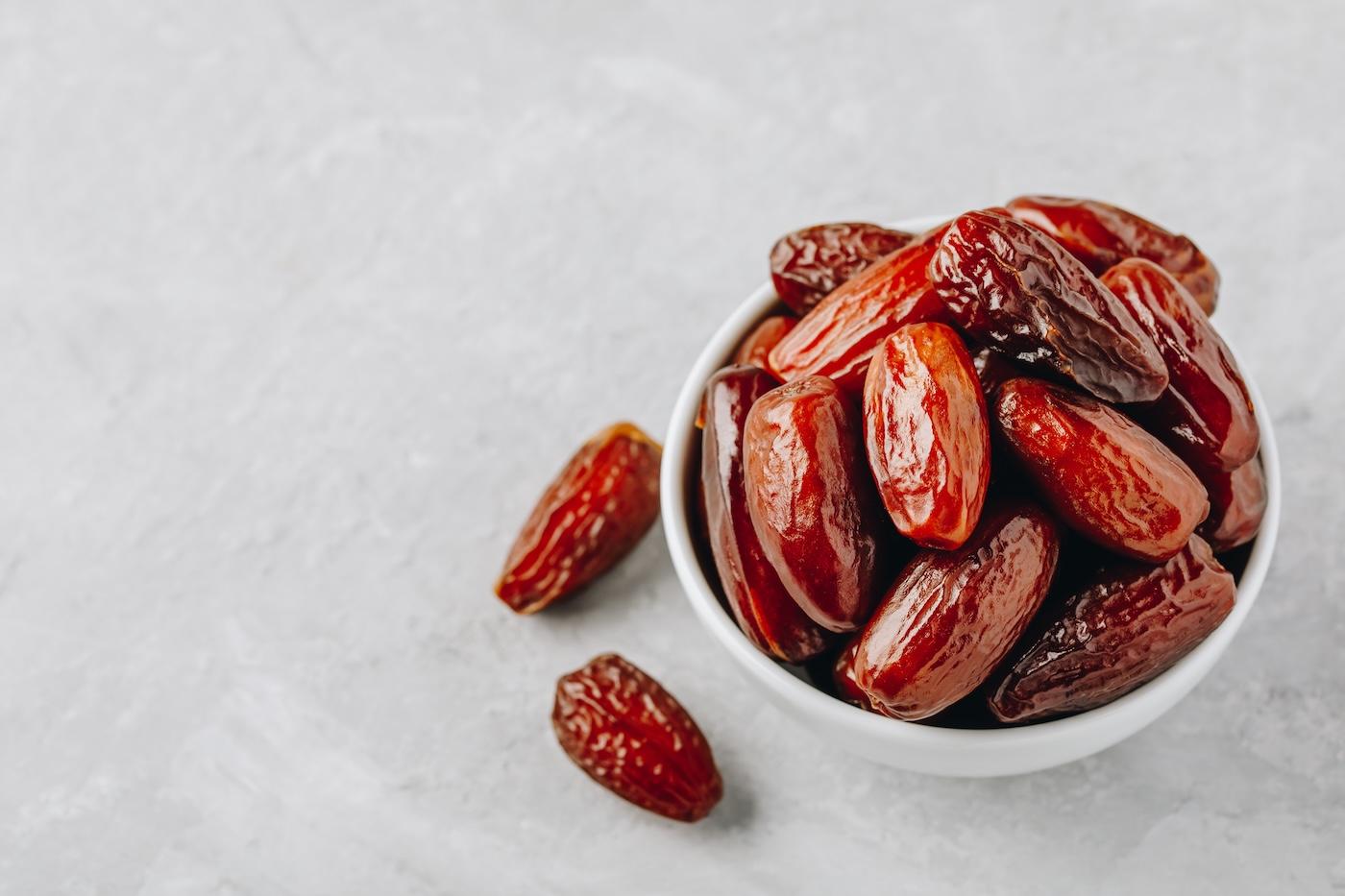
Dates are one of the oldest cultivated fruits in the world, and they've been having a moment in the pregnancy wellness space. You may have heard that eating dates in your final weeks can help kickstart labor—but is there any truth to that? And more basically, are dates even safe to eat while pregnant?
The short answer: yes! Dates are a safe, whole-food choice during pregnancy for most people. They're rich in fiber, natural sugars, and key minerals, and there's some compelling (if preliminary) research behind the labor claim. Here's everything you need to know.
What are dates?
Dates are the fruit of the date palm tree (Phoenix dactylifera), grown primarily in the Middle East and North Africa. They're typically sold dried, which concentrates their natural sugars and gives them that caramel-like sweetness. Medjool dates are the large, soft variety commonly found in U.S. grocery stores, while Deglet Noor dates are smaller and slightly less sweet.
Nutritionally, dates pack a real punch. A serving of about three to four Medjool dates (roughly 100 grams) provides approximately 7 grams of fiber, along with meaningful amounts of potassium, magnesium, and folate—all nutrients that matter during pregnancy.
Are dates safe to eat during pregnancy?
Yes. Dates are a whole, minimally processed food with no pasteurization concerns and no known toxicity for pregnant people or their babies. Unlike some herbal supplements or raw animal products, dates carry no special food-safety warnings during pregnancy.
That said, a few considerations apply:
- Blood sugar: Dates have a high natural sugar content. If you have been diagnosed with gestational diabetes, talk with your healthcare provider before eating them regularly, as they may affect your blood sugar levels. The American College of Obstetricians and Gynecologists (ACOG) recommends careful dietary management for people with gestational diabetes, including monitoring high-glycemic foods.
- Quantity: Most research on dates in pregnancy uses a daily amount of about three to six dates. There's no evidence that eating the occasional date is harmful, but regularly consuming large quantities—as with any high-sugar food—isn't advisable.
- Storage and hygiene: Rinse dates before eating, and store them in a sealed container in the refrigerator to prevent mold.
If you have questions about whether dates fit into your pregnancy diet, your healthcare provider or a registered dietitian is your best resource.
Benefits of Eating Dates During Pregnancy
Fiber
Constipation is one of the most common pregnancy complaints, affecting up to 40% of pregnant people at some point. Increasing dietary fiber and fluid intake is the first-line recommendation for managing constipation during pregnancy, according to the American Academy of Family Physicians (AAFP). Dates are one of the most fiber-dense fruits available—three Medjool dates deliver roughly 5 to 7 grams of fiber, a meaningful contribution toward the recommended 25 to 28 grams per day.
Energy
Pregnancy is exhausting, and dates are a convenient, nutrient-dense source of quick energy. Their natural sugars—primarily fructose and glucose—are quickly absorbed, making them a practical snack when energy flags. Pairing dates with a protein or healthy fat (like almond butter or a small handful of nuts) slows the sugar absorption and helps keep blood sugar more stable.
Key Minerals
Dates provide several minerals that are important during pregnancy:
- Potassium: Supports healthy blood pressure and muscle function. The NIH Office of Dietary Supplements recommends 2,900 milligrams per day during pregnancy, and dates contribute a modest but real amount.
- Magnesium: Plays a role in bone development, muscle function, and blood sugar regulation. The NIH notes that magnesium needs increase slightly during pregnancy.
- Folate: Critical for neural tube development, especially in early pregnancy. While dates are not a primary source of folate compared to leafy greens or fortified foods, they contribute to overall intake alongside your prenatal vitamin. The NIH Office of Dietary Supplements recommends 600 micrograms of dietary folate equivalents (DFE) daily during pregnancy (see more on the importance of folic acid during pregnancy.)
- Iron: Dates contain small amounts of non-heme iron, which may support the increased iron demands of pregnancy. Iron needs nearly double during pregnancy (from 18 mg/day to 27 mg/day). Dates won't replace an iron-rich diet or prenatal supplement, but every bit helps!
Can dates help speed up labor?
And now the question that's sent many third-trimester pregnant people reaching for the date bin at Whole Foods. While there is some research behind this claim, it comes with important caveats.
What the Research Shows
Several studies have investigated whether eating dates in late pregnancy affects labor outcomes—specifically, cervical ripening, labor duration, and the need for medical induction.
One of the earliest and most-cited studies, published in the Journal of Obstetrics and Gynaecology, followed 69 women in Jordan who ate six dates per day in the final four weeks of pregnancy, compared to 45 who did not. Those in the date-eating group had significantly higher cervical dilation on admission to the labor ward, a higher rate of intact membranes, and a lower rate of oxytocin augmentation. Their mean latent phase of labor was also shorter. The researchers suggested dates may have an oxytocin-like effect on uterine smooth muscle.
Another randomized controlled trial from Iran assigned women to eat 70 to 75 grams of dates daily from 37 weeks of pregnancy. Compared to the control group, the date-eating group had significantly better Bishop scores (a measure of cervical readiness for labor) and a significantly shorter active phase of labor.
And then a larger randomized controlled trial in Malaysia found that women who consumed dates from 36 weeks of gestation had a higher likelihood of spontaneous labor and a shorter latent phase compared to the control group, though there were no significant differences in active labor duration or delivery outcomes.
Why might dates affect labor?
Researchers have proposed a few mechanisms. For example, dates contain compounds—including oxytocin-like substances and tannins—that may act on uterine smooth muscle. They also contain high levels of saturated fatty acids, particularly linoleic acid, which is a precursor to prostaglandins, hormone-like substances involved in cervical ripening. But exact mechanism remains a bit of a mystery!
Research Limitations
The dates-and-labor research is promising but not definitive—and it has some real limitations. For one, most studies have been relatively small (under 200 participants). Likewise, blinding participants in food-based studies is challenging, which introduces potential bias. Results have also not been fully consistent across studies, and it's not clear how well these findings translate across different populations, date varieties, or amounts consumed.
A 2021 systematic review and meta-analysis published in BMC Pregnancy and Childbirth analyzed seven studies and concluded that date consumption was associated with a significantly higher rate of spontaneous labor onset and shorter duration of the first stage of labor—but the authors noted the evidence quality was moderate and called for larger, well-designed trials before firm conclusions can be drawn.
The Bottom Line on Dates and Labor
Eating dates in late pregnancy is unlikely to cause harm for most people, and the research—while preliminary—suggests it may offer a modest benefit for labor readiness. It is not a proven medical intervention, and it should not replace evidence-based obstetric care. Talk to your healthcare provider before using dates as a deliberate labor preparation strategy, especially if you have gestational diabetes, are at risk for preterm labor, or have any other pregnancy complications.
Are there any risks to eating dates during pregnancy?
For most healthy pregnant people, dates are a safe and nutritious choice in moderation. A few things to keep in mind:
- High natural sugar content: Three Medjool dates contain roughly 54 grams of carbohydrate and 47 grams of sugar. This is worth noting if you're monitoring blood sugar, and is one reason your healthcare provider's guidance matters if you have gestational diabetes.
- Calorie density: Dates are energy-rich—about 60 to 70 calories per date. It's easy to eat several without noticing, so portion awareness is useful.
- Digestive effects: Too many dates at once can cause bloating, gas, or loose stools in some people, thanks to their high fructose and fiber content.
- Dental health: Dates are sticky and sweet, which means they cling to teeth and can contribute to cavities if oral hygiene isn't maintained. The National Institute of Dental and Craniofacial Research (NIDCR) notes that fermentable sugars—including those in dried fruits—are a primary driver of tooth decay.
How to Safely Eat Dates During Pregnancy
- Stick to a reasonable amount: Most research has used three to six dates per day, which is a good ceiling for most folks!
- Pair them with protein or fat: Date + almond butter, date + a small piece of cheese, or date + walnuts all help slow the sugar absorption and make the snack more satisfying.
- Choose whole, quality dates: Look for plump, fresh-smelling dates without any white mold, unusual odors, or crystallized sugar on the surface (a small amount of natural crystallization is fine, but significant white coating can indicate fermentation or mold).
- Rinse before eating: Like all produce, dates should be rinsed under running water before eating.
- Check in with your provider: If you plan to eat dates regularly in the third trimester—especially as a deliberate labor preparation practice—it's worth mentioning it to your OB-GYN or midwife.
When to Avoid Dates During Pregnancy
There's no hard rule that says pregnant people must avoid dates, but you may want to limit or skip them if:
- You have gestational diabetes and dates elevate your blood sugar beyond target range.
- Your healthcare provider has asked you to follow a low-sugar or low-carbohydrate diet.
- You have been diagnosed with irritable bowel syndrome (IBS) or a fructose sensitivity, and dates trigger symptoms.
- The dates look or smell off—mold, fermentation, or unusual texture are reasons to toss them.
The Bottom Line
Dates are safe and genuinely nutritious during pregnancy. They offer fiber to ease constipation, natural energy, and modest amounts of important minerals including potassium, magnesium, folate, and iron. The research on dates and labor is real—and intriguing—though still preliminary. If you enjoy dates and want to incorporate them in your third trimester, three to six per day appears to be both the studied amount and a reasonable portion. Just loop in your healthcare provider if you have any concerns about blood sugar or other pregnancy complications.
More Pregnancy Nutrition Reads:
- Chia Seeds During Pregnancy
- Beet Juice During Pregnancy
- Barley Grass During Pregnancy
- Licorice Root Tea During Pregnancy
***
REFERENCESThe Role of Dietary Fiber in Health Promotion and Disease, StatPearls, Dec 2025Gestational Diabetes Mellitus, American College of Obstetricians and Gynecologists Practice Bulletin No. 190, Feb 2018National Institutes of Health Office of Dietary Supplements: Potassium Fact Sheet for Health ProfessionalsNational Institutes of Health Office of Dietary Supplements: Magnesium Fact Sheet for Health ProfessionalsNational Institutes of Health Office of Dietary Supplements: Folate Fact Sheet for Health ProfessionalsNational Institutes of Health Office of Dietary Supplements: Iron Fact Sheet for Health ProfessionalsThe Effect of Late Pregnancy Consumption of Date Fruit on Labour and Delivery, Journal of Obstetrics and Gynaecology, Feb 2011The Effect of Late Pregnancy Consumption of Date Fruit on Cervical Ripening in Nulliparous Women, Journal of Midwifery and Reproductive Health, Jul 2014Date Fruit Consumption at Term: Effect on Length of Gestation, Labour and Delivery, Journal of Obstetrics and Gynaecology, Feb 2017Dates and Labor: A Systematic Review and Meta-Analysis, BMC Pregnancy and Childbirth, Apr 2020National Institute of Dental and Craniofacial Research: Tooth DecayDisclaimer: The information on our site is NOT medical advice for any specific person or condition. It is only meant as general information. If you have any medical questions and concerns about your child or yourself, please contact your health provider.






SHARE THIS ARTICLE
MOST LOVED
Sleepytime Sidekicks