PREGNANCY
Pelvic Girdle Pain During Pregnancy: Causes, Symptoms, and Treatments
While that sharp, aching pregnancy pain is common, you’ve got options for relief!

Written by
Happiest Baby Staff
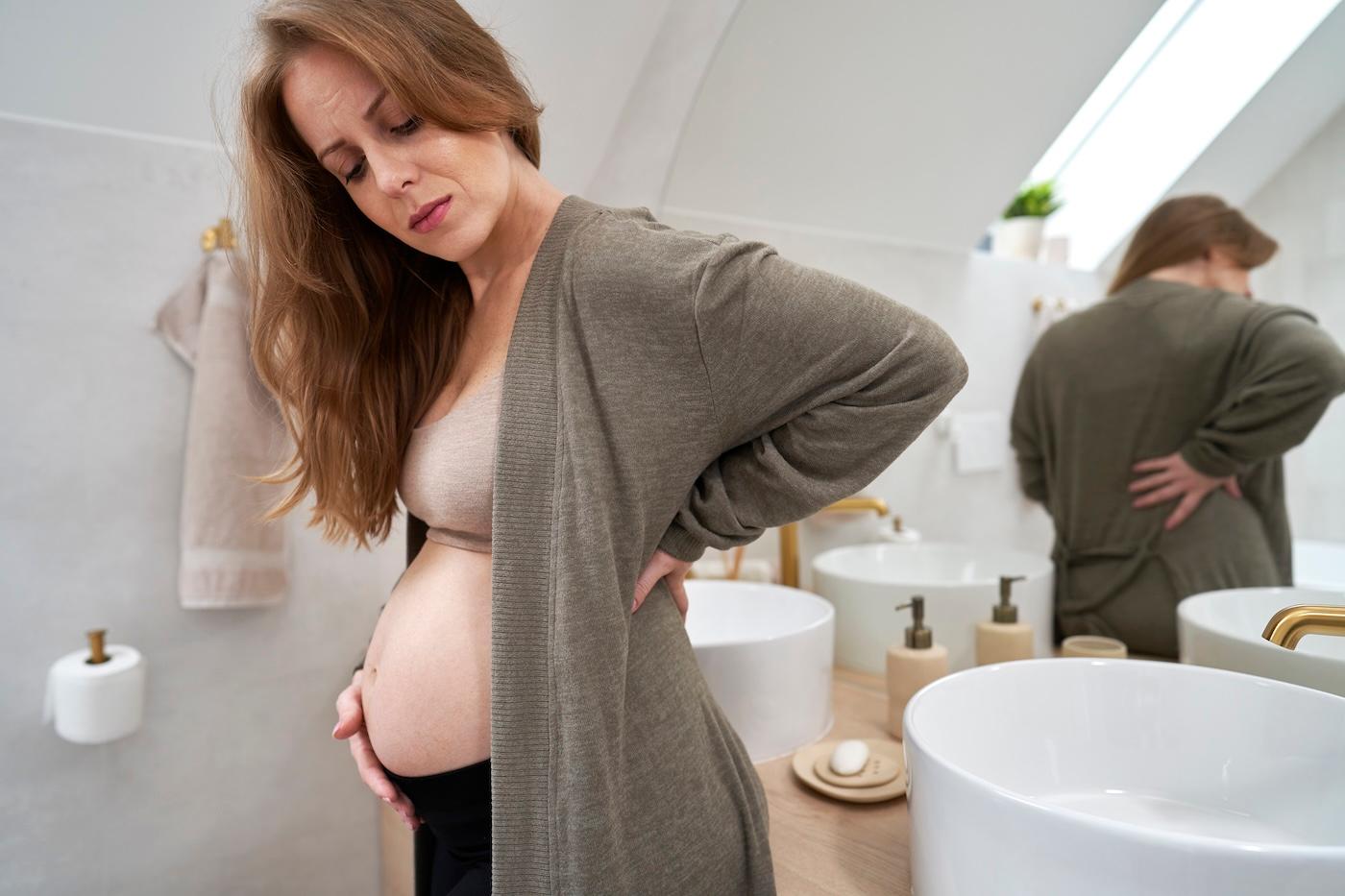
If you're pregnant and have started to notice a sharp, stabbing, or aching pain deep in your pelvis, hips, or groin—especially when you walk, climb stairs, or roll over in bed—you may be dealing with pelvic girdle pain. It's one of the more common (and commonly under-discussed) pregnancy discomforts, affecting an estimated one in five pregnant people. The good news: there are real, evidence-based strategies to manage it. Here's what you need to know.
What is pelvic girdle pain?
Pelvic girdle pain (PGP) is a broad term for pain that originates in the joints and ligaments of the pelvic girdle—the bony ring formed by your sacrum, tailbone, and two hip bones (the ilium). These bones are connected by three joints: the two sacroiliac (SI) joints at the back of your pelvis and the pubic symphysis at the front. During pregnancy, all three can become a source of pain.
You may hear PGP referred to by more specific names. Symphysis pubis dysfunction (SPD) refers to pain at the front of the pelvis, at the pubic symphysis joint. Sacroiliac joint pain affects the back of the pelvis. PGP is the umbrella term that covers pain at either or both locations. It's distinct from general low back pain, though the two can occur together.
PGP can begin as early as the first trimester, though it most commonly develops in the second or third trimester. For most people, it resolves within a few months after giving birth—but for some, it can persist longer without treatment.
Symptoms of Pelvic Girdle Pain
PGP can feel different from person to person, and its intensity can range from mild and manageable to severe enough to affect daily functioning.
Common symptoms include:
- Pain in the pubic area, groin, inner thighs, hips, or lower back. The pain may be felt on one or both sides of the pelvis
- A clicking or grinding sensation in the pelvic area
- Pain that worsens with movement, particularly activities that involve standing on one leg—like climbing stairs, getting dressed, or getting in and out of a car
- Pain when rolling over in bed or shifting positions
- Difficulty walking, sometimes described as a waddling gait
- Pain that radiates down the legs (though this can also signal sciatica, so it's worth discussing with your healthcare provider)
One hallmark of PGP is that symptoms tend to flare with weight-bearing activities and improve with rest. If your pain is severe, symmetrical at the front of the pelvis, or accompanied by swelling over the pubic bone, that's worth flagging with your healthcare provider promptly, as these can signal a more significant separation of the pubic symphysis.
What causes pelvic girdle pain in pregnancy?
The exact cause of PGP isn't fully understood, but research points to a combination of hormonal, biomechanical, and muscular factors.
- Hormonal changes: During pregnancy, your body produces a hormone called relaxin, which loosens the ligaments that hold your pelvic joints together. This is necessary to allow your pelvis to widen for birth—but it also means those joints have less stability than usual, making them more susceptible to strain and inflammation.
- Biomechanical changes: As your uterus grows, your center of gravity shifts forward. This puts new demands on your pelvis, hips, and lower back, and can alter the way weight is distributed across the pelvic joints. If the load isn't shared evenly—which can happen when the surrounding muscles aren't providing enough support—the joints can become irritated.
- Muscle function: Weakness or poor coordination in the muscles of the pelvic floor, abdomen, hip, and lower back can reduce the stability of the pelvis. Research suggests that pelvic girdle instability is often tied to impaired neuromuscular control of these deep stabilizing muscles.
- Other risk factors: These PGP-related issues include a previous history of pelvic or low back pain, prior pelvic trauma or injury, a physically demanding job, and carrying multiple babies. Some evidence also suggests a genetic component.
Pelvic Girdle Pain Treatments
PGP is very treatable, and most people see meaningful improvement with the right combination of support and care. The goal is to reduce pain, restore stability, and help you keep moving as comfortably as possible.
Physical therapy: This is the cornerstone of PGP management. A pelvic floor physical therapist or physiotherapist can assess your specific movement patterns, identify muscle imbalances, and guide you through targeted exercises to strengthen the pelvic floor, deep abdominal muscles, and hip stabilizers. Clinical guidelines consistently recommend individualized physiotherapy as the primary treatment for PGP during pregnancy.
Pelvic support belts: A sacroiliac belt or maternity support belt can help compress and stabilize the pelvis, reducing strain on the joints during activity. Many people find these helpful for walking and other weight-bearing tasks. Your physical therapist or healthcare provider can recommend the right type for your situation.
Activity modification: This doesn't mean becoming sedentary—movement is still important. It means learning which activities aggravate your symptoms and adapting them. Practical strategies include:
- Sitting down to put on pants and shoes (rather than standing on one leg)
- Keeping your legs together when getting in or out of a car
- Taking stairs one at a time, leading with your less painful leg
- Avoiding carrying weight on one side of your body
- Sleeping with a pillow between your knees
Manual therapy: Some evidence supports joint mobilization and soft tissue techniques performed by a trained physiotherapist or osteopath as part of a comprehensive PGP treatment plan. This should always be done by a provider experienced in treating pregnant patients.
Pain relief: Acetaminophen (Tylenol) is generally considered safe during pregnancy for short-term pain management, though you should always confirm with your healthcare provider before taking any medication. Anti-inflammatory medications like ibuprofen are typically avoided, especially in the third trimester. Local heat or cold packs can help with temporary symptom relief.
Water exercise: Exercising in water—such as swimming or water aerobics—reduces the load on your joints while still allowing you to stay active. Many people with PGP find this a welcome alternative to land-based exercise.
When to Talk to Your Healthcare Provider
If you're experiencing pelvic pain during pregnancy, bring it up at your next appointment—or sooner if it's severe. PGP is often underreported because people assume it's just a normal part of pregnancy that must be endured. It doesn't. Early intervention leads to better outcomes, so advocating for yourself matters here.
Your healthcare provider can rule out other causes of pelvic pain, refer you to a pelvic floor physical therapist, and help you build a plan that keeps you as functional and comfortable as possible through the rest of your pregnancy.
The Bottom Line
Pelvic girdle pain is common during pregnancy, but it's not something you simply have to push through. Caused by a mix of hormonal loosening of ligaments, biomechanical changes, and reduced pelvic stability, PGP can range from a nuisance to genuinely debilitating—but it responds well to treatment. Physical therapy, pelvic support belts, and mindful movement modifications can make a significant difference. Talk to your healthcare provider if you're experiencing pelvic pain; getting the right support early is the best thing you can do for your comfort and recovery.
More on Pregnancy Discomforts:
- High Blood Pressure During Pregnancy
- Get Relief From Pregnancy Fatigue
- Round Ligament Pain, Explained
- Lightning Crotch—a Shocking Pregnancy Pain
***
REFERENCESEuropean Guidelines for the Diagnosis and Treatment of Pelvic Girdle Pain, European Spine Journal, Jun 2008National Institute for Health and Care Excellence: Management of Pelvic Girdle Pain in Pregnancy, NICE Guideline No. 201, Aug 2021Experiences of First-Time Mothers With Persistent Pelvic Girdle Pain After Childbirth, Physical Therapy, Apr 2015Pelvic Pain During Pregnancy Is Associated With Asymmetric Laxity of the Sacroiliac Joints, Acta Obstetricia et Gynecologica Scandinavica, Nov 2001American College of Obstetricians and Gynecologists: Back Pain During PregnancyIs Pregnancy-Related Pelvic Girdle Pain Associated With Altered Kinematic, Kinetic and Motor Control of the Pelvis? A Systematic Review, European Spine Journal, Sep 2012Treatments for Pregnancy-Related Lumbopelvic Pain: A Systematic Review of Physiotherapy Modalities, Acta Obstetricia et Gynecologica Scandinavica, Nov 2015Disclaimer: The information on our site is NOT medical advice for any specific person or condition. It is only meant as general information. If you have any medical questions and concerns about your child or yourself, please contact your health provider.





SHARE THIS ARTICLE
MOST LOVED
Sleepytime Sidekicks