TODDLER
An Age-by-Age Guide to Sensory Play for Toddlers
Because tots are wired to learn through touching, squeezing, smashing and pouring.

Written by
Happiest Baby Staff
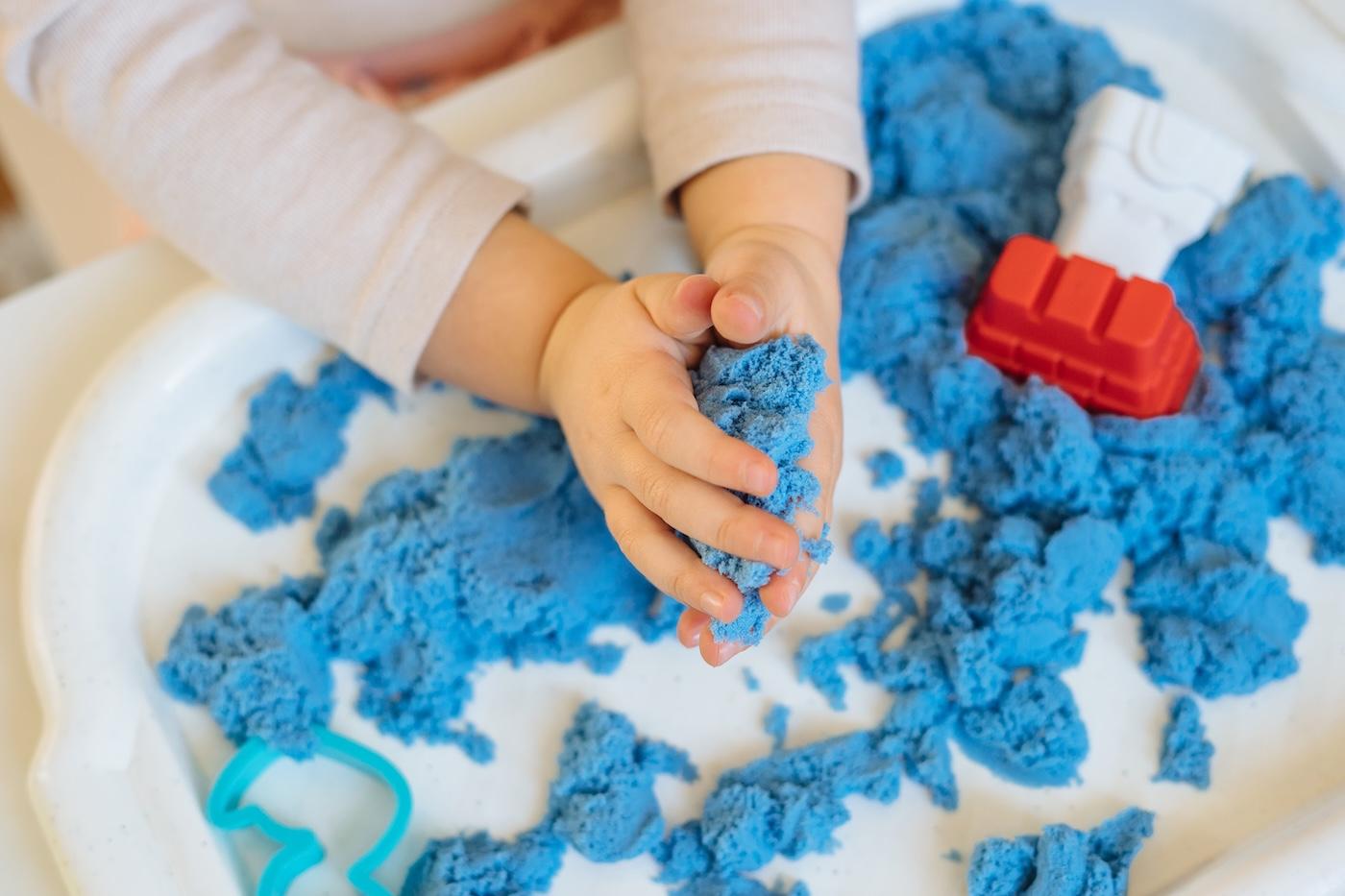
That joyful focus that emerges when you give your toddler a bowl of dry pasta, bin of sand, or squishy ball of playdough is no accident! Touching, squeezing, smashing, pouring, and exploring textures is exactly how young kids are wired to learn. Sensory play (any activity that engages a child's senses of touch, sight, sound, smell, taste, or movement) helps tots build language, fine motor skills, and emotional regulation, all while keeping them happily occupied for a stretch. The ultimate win-win!
Need help figuring out where to start? We’ve rounded up sensory activities for every age and stage—along with the "why" behind each one.
Why Sensory Play Matters
Play isn't just a way to pass the time between naps—it's brain-building work. Developmentally appropriate play with caregivers helps build the social-emotional, cognitive, language, and self-regulation skills that support lifelong learning. And because so much of what toddlers do (stacking, dumping, splashing, mixing) offers real clues about how they're developing, the Centers for Disease Control and Prevention (CDC) even tracks play skills as part of its developmental milestone checklists.
One more thing worth keeping in mind: Not every kid experiences sensory input the same way. Some toddlers are thrilled to launch themselves into a muddy puddle, while others need time to warm up to new textures and sensations. Zero to Three, the nonprofit research organization focused on infant and toddler development, recommends introducing new sensory experiences slowly and letting your child set the pace rather than insisting they touch, taste, or handle something before they're ready.
Sensory Play Ideas: 12 to 24 Months
Between their first and second birthdays, toddlers are obsessed with figuring out how things work. Young toddlers love filling and dumping water, sand, and blocks, and are starting to make connections between objects, like tucking a toy person inside a toy bus. Their favorite plaything is still you, so activities that involve back-and-forth interaction go a long way. Just keep in mind that kids in this age range still mouth objects, so stick to pieces too large to be a choking hazard, and stay within arm's reach during water or food-based play!
Waterplay With Cups and Containers
Set up a shallow tub or a few inches of water in the tub and hand your toddler some unbreakable cups, a funnel, and a measuring spoon. Filling, pouring, and dumping builds hand-eye coordination and is exactly the kind of open-ended play this age group gravitates toward naturally.
Taste-Safe Finger Painting
Swap traditional paint for yogurt, pudding, or mashed sweet potato tinted with food coloring. Because toddlers this age still explore the world with their mouths, this lets them dig in with their hands (and occasionally a curious lick) without any worry.
Textured Treasure Basket
Fill a basket or shallow box with a few safe household items in different textures—a soft washcloth, a wooden spoon, a rubber jar lid, a silicone spatula—and let your toddler pull items out one at a time. (Get more Montessori-style treasure box inspo here!)
Pots-and-Pans Drum Circle
Pull a few pots, pans, and wooden spoons out of the cabinet and let your toddler bang away. It's loud, but it's also a low-cost way to explore cause and effect and sound.
Sensory Play Ideas: 2 to 3 Years
Somewhere around age 2, imagination kicks into gear! Toddlers start using props to act out simple pretend scenarios, like feeding a doll a bottle, and their vocabularies explode into two- and three-word phrases. Fine motor control is also coming along, which shows up in skills like holding a crayon and beginning to sort shapes and colors. Sensory activities that combine hands-on materials with a little storytelling tend to be a hit.
DIY Sensory Bin
Fill a plastic bin with dry rice, beans, or pasta, then add scoops, cups, and a few small toys to bury and dig up. This is a favorite among occupational therapists for building fine motor strength and can double as a color- or counting-sorting activity as your toddler's skills grow.
Playdough With Mix-Ins
Homemade or store-bought playdough gets a boost from add-ins like googly eyes, pom-poms, or dried herbs for scent. Encourage your toddler to roll, squish, and press objects into it—their improving hand strength makes this a great fit right now. For more ideas along these lines, check out our fine motor activities for toddlers.
Sidewalk Chalk and Water Painting
Hand your toddler a bucket of water and a paintbrush and let them "paint" the driveway or sidewalk chalk designs. It's mess-free, encourages gross and fine motor coordination, and gets everyone outside.
Texture Nature Walk
On a walk or in the backyard, invite your toddler to touch rough tree bark, smooth stones, and soft leaves, narrating what you're feeling as you g. Running their little hands over interesting trees, rocks, and sticks, is a simple way for tots to build sensory awareness.
Sensory Play Ideas: 3 to 4 Years
By age 3 or 4, kids are ready for sensory play with more structure and a bit more mess tolerance. Around this age they’ll start being able to name colors, raw a person with a few body parts, and tell you about something that happened during the day. All these skills pair beautifully with open-ended sensory projects! Socially, preschoolers are also moving from playing alongside other kids to playing with them, so sensory activities that invite a sibling or friend to join in are especially well timed.
Color-Mixing Water Lab
Set out a few clear cups of water tinted with food coloring, an empty egg carton, and an eyedropper or spoon, and let your preschooler experiment with mixing colors together. It's simple, but it holds attention and introduces early science vocabulary like "mix" and "combine."
Shaving Cream Writing Tray
Spread a layer of shaving cream on a cookie sheet or table and let your tyke draw letters, shapes, or their name with a finger. This combines the tactile fun of squishing foam with early writing practice, right as fine motor control for drawing is taking off.
Themed Dig-and-Discover Bin
Bury small dinosaur figures, sea creatures, or vehicles in a bin of dried beans, sand, or shredded paper for a dig-and-discover adventure your kiddo can narrate as they go. Add a magnifying glass or small shovel to enhance their explorations.
Sensory Obstacle Course
Line up a path with different textures to walk, crawl, or hop across—a bath mat, a pillow, a section of bubble wrap, a plastic tarp with water on it (translation for millennial parents: a version of “the floor is lava”). This blends sensory input with the gross motor practice preschoolers need, and it's easy to turn into a game with a sibling or friend.
The Bottom Line
Sensory play doesn't need to be Pinterest-perfect to be valuable. A tray of dry pasta, a muddy puddle, or a bowl of shaving cream can be vehicles for real developmental work, especially when by your toddler’s side, narrating and exploring along with them. Follow your child's cues: Some kids want to dive in with both hands, while others need a slower introduction to new textures. Both approaches are A-okay!
More Ways to Learn Through Play:
- 9 Sensory Activities for Curious Babies and Toddlers
- The Surprising Benefits of Letting Kids Play in Dirt and Mud
- Block Play Benefits Babies and Toddlers
- Science Activities for Toddlers
***
REFERENCES- The Power of Play: A Pediatric Role in Enhancing Development in Young Children, Pediatrics, Sep 2018
- Zero to Three: Stages of Play From 12–24 Months: Young Toddlers Are Problem Solvers
- Zero to Three: Stages of Play from 24–36 Months: The World of Imagination
- Centers for Disease Control and Prevention: Milestones by 2 Years
- Zero to Three: Your Child's Sensory Threshold: Mastering the Messiness of Springtime
- Centers for Disease Control and Prevention: Milestones by 4 Years
Disclaimer: The information on our site is NOT medical advice for any specific person or condition. It is only meant as general information. If you have any medical questions and concerns about your child or yourself, please contact your health provider.






SHARE THIS ARTICLE