PARENTS
How to Safely Use Insect Repellent on Kids
Because nothing ruins a summer evening like a swarm of mosquitoes!

Written by
Happiest Baby Staff
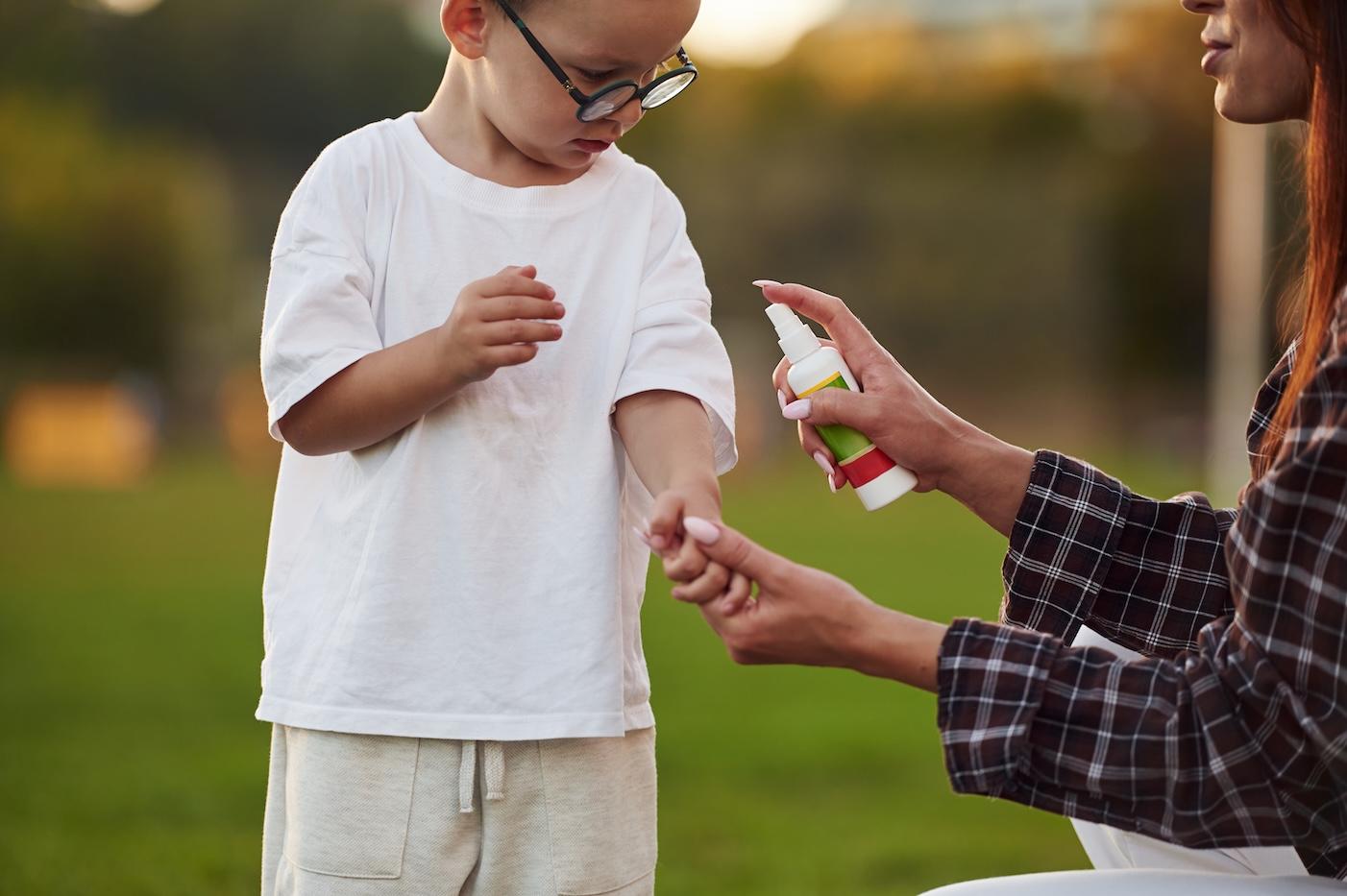
Nothing ruins a summer evening on the porch like a swarm of mosquitoes (not to mention the itchy red bites that follow!). And bug bites are more than an annoyance, with mosquitoes and ticks carrying serious diseases in some parts of the country—which has been on the rise as the climate has changed. That’s where a little know-how about insect repellent can go a long way toward keeping your family both comfortable and protected. Insect repellents can help reduce the incidence of diseases such as West Nile virus, Lyme disease, malaria, and Zika, and when used properly, they safely help protect children from insect bites and the diseases they may carry. Here’s what parents need to know.
How to Pick the Right Insect Repellent
Repellents work by keeping bugs away rather than killing them, and that they only work on biting insects—mosquitoes, ticks, fleas, chiggers, and biting flies—not stinging insects like bees, hornets, and wasps. But not all repellents are created equal, and the ingredient list matters more than the marketing.
DEET
Products containing DEET are the most effective mosquito repellents currently available, and DEET also works well against a variety of other pests, including ticks. The concentration affects how long it lasts: 10% DEET protects for about 2 hours, while 30% protects for about 5 hours. For children, the American Academy of Pediatrics (AAP) recommends products with no more than 30% DEET. Reports of adverse effects from DEET are rare, and when used appropriately, it doesn't present a health risk.
Picaridin and Other EPA-Registered Ingredients
Picaridin is also deemed safe and effective by the US Environmental Protection Agency, along with IR3535 and 2-undecanone. The Centers for Disease Control & Prevention (CDC) recommends using EPA-registered insect repellents, which are proven safe and effective when used as directed, even for people who are pregnant or breastfeeding. You can use the EPA's search tool to find a product that fits your family's needs.
"Natural" Repellents
Common natural ingredients like citronella, geranium, peppermint, and soybean oil are considered safe, but they haven't been approved for effectiveness by the EPA. If you're in an area with a real risk of tick- or mosquito-borne illness—or traveling somewhere with high malaria risk—stick with DEET, picaridin, or another EPA-approved product instead.
A Note on Age…
Oil of lemon eucalyptus (OLE) and para-menthane-diol (PMD) are effective, but they should not be used on children under age 3. The AAP does not recommend insect repellent at all for babies younger than 2 months old, and CDC guidance allows DEET starting at 2 months. For infants younger than that, protective clothing and mosquito netting are the way to go.
How to Apply Repellent Safely
A few application tips make a real difference in both safety and effectiveness:
- Choose sticks, lotions, or unpressurized sprays, and avoid products that combine repellent with sunscreen—sunscreen typically needs reapplying more often than repellent does.
- If you're using a separate sunscreen, apply sunscreen first and repellent second, and apply DEET only once a day.
- Only apply repellent to exposed skin and the outside of clothing—never underneath clothing.
- Use just enough to cover exposed skin and clothing. More product doesn't mean more protection!
- Keep all repellent products out of young children's reach, and help younger kids apply it rather than letting them do it alone. Supervise older kids who are applying it themselves.
- Never spray repellent directly onto a child's face. Spray a little onto your hands first, then rub it on.
- Avoid the eyes, mouth, cuts, wounds, and irritated skin, and use sparingly around the ears.
- Avoid applying repellent to a child's hands, since little ones tend to put their hands in their mouths and eyes.
- Apply spray repellents outdoors or in open areas to avoid inhaling them.
- Once you're back inside, wash your child's skin with soap and water, and wash their clothing before it's worn again.
Since exposure to insect-borne illness has to be weighed against the possibility of absorbing chemicals through the skin, parents of newborns and premature infants should be especially cautious about applying DEET or other chemicals to their baby's skin. When in doubt, check with your healthcare provider.
Protecting Babies Too Young for Repellent
For infants under 2 months old—or anytime you'd rather skip the chemicals altogether—physical barriers can get the job done. Dress your baby in clothing that covers their arms and legs, and cover strollers and baby carriers with mosquito netting. A fine-mesh net over the stroller or bassinet, like the Shoo Mosquito Net, is a simple, chemical-free way to keep mosquitoes, flies, and other pests off your little one while they snooze.
What to Know About Ticks
Ticks bring their own set of precautions. If children have been playing outdoors in a tick-prone area, check their skin at the end of the day and safely remove any ticks you find. Permethrin is the most effective repellent against ticks, but it should never go directly on skin—only on clothing and gear.
Elsewhere around the yard, a little maintenance helps, too: eliminating standing water, pruning overhanging branches, keeping the lawn at a reasonable height, and clearing debris can all reduce tick and mosquito habitat. Using window and door screens, and running the air conditioning when you can, helps keep mosquitoes from getting inside in the first place.
What to Do If Your Child Has a Reaction
Reactions to insect repellent are uncommon, but if one happens, stop using the product right away and wash your child's skin with soap and water. Contact Poison Help at 1-800-222-1222 (or online at webpoisoncontrol.org), or reach out to your child's doctor, and bring the repellent container with you if you need medical care. Call 911 if there's a serious reaction, like trouble breathing or a seizure.
The Bottom Line
Insect repellent, used correctly, is one of the simplest ways to keep your family comfortable and protected all summer long. Stick to EPA-registered products, follow the age and concentration guidelines for kids, apply it the right way, and lean on clothing and netting for babies who are too young for repellent. A few smart habits now can save you—and your child—a lot of itching later.
More Summer Safety Tips:
- Use Shoo to Keep Your Baby Bug-Bite-Free
- Smart Sunscreen Advice for Babies and Kids
- Keep Kids Safe at the Beach
- Water Safety Rules for Kids and Parents
***
REFERENCES- American Academy of Pediatrics: Insect Repellents
- Centers for Disease Control and Prevention: Preventing Mosquito Bites
- US Environmental Protection Agency: Find the Repellent that is Right for You
- National Pesticide Information Center: Insect Repellents Fact Sheet
- US Environmental Protection Agency: Using Insect Repellents Safely and Effectively
Disclaimer: The information on our site is NOT medical advice for any specific person or condition. It is only meant as general information. If you have any medical questions and concerns about your child or yourself, please contact your health provider.



SHARE THIS ARTICLE