PARENTS
10 Science-Backed Ways to Build Your Village
Find your parent peeps with these evidenced-based tips.

Written by
Happiest Baby Staff

"It takes a village" might be the most-repeated phrase in parenting…and one of the most frustrating. Because what if you don't have one? Maybe your family lives three time zones away. Maybe you're the first in your friend group to have a baby. Maybe you have people, but somehow still feel like you're doing this alone at 3am.
You're far from the only one. In a 2021 survey cited by the U.S. Surgeon General's 2024 advisory on parental mental health, about 65% of parents and guardians reported feeling lonely, compared to 55% of non-parents. Among single parents, that number jumped to 77%.
But you’re not destined to live on this island! Researchers who study friendship, connection, and helping behavior have uncovered some surprisingly practical ways to build community faster—and with less awkwardness—than you might think. Here's how to use them.
Why is it so hard to find your village?
Modern parenting is asking today’s moms and dads to do something humans were never designed to do: Raise a baby with only one or two adults on deck. "The biggest lie that new parents believe these days is that it's normal to go it alone," says Dr. Harvey Karp, pediatrician and author of The Happiest Baby on the Block. "In the past, it was typical to have five or more people helping you."
The other part is that the new-parent season makes connection harder right when you need it most. You're sleep-deprived, your schedule revolves around naps and feeds, and many of those reliable pre-baby social routines (happy hours, work lunches, weekend plans) may have vanished. The Surgeon General's advisory notes that the early childhood years bring stress related to sleep disturbances and adjusting to new parental roles—and that social isolation and lack of social support can heighten that stress.
Your village is smaller (and bigger) than you think.
When you picture "a village," you might imagine dozens of aunties, neighbors, and friends passing your baby around. The reality—at least according to anthropologists—is more manageable.
A 2024 study in Developmental Psychology followed 18 young children among the Mbendjele BaYaka, a hunter-gatherer community in the Republic of Congo, to see how childcare was shared. (Humans lived as hunter-gatherers for most of our evolutionary history, so these communities offer clues about the kind of support parents may be wired to expect.) Researchers found that caregivers other than the mother provided 40% to 50% of children's care. Kids were typically near about 14 caregivers a day…but more than 90% of the hands-on, non-maternal care came from just four people.
This suggests that a thriving village has two layers:
- An inner circle: Three or four people you can call to hold the baby, drop off dinner, or talk you through a rough night.
- An outer ring: A wider network of friendly faces—neighbors, other parents, the regulars at your coffee shop—who make daily life feel less isolating.
You don't need to build both overnight. But knowing the goal is "a few close helpers plus a friendly outer ring" (not "a huge squad") can make the whole project feel a lot more doable.
Science-Backed Ways to Build Your Village
Choose repetition over novelty.
It's tempting to try a different baby class every week in hopes of meeting "your people." But friendship science suggests you'll get further by showing up to the same place, over and over.
In a study published in the Journal of Social and Personal Relationships, researchers estimated that it takes roughly 40 to 60 hours together to go from acquaintance to casual friend, 80 to 100 hours to become friends, and more than 200 hours to become good friends. Just as important: Hours spent hanging out by choice predicted closeness, while time spent together at work or school did not.
A one-off class gives you maybe an hour with any given person. A standing weekly 90-minute stroller walk with the same crew? That adds up to about 40 hours in 6 months—right in casual-friend territory.
Try this:
Pick one recurring thing and commit to it for a season: the same library storytime, the same Saturday farmers' market, the same park bench at the same time.
When you meet someone you like, suggest a second, lower-pressure hang outside of the original setting. ("Want to grab coffee after class next week?") Choosing to spend time together outside of a structured activity is a classic friendship turning point.
Skip the small talk sooner than feels natural.
Every new parent knows the script: How old? What's their name? How are they sleeping? It's a fine place to start…but not a great place to stay.
Certain kinds of everyday talk—catching up on each other's lives, joking around, and having meaningful conversations—have been shown to predict friendships growing closer over time, even beyond the number of hours spent together. Small talk, on the other hand, was linked to friendships becoming less close over time.
Try this:
- Follow up on something specific: "How did the four-month shots go?" tells someone you were listening.
- Share one truthful thing: "Honestly, this week was rough" invites the other person to be real, too.
- Laugh about the absurd stuff: The time you put the diaper on backward counts as bonding material.
Assume they like you.
You finally have a real conversation with another parent at the playground. Then you spend the whole walk home replaying it: Did I talk too much? Was that weird?
There's a name for this: the "liking gap." In a series of studies published in Psychological Science, researchers found that after conversations, people consistently underestimated how much their conversation partners liked them and enjoyed their company. The gap showed up between strangers in a lab, among workshop participants, and among college students getting to know new dormmates—where it lasted for months.
Try this: Treat your self-doubt as a known bias, not a reliable signal. If the conversation felt even pretty good, send the follow-up: "So fun chatting today! Same time next week?"
Send the text you've been drafting in your head.
The friends you had before baby are an underrated village resource—they already know you, which means you may not have to start from zero. Yet many of us hesitate to reach out.
In a 2024 study in Communications Psychology, 90% of participants said they'd lost touch with someone they still cared about. But even when people wanted to reconnect, had the person's contact info, and were given time to write a message, only about a third hit send. The study authors found that people were about as reluctant to message an old friend as they were to talk to a stranger, and many felt a birthday was one of the only "legitimate" reasons to reach out.
Here's why you should send it anyway: Across 13 experiments involving nearly 6,000 participants, researchers found that people consistently underestimate how much others appreciate being contacted—whether through a quick text or a small gift. And the gap was biggest when the message was more surprising or came from someone less close.
Try this:
- Warm up first: In the old-friends study, people who first sent a quick message to a current friend were about two-thirds more likely to then reach out to an old one. So, text your sister, then text your college roommate.
- Keep it simple: "Saw a photo from our trip and thought of you. How are you?" is plenty. You don't need a birthday or a big update.
- Include your new-parent news—or don't: Reconnecting doesn't have to be about the baby.
Ask for help like you mean it.
"Let me know if you need anything!" Many new parents hear this…and almost none take people up on it. Part of the problem is that we assume people won't really want to help.
We're usually wrong. In a series of studies published in the Journal of Personality and Social Psychology, people underestimated by as much as 50% the likelihood that others would agree to a direct request for help. The reason: When we're the one asking, we focus on the cost of saying yes—and forget how uncomfortable it feels to say no.
Another finding worth knowing: Help-seekers in these studies believed that hinting would get them more help than asking outright. In reality, potential helpers said they were much more likely to help when asked point-blank.
Try this:
- Make a "help menu": Keep a running note on your phone or fridge with specific tasks: Walk the dog Tuesday. Pick up groceries. Hold the baby for an hour so I can shower and nap. When someone offers, hand them a real option.
- Be direct and specific: "Could you bring dinner Thursday?" works better than "If you ever have time…"
- Remember the math: People are likely to say yes more often than your anxious brain predicts.
Don’t count out the barista.
Not every member of your village needs to be a close friend. The woman who works the register at your pediatrician's office, the neighbor who always waves, the barista who remembers your order—these "weak ties" matter more than you'd think.
In research published in Personality and Social Psychology Bulletin, people reported greater happiness and a stronger sense of belonging on days when they interacted with more acquaintances than usual. The researchers concluded that even interactions with the more peripheral people in our lives contribute to our well-being.
The Surgeon General's advisory makes a similar point, calling out places like public libraries, faith-based organizations, schools, laundromats, and barbershops as potential "social infrastructure" for parents.
Try this: On days you can't manage a real get-together, aim for a few micro-connections instead. Linger an extra minute to chat at the coffee counter. Ask your neighbor about their garden. These moments add up—and some of them may grow into something more.
Befriend a parent who's a few years ahead.
Other new parents are wonderful company, but they're often just as exhausted and overwhelmed as you are. That's why it's worth widening your lens.
The Surgeon General's advisory specifically encourages parents to seek out relationships with parents of children across age groups—people who can share what worked (and what didn't) and remind you that this stage won't last forever.
Try this:
- Look for the "been there" parent: A coworker with a kindergartner, a neighbor whose kids are in middle school, an older relative. Ask them what they wish they'd known during the newborn months.
- Don't overlook older adults without young kids at home: Retirees on your block, members of your faith community, or a friend's parents may be thrilled to be part of your baby's life—and to give you an hour's break.
- Consider a mother's helper: A responsible preteen or teen who plays with your baby or helps with light chores while you're home can give you breathing room. (The BaYaka study found that older children played a major role in caregiving, too.)
Find your niche.
Sometimes you don't need any parent friend, you need someone who gets your specific situation. Twin parents, NICU parents, single parents, queer and trans parents, and dads often find that general parent groups don't quite fit.
That's where targeted support groups can be a huge help. Postpartum Support International (PSI) offers free online peer support groups for dozens of lived experiences, including groups for dads, single parents, parents of multiples, NICU parents, queer and trans parents, and parents of 1- to 4-year-olds.
Peer support isn't just comforting, it can protect your mental health. In a randomized controlled trial published in BMJ, new moms at high risk for postpartum depression were paired with a trained volunteer mom who had recovered from postpartum depression herself and offered support by phone. At 12 weeks postpartum, 14% of moms who received peer support had significant depressive symptoms, compared to 25% of those who didn't.
Be the one who offers first.
The fastest way to find support is often to give it. The same researcher behind the ask-for-help studies found that people overestimate how likely others are to come to them for help. In other words, the vague "I'm here if you need me" rarely gets used. A specific offer does.
Try this:
- Text the parent from storytime: "I'm doing a Target run—need anything?"
- Offer a babysitting swap: "I'll watch your little one Saturday morning if you'll take mine next week."
- Start a group text for your street or building's new parents: Someone has to go first…and people are likely to appreciate it more than you think.
Consider unconventional village additions.
Historically, a lot of village support was hands-on help: someone to cook, clean, and hold the baby while you rested. Today, some of that help may come with a price tag—and that's okay. Paid support can free up your limited energy for the relationships that matter most.
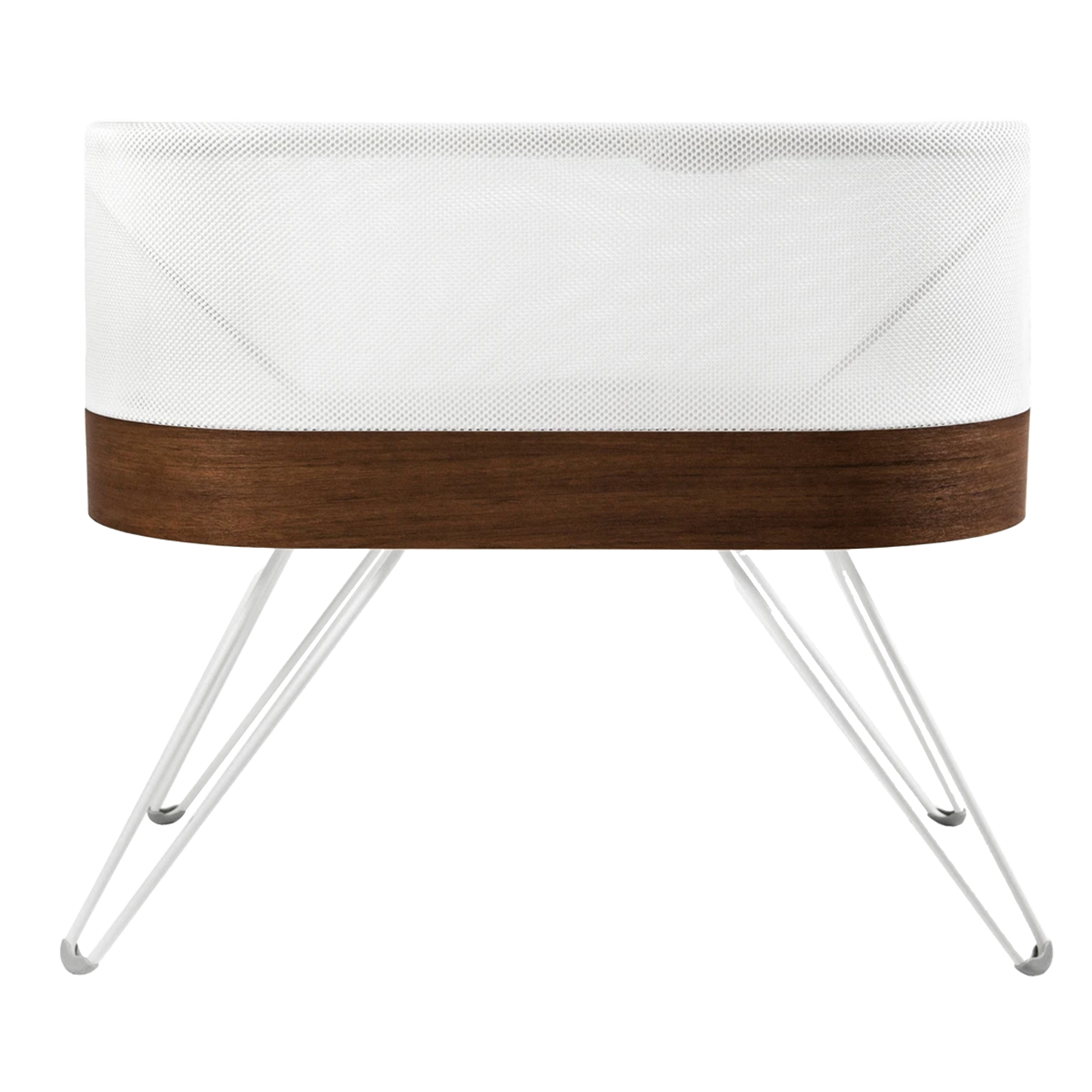
Depending on your budget and needs, your "hired village" might include a postpartum doula, a babysitter or mother's helper, a cleaning service, or a meal delivery subscription. Some families add a responsive bassinet like SNOO to help with overnight soothing. And check your benefits: Some employers now cover support for new parents, including a free SNOO through Happiest Baby's Employee Benefit Program.
When Loneliness Is a Sign of Something More
Feeling lonely during the newborn months is common. But sometimes loneliness overlaps with—or masks—a perinatal mood disorder. Postpartum depressive symptoms affect about 1 in 8 mothers and can show up anytime in the first year after birth. Poor social support is one of several factors that can raise vulnerability.
If you're feeling persistently sad, anxious, numb, or overwhelmed, or if you're having thoughts that scare you, please talk to your healthcare provider. You can also call or text the free, 24/7 National Maternal Mental Health Hotline at 1-833-TLC-MAMA (1-833-852-6262). If you're in crisis, call or text 988 to reach the 988 Suicide & Crisis Lifeline.
The Bottom Line
Building your village as a new parent comes down to a few research-backed moves: Show up to the same place on repeat (friendship takes roughly 40 to 60 hours to spark), skip ahead from small talk to real talk, reach out first (people appreciate it more than you'd guess), and ask for help directly and specifically (people say yes far more often than we expect). Your village doesn't need to be huge—a handful of core helpers plus a wider ring of friendly faces is closer to how humans have always raised babies.
More on Parent Wellbeing:
- 6 Ways to Meet and Make Mom Friends
- How to Prioritize Your Sleep During Parental Leave
- What Is the Mental Load—and What You Can Do About It
- What's a Postpartum Doula?
- The Science Behind Postpartum Depression in Dads
- The Happiest Baby Postpartum Mental Wellness Toolkit
***
REFERENCES- Office of the Surgeon General: Parents Under Pressure: The U.S. Surgeon General's Advisory on the Mental Health & Well-Being of Parents
- Sensitive Responsiveness and Multiple Caregiving Networks Among Mbendjele BaYaka Hunter-Gatherers: Potential Implications for Psychological Development and Well-Being, Developmental Psychology, Mar 2024
- How Many Hours Does It Take to Make a Friend?, Journal of Social and Personal Relationships, Mar 2018
- The Liking Gap in Conversations: Do People Like Us More Than We Think?, Psychological Science, Nov 2018
- People Are Surprisingly Hesitant to Reach Out to Old Friends, Communications Psychology, Apr 2024
- The Surprise of Reaching Out: Appreciated More Than We Think, Journal of Personality and Social Psychology, Apr 2023
- If You Need Help, Just Ask: Underestimating Compliance With Direct Requests for Help, Journal of Personality and Social Psychology, Jul 2008
- Stanford Graduate School of Business: Francis Flynn: If You Want Something, Ask For It
- Social Interactions and Well-Being: The Surprising Power of Weak Ties, Personality and Social Psychology Bulletin, Jul 2014
- Effect of Peer Support on Prevention of Postnatal Depression Among High Risk Women: multisite Randomised Controlled Trial, BMJ, Jan 2009
Disclaimer: The information on our site is NOT medical advice for any specific person or condition. It is only meant as general information. If you have any medical questions and concerns about your child or yourself, please contact your health provider.





SHARE THIS ARTICLE
MOST LOVED
Sleepytime Sidekicks