PARENTS
A Grownup's Guide to Napping
You spend so much time helping your little one sleep—here's how to get better at it yourself.
Written by
Happiest Baby Staff
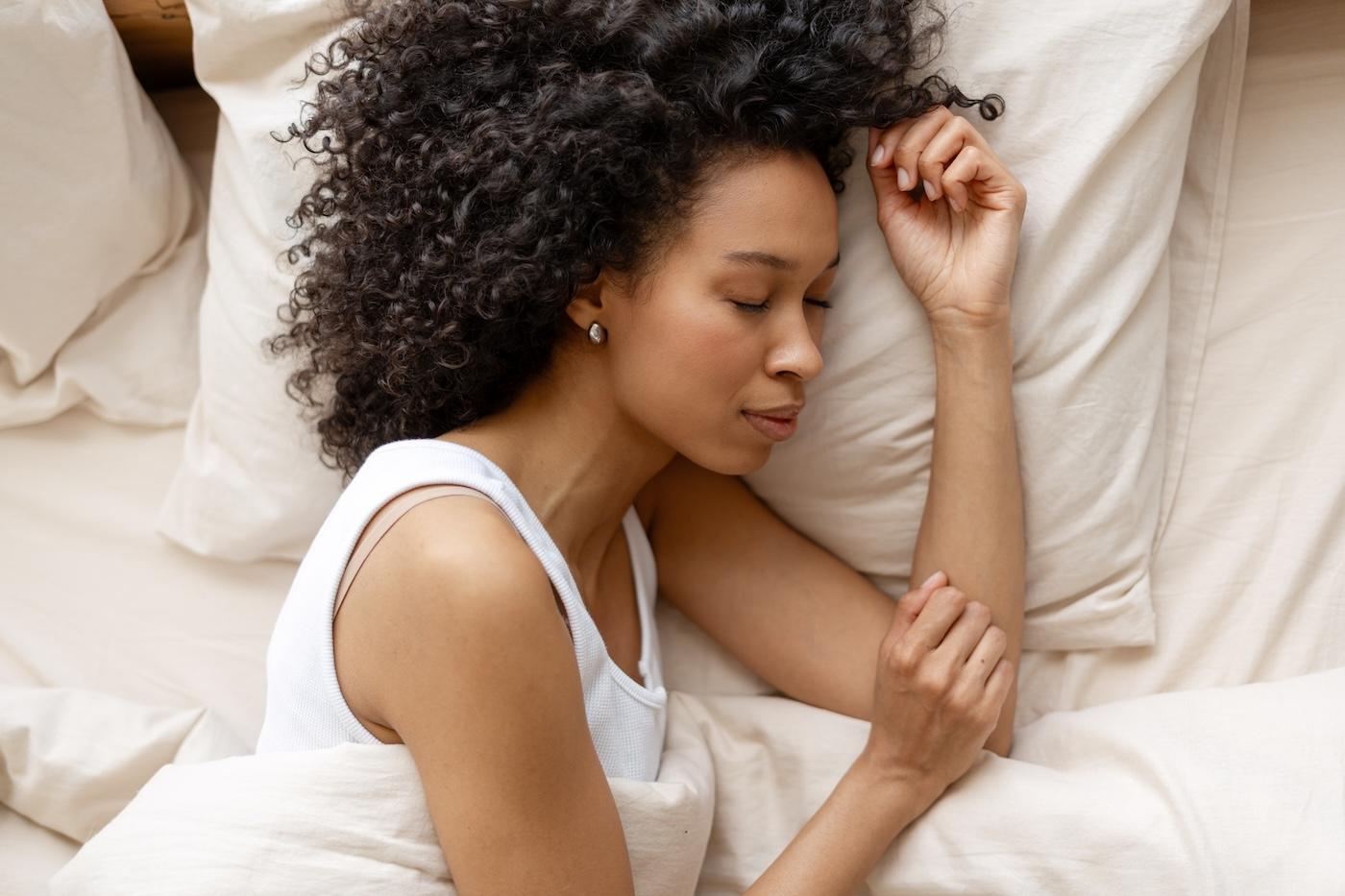
Before you became a parent, you may have thought of napping as a luxury. Now it’s a survival skill! Between nighttime feedings, crack-of-dawn wakeups, and the endless cycle of soothing a tiny human back to sleep, your own rest has probably taken a nosedive. And that feeling of perma-fatigue isn’t in your head! A study published in the journal Sleep found that new parents' sleep doesn't fully recover for up to six years after their baby is born. Six years!
But science says that even a short nap can be a powerful reset button for your brain, your mood, and your ability to function like the capable adult you were before you started scraping by on four hours of broken sleep. So, let's talk about how to make the most of those precious stolen moments of daytime rest.
Ditch the guilt (napping is good for you!).
If you've ever felt guilty about dozing off while your baby naps instead of tackling the dishes, consider this your official permission slip. Napping isn't lazy—it's legitimately good for you.
Napping offers a range of benefits for healthy adults, including improved alertness, better mood, quicker reaction time, and sharper memory. For new parents specifically, those benefits are even more meaningful. Research has shown that poor sleep quality is a significant risk factor for postpartum depression, with one study finding that the odds of depression were more than three times higher in postpartum people with poor sleep compared to those sleeping well.
That means protecting your rest isn't just about feeling less zombie-like—it's genuinely important for your mental health.
It’s okay to keep it short…
When it comes to naps, longer isn’t necessarily better! The CDC's National Institute for Occupational Safety and Health (NIOSH) recommends keeping daytime naps to about 15 to 20 minutes if you're on a regular schedule. At that length, you dip into the lighter stages of sleep—enough to feel refreshed without triggering what sleep experts call "sleep inertia," that groggy, disoriented feeling you get when you wake up from a deep sleep.
Perhaps the most famous example of strategic napping comes from NASA. In a 1995 study of long-haul pilots, researchers found that those who napped for roughly 26 minutes during flight experienced significant improvements in both alertness and performance compared to pilots who didn't nap. The pilots who rested also had far fewer microsleep episodes—those brief, involuntary lapses in consciousness—during the most critical phases of flight.
So, if 26 minutes is good enough for someone literally flying a plane, it's probably good enough for you.
But if you have more time, aim for a full 90 minutes.
A 20-minute power nap is great for a quick recharge—but what if the stars align and you have a longer window? A 2023 study published in Sleep Advances compared 10-minute, 30-minute, and 60-minute naps and found that all three improved alertness and mood. But only the 30-minute nap significantly boosted memory—and it came with minimal grogginess afterward.
Longer naps (around 60 minutes) can get you into deeper stages of sleep, which has its own benefits for learning and memory. But the trade-off is that you're more likely to wake up feeling foggy and disoriented. As the Johns Hopkins Sleep Disorders Center puts it, that's because waking from deeper sleep stages makes your brain slower to "come back online."
If you're seriously sleep-deprived (and let's face it, many new parents are), a full 90-minute nap allows you to complete an entire sleep cycle—cycling from light sleep through deep sleep and back again—which means you're more likely to wake up feeling restored rather than groggy. But for most everyday situations, 20 to 30 minutes is the sweet spot.
Nap in the early afternoon, if you can.
Your body naturally dips in alertness in the early afternoon, usually somewhere between 1pm and 3pm. Sleep scientists call this the "post-lunch dip," and it happens whether or not you've actually eaten lunch—it's part of your circadian rhythm.
Though an early afternoon snooze can give you a boost, avoid naps after 3pm, which can make it harder to fall asleep at bedtime. Of course, when you're a new parent, you may just need to nap when the opportunity presents itself—and that's okay. An imperfectly timed nap still beats no nap at all.
Consider a coffee nap.
A "coffee nap" (or "caffeine nap") involves drinking a cup of coffee right before lying down for a 20-minute snooze. The idea is that caffeine takes about 20 to 30 minutes to kick in, so by the time you wake up, you get the combined benefits of both the nap and the caffeine.
A study published in Clinical Neurophysiology found that combining caffeine with a short nap was more effective at reducing sleepiness and improving performance than either a nap or caffeine alone. Other research on sleepy drivers found similar results—caffeine plus a short nap significantly reduced drowsiness compared to a placebo.
And if you’re breastfeeding, you can rest easy knowing that moderate caffeine intake is unlikely to affect your baby. (Learn more about caffeine and breastfeeding!)
Set yourself up for nap success.
While you can't exactly conjure up a spa-like sleep environment when there's a baby monitor on your nightstand and a pile of unfolded laundry on the bed, a few small tweaks can make even a short nap feel more restorative.
Block light. Light exposure is one of the most important factors when it comes to sleep—so for a midday nap, your sleep mask may just be your new BFF. (More on why darkness is your sleepytime friend!)
- Keep the room cool. The ideal sleeping temp is chillier than you may think! Experts recommend setting the thermostat between 60°F and 65°F.
- Use white noise. It’s not just for babies! White noise can mask disturbances like noisy cars driving by or a TV blaring in the other room.
- Set an alarm. Set it for 25 to 30 minutes to give yourself a few minutes to fall asleep plus 20-ish minutes of actual nap time. Without an alarm, a quick catnap can turn into a two-hour deep-sleep marathon—and the grogginess that follows won't do you any favors.
- Give yourself a buffer. Allow about 20 minutes after waking to shake off any residual grogginess before jumping into anything demanding. Splash some cold water on your face, step outside for a minute of fresh air, or just sit quietly before diving back into parent mode.
Don't stress if you can't doze off.
Here's a secret that sleep researchers know and most parents don't: You don't actually have to fall asleep for a nap to help. Even resting quietly with your eyes closed can reduce sleepiness and provide some restorative benefit. So if you spend your entire 20-minute nap window just lying still in a dark room without ever truly dozing off, that time is still well spent.
That said, if you find yourself constantly unable to sleep despite being exhausted, or if you're relying on naps just to get through every single day, it's worth mentioning to your healthcare provider. Persistent daytime sleepiness can sometimes signal an underlying issue like sleep apnea or another sleep disorder.
Don't worry about napping wrecking your nighttime sleep.
For most adults, a short nap in the early afternoon won't interfere with nighttime sleep. In fact, a 2023 study in Sleep Advances noted that research in young and middle-aged adults has found that daytime napping—even naps up to 60 minutes—generally does not impair overnight sleep.
The key is keeping naps short (under 30 minutes for most people) and timing them before 3pm. If you do notice that napping is making it harder to fall asleep at night, cut back on nap length or skip the nap and focusing on improving your nighttime sleep routine instead.
The Bottom Line on Napping for Parents
Parenting is the hardest job you'll ever love—and it's exponentially harder when you're running on empty. Napping won't erase the sleep debt that comes with caring for a little one, but it can take the edge off, boost your mood, sharpen your focus, and help protect your mental health during one of the most demanding (and rewarding) chapters of your life.
So, the next time your baby drifts off and you're tempted to "just quickly" empty the dishwasher or fold that mountain of tiny onesies...don't. Lie down. Close your eyes. Set a timer for 25 minutes. The dishes will still be there when you wake up. And you'll be a little more rested, a little more patient, and a whole lot more ready for whatever comes next.
More on Caring for Yourself:
- How to Prioritize Your Sleep During Parental Leave
- 25 Ways Busy Parents Can Squeeze in Self-Care
- How to Set Boundaries at Work as a New Parent
- Happiest Baby’s Postpartum Mental Wellness Toolkit
- How to Get a Free SNOO at Work
Disclaimer: The information on our site is NOT medical advice for any specific person or condition. It is only meant as general information. If you have any medical questions and concerns about your child or yourself, please contact your health provider.
SHARE THIS ARTICLE
MOST LOVED
Sleepytime Sidekicks