PARENTS
Meet the Founder Who Believes a Mom's Nourishment Is as Important as a Baby's
Mandela Cocores is turning a postpartum gap into a lifeline…one home-cooked meal at a time.

Written by
Happiest Baby Staff
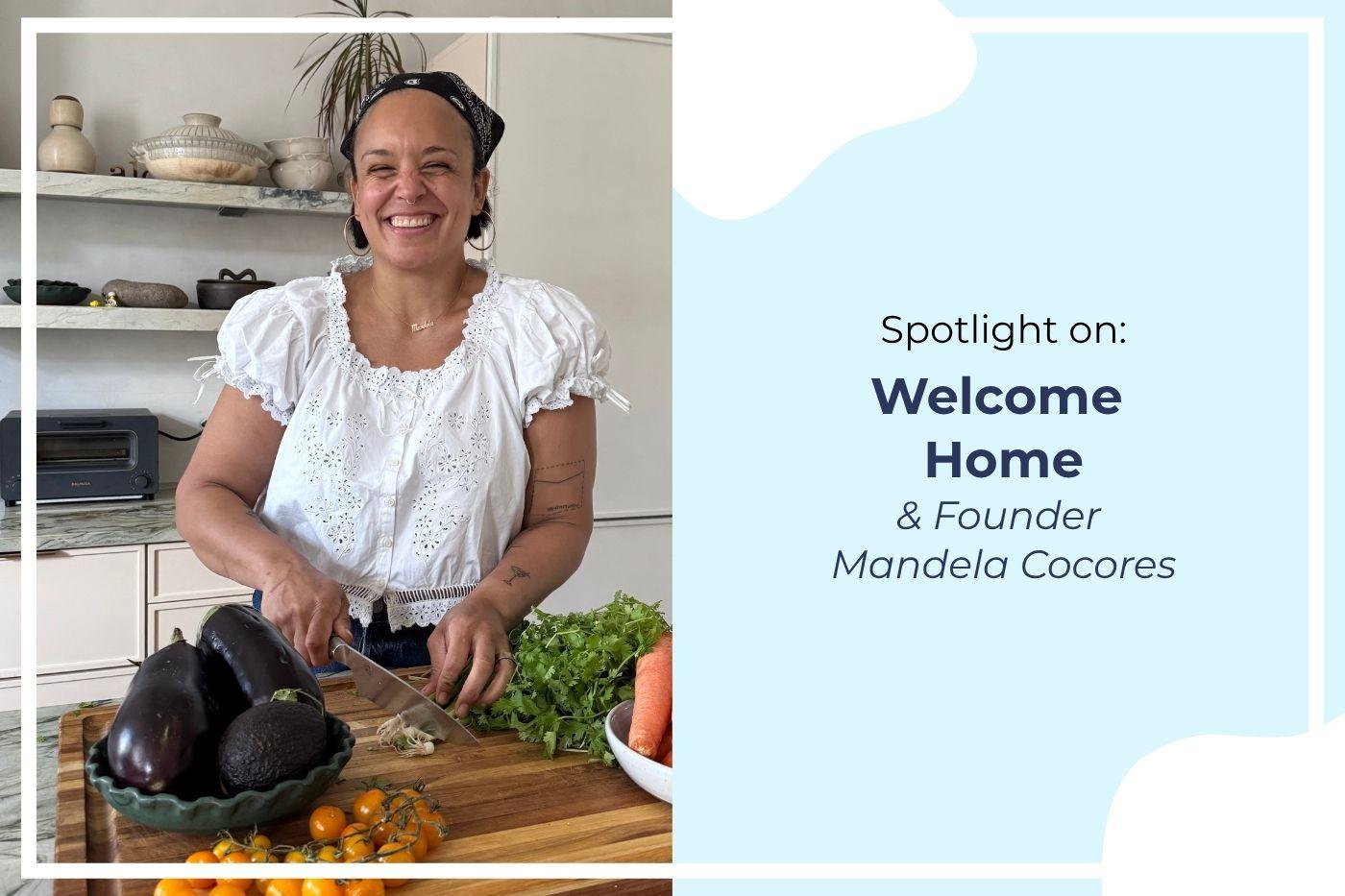
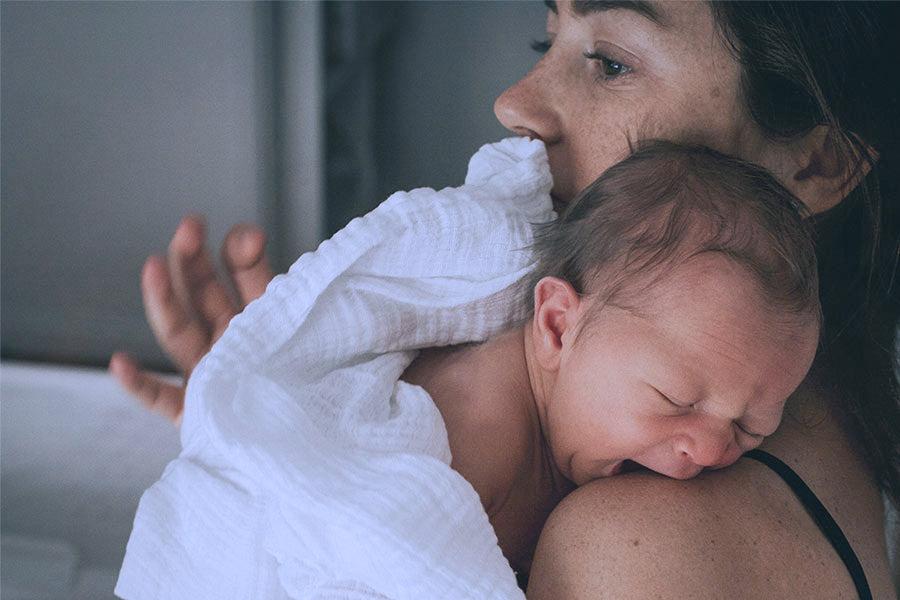
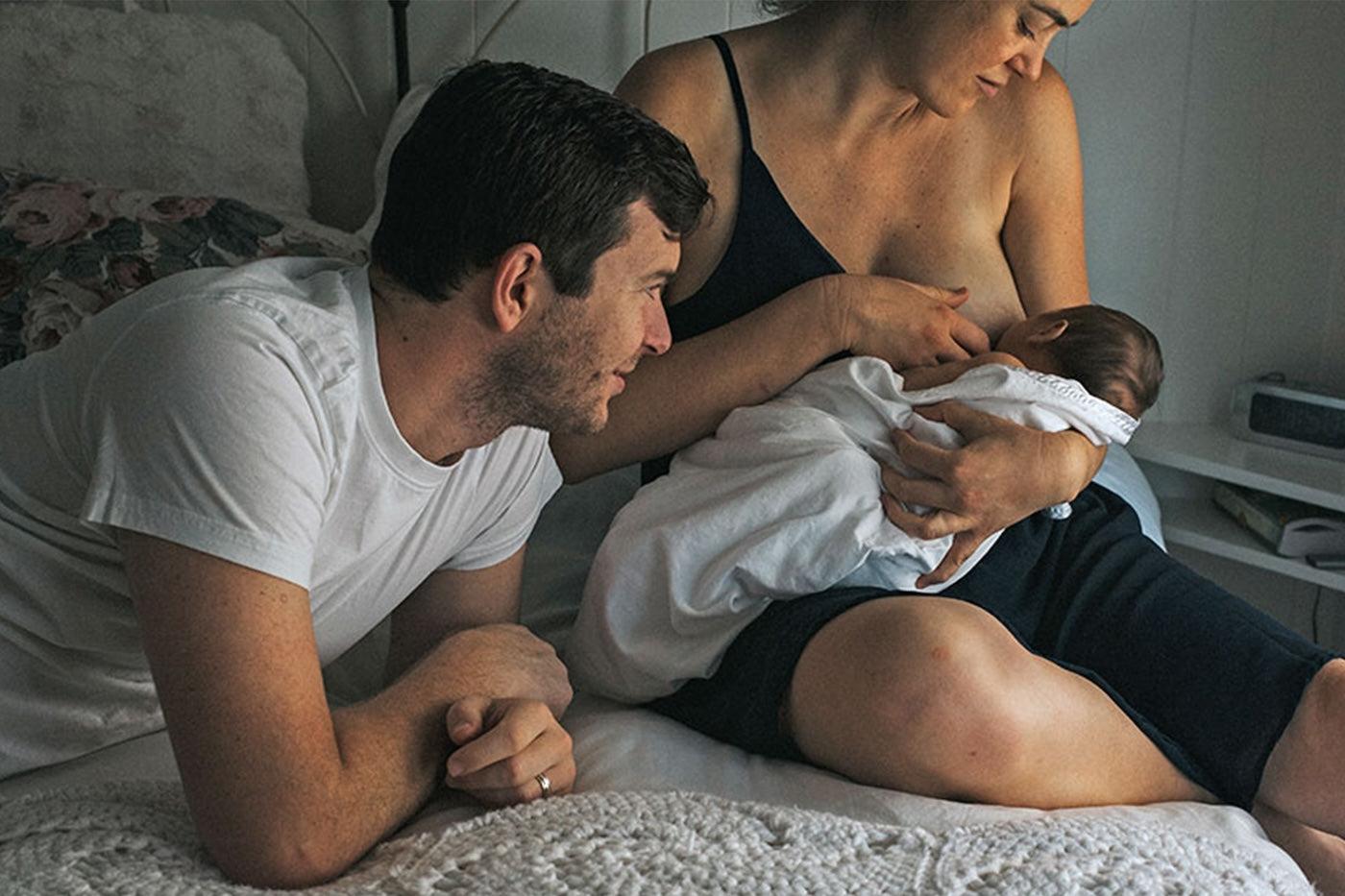
When Mandela Cocores was weeks away from delivering her second son, she went looking for something that didn't exist: a meal delivery service that could nourish a postpartum mom and feed the rest of the family. So, she built it herself! Welcome Home—her Brooklyn-based meal delivery service—offers weekly deliveries of gluten-free, dairy-free, nutritionist-approved meals designed to support postpartum recovery without sacrificing the comfort of real, home-cooked food. We caught up with Mandela to talk about the fourth trimester, why she puts herself first, and what she wishes someone had told her before she left the hospital.
Tell us the origin story. You were weeks away from your second birth when the idea for Welcome Home sparked—what were you feeling in that moment that made you think, "I need to build this myself"?
With my first son, Rye, I felt so, so strong during pregnancy. I biked to work every single day, right up until my last check-in. But the second I gave birth, it all vanished. I didn’t have time to bike, I was eating whatever was in arm's reach, and I felt depleted—inside and out.
When I got pregnant with Lennon, I refused to feel that way again. I dove into deep research on postpartum nutrition—not to lose weight, but to stop feeling so crummy and sluggish. I was shocked to find there was nothing on the market that supported actual recovery while also feeding a family. I needed to heal, but my husband and my toddler needed to eat, too. A few weeks before my due date, a friend offered to drop off meals, and it was a literal lifeline. That was the 'aha' moment: every mother deserves that lifeline, but it shouldn't depend on luck. It should be a standard of care.
Your philosophy is that "a mother needs to be taken care of just as much as a newborn does." Where do you think that belief comes from, and why do you think our culture has been so slow to embrace it?
I’ve watched so many women lose themselves the moment they become partners or mothers. We’re socialized to nurture everyone else first, but I live by a different hierarchy: I am number one, my husband is number two, and our children are number three. That sounds radical to some, but if I’m not well, the house isn't well. If my husband and I aren't thriving, we can't parent effectively.
I think our culture is slow to embrace this because we are constantly battling outside pressure and shame—often from the very 'experts' who are supposed to be helping us. My own experience started in the doctor's office. I felt so much shame from lactation consultants for not breastfeeding Rye, and that kind of judgment makes it impossible for a woman to put her own mental health first. We’ve built a culture that prioritizes the 'output' of motherhood—the breastfeeding, the milestones, the perfect child—over the actual human being doing the work. When the system shames you for choosing your own well-being, it’s no wonder mothers feel like they have to disappear.
Welcome Home meals are all approved by a postpartum nutritionist and designed around what a recovering body needs. Can you walk us through what that looks like? What goes into building a meal plan for a new parent?
It’s a labor of love. I spend hours workshopping recipes to ensure they hit every guideline set by our postpartum nutritionist. The real challenge—and the fun part—is making everything gluten-free, dairy-free, and soy-free without sacrificing the 'soul' of the food. These restrictions are vital for many recovering bodies and sensitive newborns, but 'free-of' shouldn't mean 'boring.' We focus on nutrient density and deep flavor so that the food feels like a satisfying, home-cooked meal, and not something bland or clinical.
You've said food is the "language we all speak" when it comes to showing care. How did food play a role in your own postpartum experiences?
Food was my first bridge back to feeling like a human being. I remember the insane joy of that first 'forbidden' sushi roll or a massive deli sandwich after both my boys were born. But more than the indulgence, it was about the ritual. The first time I was able to stand in my kitchen and make simple eggs and toast for my family, I cried—it felt like such a massive win to provide for them again. In those early weeks, when you feel like your body isn't your own, a warm, nourishing meal is the most basic way to say, 'I see you, and I’m taking care of you.' It’s a hug you can eat."
Welcome Home serves the whole family, not just the birthing parent. How do you think about supporting partners and older siblings in those early weeks?
I remember the heartbreak of Rye looking at me, wondering why the home-cooked meals had stopped when Lenny came home. The guilt was crushing. That’s why Welcome Home isn't just for one; it’s a solution for the whole family. When I hear from a mom that her picky 2-year-old is obsessed with our chicken dish, I know I’ve done my job. We aren't just feeding a mom; we’re removing 'What’s for dinner?' from the family’s list of anxieties.
You're a mom of two boys, a founder, and you're running all of this out of Brooklyn. What does your own nourishment look like on a hard day?
Honestly? An ice-cold martini, an episode of Housewives, and—if I have an ounce of energy left—a solo dance party in my kitchen. I try to find the joy where I can.
What's one thing you wish someone had told you before you came home from the hospital with your first baby?
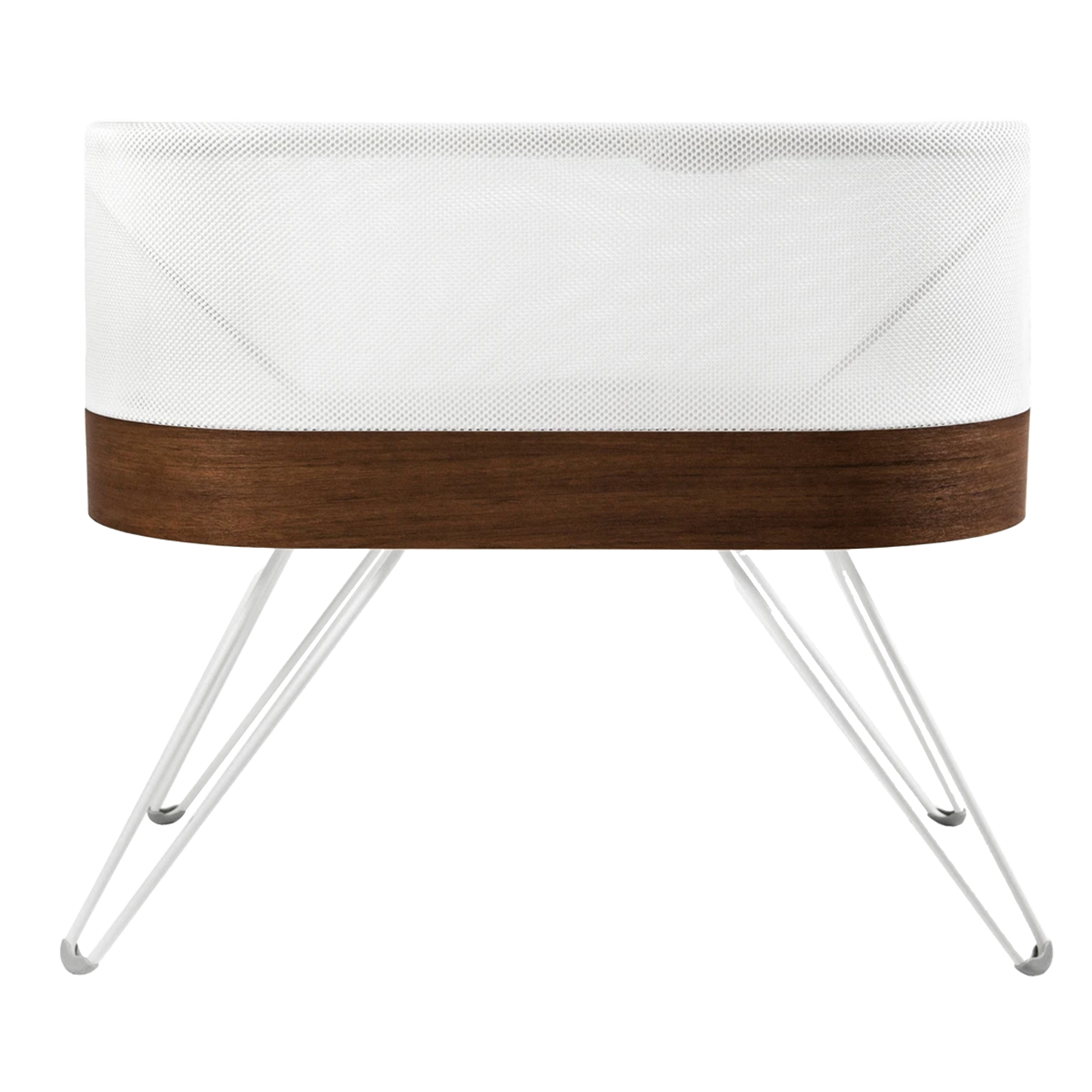
Do what works for your family and ignore the noise. With my first, Rye, I had paralyzing anxiety about sleep. I was terrified he would cry, and my husband was terrified of the worst-case scenarios. We ended up co-sleeping out of necessity, but the 'experts' made us feel so much guilt about it that the anxiety stayed. By the time we had Lennon, we got the SNOO, and that bedtime dread finally evaporated. You have to do whatever you need to do to survive and not feel guilt or shame around it.
For a parent who's pregnant right now and reading this, what's the one thing you want them to walk away knowing about taking care of themselves postpartum?
Asking for help is a superpower, not a failure. We think 'doing it all' is the goal, but your baby doesn't need a martyr; they need a happy, regulated mother. Go on the walk. See the friend. Go on a date with your husband. The baby is going to be okay—in fact, the baby will thrive because you are thriving. You aren't just raising a child; you’re sustaining the person who raises that child. Don't let yourself go hungry.
Disclaimer: The information on our site is NOT medical advice for any specific person or condition. It is only meant as general information. If you have any medical questions and concerns about your child or yourself, please contact your health provider.
SHARE THIS ARTICLE
MOST LOVED
Sleepytime Sidekicks