BABY
What to Do When Your Baby Refuses the Bottle
Bottle refusal doesn't have to derail your feeding routine.

Written by
Happiest Baby Staff
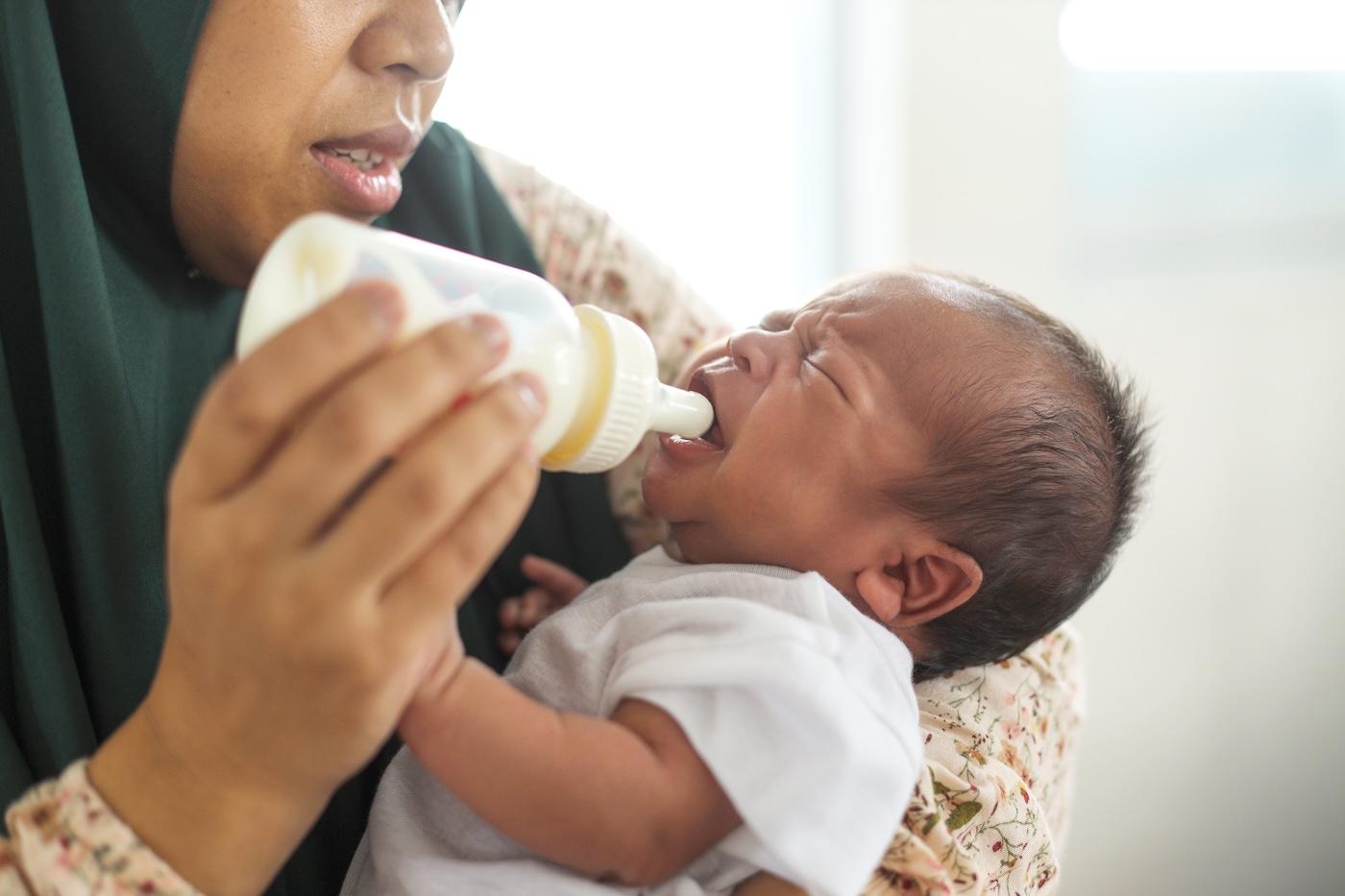
You've got the bottle warmed, the milk ready, and your baby is giving every hunger cue in the book. But the moment that bottle nipple gets close? Total meltdown.
Bottle refusal is one of the most common feeding frustrations parents face, whether you're breastfeeding and trying to introduce a bottle for the first time or transitioning to formula. The good news is that most bottle refusal is temporary, and there are plenty of practical strategies to help your little one come around.
Why do babies refuse the bottle?
Before you can fix the problem, it helps to understand why your baby might be pushing that bottle away. There's rarely one single reason—it's often a combination of factors. Babies can be particular about their feeding method, and it may take some patience and experimentation to find an approach that works, according to the American Academy of Pediatrics (AAP).
Some of the most common reasons for bottle refusal include:
They prefer the breast. If your baby has been exclusively breastfed, the breast and bottle are two very different experiences. The nipple shape, texture, flow rate, and even the posture your baby uses during feeding are all different—and for someone so new to the world, that can feel overwhelming.
The timing of bottle introduction wasn't quite right. Babies are born with an automatic sucking reflex, but around 2 to 3 months that reflex becomes voluntary. If a bottle wasn't introduced before this shift, some babies develop a strong preference for the breast and resist the change.
Something feels off physically. Pain or discomfort from conditions like reflux, oral thrush, an ear infection, or teething can make feeding unpleasant—and a baby who associates eating with discomfort will naturally pull away.
The temperature or flow is wrong. Some babies are picky about whether their milk is warm, room temperature, or cool. Others may get frustrated by a flow that's too slow—or overwhelmed by a flow that's too fast.
They're just not hungry. This one sounds obvious, but it's easy to overlook. If you're offering a bottle too soon after a breastfeeding session or at an off time in your baby's routine, they may simply not be ready to eat.
When should you introduce a bottle to a breastfed baby?
The AAP recommends waiting until breastfeeding is well established—usually around 3 to 4 weeks—before offering a bottle. Starting too early can interfere with your milk supply and your baby's latch, but waiting too long may mean your baby becomes resistant to the new feeding method. That sweet spot between 3 and 6 weeks is generally ideal for giving your baby a chance to get comfortable with both breast and bottle.
Can bottle refusal happen suddenly?
Yes! Some babies take a bottle happily for weeks or even months—and then suddenly want nothing to do with it. This can happen for a number of reasons: teething pain, an illness, a developmental leap, or even just a change in routine. A growth spurt or a new environment (like starting daycare) can also disrupt previously smooth bottle feeding. The key is to stay calm, be patient, and try not to force it.
What are signs my baby is refusing the bottle?
Bottle refusal can look different from baby to baby. Some little ones will cry or arch their backs the moment the bottle comes near. Others might latch on but then let the milk dribble out without actually swallowing. You might also notice your baby chewing or playing with the nipple, turning their head away, or pushing the bottle out with their tongue. All of these are signals that something about the bottle experience isn't working for them.
How can I get my baby to take a bottle?
Here's where the troubleshooting begins! These evidence-based strategies can help ease your baby into accepting the bottle:
Have someone else offer the bottle. The AAP suggests that another caregiver offer the bottle in a location away from where your baby typically breastfeeds. If your baby can smell the nursing parent nearby, they may hold out for the breast. Try having a partner, grandparent, or caregiver step in while you leave the room—or even the house.
Try a calm, low-stimulation environment. Dim the lights, minimize noise, and gently sway or rock your baby for a few minutes before offering the bottle. A relaxed baby is much more likely to try something new.
Experiment with nipple shapes and flow rates. Every baby is different—some prefer a wider, breast-like nipple, while others do better with a narrower shape. If your baby uses a pacifier, try a bottle nipple with a similar feel. Start with a slow-flow nipple and adjust from there.
Adjust the milk temperature. Try offering the milk at different temperatures—body temperature, slightly warm, or even room temperature—to see what your baby prefers. You can also warm the bottle nipple under warm water before offering it, which can make it feel more inviting.
Don't wait until your baby is starving. It's best to offer the bottle when your baby is alert and motivated but not frantically hungry. About an hour or two after a regular feeding tends to be a good time.
Let your baby lead. Rather than pushing the nipple into your baby's mouth, try gently tickling their upper lip with the bottle nipple and waiting for them to open wide and latch on—similar to how they would latch at the breast. This gives your baby a sense of control over the feeding.
Use the familiar scent trick. Wrap the bottle in a shirt or cloth that the nursing parent has worn. That familiar scent can help your baby feel more comfortable with this new feeding method.
Consider a cup or alternative feeding method. Believe it or not, some babies—even very young ones—may prefer drinking from a small open cup or medicine cup rather than a bottle.
What should I avoid when my baby refuses the bottle?
It's just as important to know what not to do. Never force the bottle into your baby's mouth—this can create negative associations with feeding and make the problem worse. If your baby is crying and resisting, stop, comfort them, and try again later. Stop the attempt if your baby becomes frustrated or if more than 10 minutes pass without feeding. It's better to end on a positive note and try again tomorrow than to create a cycle of stress around mealtimes. Also, avoid the common advice to "just let them get hungry enough"—starving a baby into accepting a bottle is not a safe or effective strategy.
When should I call the pediatrician about bottle refusal?
Most bottle refusal is a behavioral preference that resolves with time and patience. But there are some situations where you should check in with your baby's healthcare provider. Call your pediatrician if:
Your baby is refusing all feeding—both breast and bottle.
Your baby isn't producing enough wet diapers (fewer than six in 24 hours for babies older than a week).
Your baby is losing weight or not gaining weight appropriately.
You notice signs of pain during feeding, such as persistent arching, crying, or pulling away—which could indicate reflux or another medical condition.
Your baby has a fever, vomiting, or seems unusually lethargic.
Babies may have gastroesophageal reflux disease (GERD) if symptoms prevent them from feeding well or persist longer than 12 to 14 months. And according to the AAFP, conditions like cow's milk protein allergy can overlap with reflux symptoms, so it's important to have persistent feeding refusal evaluated by a professional.
Is bottle refusal normal?
Bottle refusal is incredibly common and rarely a sign that something is seriously wrong. Your baby isn't being stubborn or trying to make your life difficult—they're simply communicating the only way they know how. With patience, consistency, and a willingness to try a few different approaches, most babies eventually find their groove with bottle feeding. And remember, every feeding—whether from breast, bottle, or cup—is a moment of nourishment and connection with your little one.
Disclaimer: The information on our site is NOT medical advice for any specific person or condition. It is only meant as general information. If you have any medical questions and concerns about your child or yourself, please contact your health provider.





SHARE THIS ARTICLE
MOST LOVED
Sleepytime Sidekicks