BABY
Your Go-To Guide to Baby Spit-Up
Most babies spit up—a lot. Here’s what’s behind all that laundry, plus tips to reduce the mess.

Written by
Happiest Baby Staff
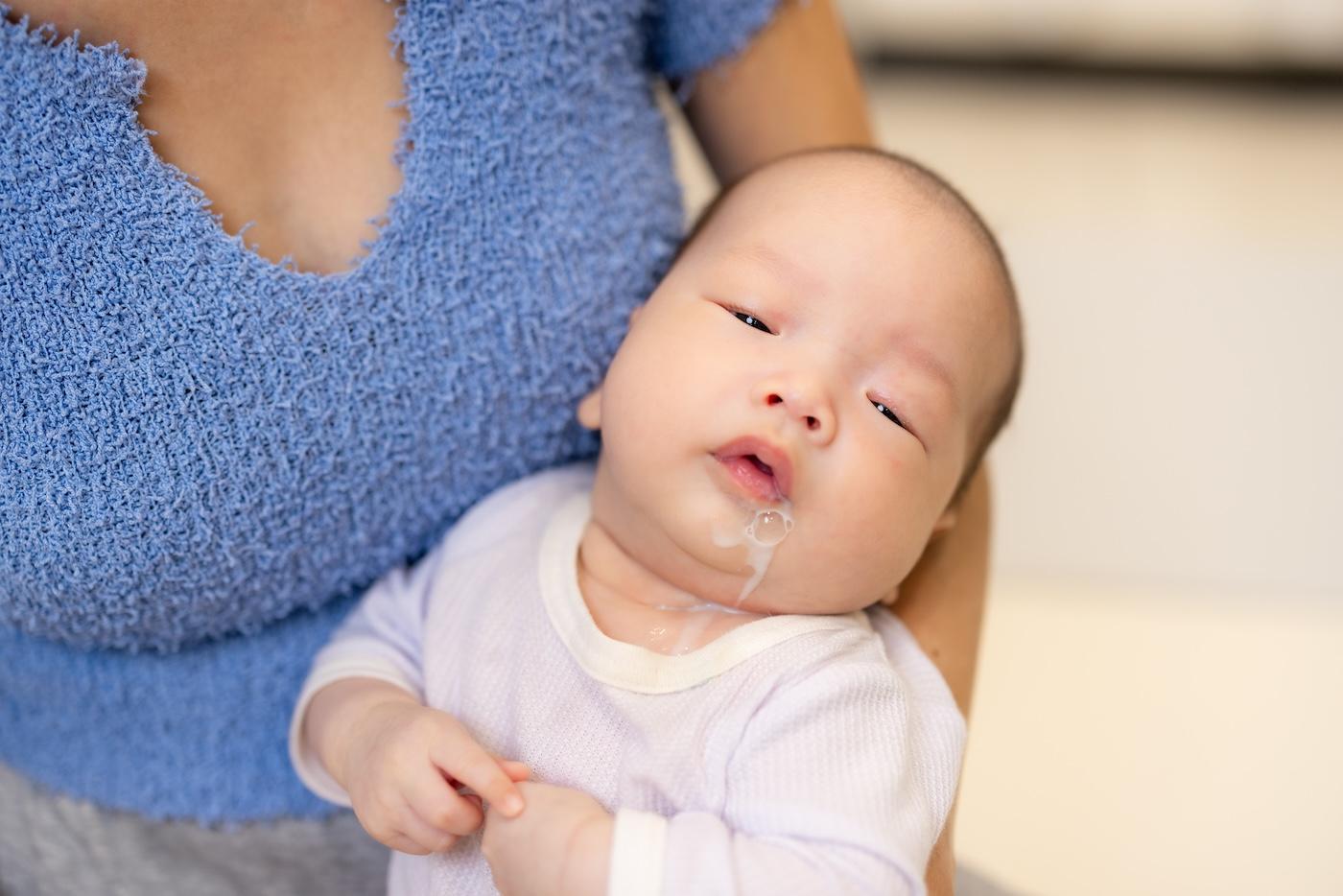
If you’ve ever picked up your freshly fed baby only to be greeted by a warm, milky surprise down your shoulder, welcome to the club. Baby spit-up is a parenting rite of passage!
And for the most part, it’s one that you don’t need to worry about! But if you’re looking for some reading material to pass the time as you wait for your next load of laundry, let’s talk about why your baby is spitting up, when it’s a sign of a problem, and what you can do about it.
Why do babies spit up?
Most of the time, spitting up is completely normal. In fact, gastroesophageal reflux (GER)—the medical term for normal spit-up—is incredibly common in healthy babies. That’s because your baby’s digestive system is still a work in progress.
Between the esophagus (the tube that carries food to the stomach) and the stomach sits a ring of muscle called the lower esophageal sphincter. In adults, this muscle acts like a one-way valve, keeping food down where it belongs. But in babies, this muscle isn’t fully mature yet. So, when your little one’s tummy gets full, some of that milk can easily flow right back up and out. And while some babies spit up more than others, most are perfectly fine.
Several factors make spit-up especially likely in young babies: They spend a lot of time lying down, they eat an all-liquid diet, and their meals are relatively large compared to the size of their stomachs. As your baby grows, spends more time upright, and begins eating solid foods, the spit-up typically slows down. (Patience, parents!)
Baby Spit-Up vs. Vomiting
It can be tricky to tell the two apart, but there is an important distinction. Spitting up is typically a gentle, easy flow of stomach contents out of a baby’s mouth…usually during or right after a feeding. Your baby usually doesn’t seem bothered by it at all. They might even smile through it! Vomiting, on the other hand, is forceful. The stomach contracts and propels its contents out with much more power and volume. A vomiting baby is more likely to seem uncomfortable, fussy, or distressed.
So, if you notice a little dribble of milk after a feeding, that’s totally normal spit-up. But a forceful episode that seems to upset your baby and soaks everything in a two-foot radius should tip you off that your baby is vomiting. And it may warrant a call to your pediatrician, especially if it happens repeatedly.
When is spitting up a sign of a problem?
Pediatricians often refer to normal spitty babies as “happy spitters”—meaning they spit up but are otherwise content, comfortable, and gaining weight just fine. As long as your baby is growing well and seems happy, spit-up is rarely a concern.
However, there are some red flags that your baby’s spitting up could point to something more serious, like gastroesophageal reflux disease (GERD). Contact your baby’s pediatrician if you notice any of the following:
- Your baby isn’t gaining weight or is losing weight
- The spit-up is forceful or projectile
- Your baby seems to be in pain, arching their back, or crying excessively during or after feeds
- You see blood or a greenish color in the spit-up
- Your baby is refusing to eat
- Your baby has fewer wet diapers than usual (which could signal dehydration)
Another condition to have on your radar: pyloric stenosis. This condition affects roughly 1 in 500 babies and involves a thickening of the muscle at the bottom of the stomach. It typically appears between 2 and 8 weeks of age and causes increasingly forceful, projectile vomiting. If your newborn is vomiting with increasing intensity after feeds and seems hungry right after, contact your pediatrician right away.
How to Reduce Baby Spit-Up
You probably can’t eliminate spit-up entirely (sorry!), but there are some tried-and-true strategies that can help minimize it:
- Feed smaller amounts more often. Overfeeding is one of the most common spit-up triggers. A too-full tummy is more likely to send milk back up. Try offering smaller, more frequent feedings instead of larger ones.
- Keep baby upright after feeds. Hold your baby in an upright position for about 20 to 30 minutes after each feeding. Gravity is your friend here! Avoid bouncing, active play, or placing your baby in a car seat or swing right after a meal.
- Burp your baby regularly. Burping during and after feedings helps release trapped air that can push milk back up. (Check out our full guide on how to burp a baby!)
- Check the bottle nipple flow. If you’re bottle-feeding, make sure the nipple isn’t flowing too fast or too slow. A nipple that’s too fast can overwhelm your baby, while one that’s too slow can cause them to gulp extra air.
- Consider your diet (if breastfeeding). In some cases, cow’s milk protein or other foods in a breastfeeding parent’s diet may worsen spit-up. If you suspect a sensitivity, talk to your pediatrician before making dietary changes.
Even if your baby spits up frequently, always place them on their back to sleep. Back-sleeping is the safest position for all babies, including those who spit up.
Tips for Cleaning Up Baby Spit-Up
Spit-up has a way of getting everywhere. On your shirt, the couch, the car seat—you name it. No cloth nor crevice is safe! Here are a few practical tips to make cleanup a little less painful:
- Stock up on burp cloths (and then buy more). Drape a burp cloth over your shoulder every single time you pick up baby after a feed. You’ll thank yourself later.
- Act fast on stains. Breast milk and formula spit-up can stain if left to set. Rinse clothing in cold water as soon as possible, then treat with a gentle stain remover before tossing it in the wash.
- Keep your baby in easy-to-change layers. Bibs and zip-up bodysuits are your best friends during peak spit-up months. Some parents also swear by keeping a waterproof pad underneath baby during tummy time or play.
- Clean upholstery with baking soda. If spit-up lands on a couch cushion or car seat fabric, blot the area, sprinkle baking soda to absorb the odor, let it sit, then vacuum it up. For car seat covers, check the manufacturer’s instructions—many are machine washable.
When do babies stop spitting up?
Take heart: You will see the bottom of your laundry basket again someday! Spitting up typically improves on its own by the time a child is 12 to 14 months old, according to NIDDK. Many babies start spitting up less around 6 to 7 months—right around the time they’re learning to sit up on their own and beginning to eat some solid foods. The combination of a more upright posture, a maturing digestive system, and thicker foods all work together to keep things moving in the right direction.
That said, if your baby is still spitting up frequently after their first birthday, it’s worth mentioning to your pediatrician. Reflux that lingers past 18 months is unusual and may need further evaluation.
The bottom line: Baby spit-up can be messy, frequent, and—in the vast majority of cases—totally harmless. As long as your little one is gaining weight, seems content, and isn’t showing any red flags, you’re most likely dealing with a perfectly normal (if slightly icky) phase of babyhood. Hang in there…and maybe keep an extra shirt in your diaper bag.
More Baby Care Questions—Answered:
- Why Is My Newborn's Skin Peeling?
- Is My Baby's Earwax Normal?
- How Often Do I Need to Sterilize My Baby's Bottles?
- How Do I Take My Baby's Temperature?
***
REFERENCES- National Institute of Diabetes and Digestive and Kidney Diseases: Acid Reflux (GER & GERD) in Infants
- National Institute of Diabetes and Digestive and Kidney Diseases: Symptoms & Causes of GER & GERD in Infants
- American Academy of Pediatrics: Why Babies Spit Up
- Mayo Clinic: Spitting Up in Babies - What’s OK, What’s Not
- American Academy of Pediatrics: Gastroesophageal Reflux (GER) & Gastroesophageal Reflux Disease (GERD)
- American Academy of Pediatrics: Hypertrophic Pyloric Stenosis
- American Academy of Pediatrics: How to Keep Your Sleeping Baby Safe – AAP Policy Explained
- National Institute of Diabetes and Digestive and Kidney Diseases: Treatment for GER & GERD in Infants
- National Institute of Health National Library of Medicine: Reflux in Infants
Disclaimer: The information on our site is NOT medical advice for any specific person or condition. It is only meant as general information. If you have any medical questions and concerns about your child or yourself, please contact your health provider.




SHARE THIS ARTICLE
MOST LOVED
Sleepytime Sidekicks