BABY
The Benefits of Babywearing—and How to Do It Safely!
Tips for wearing a sling, baby carrier or baby wrap.

Written by
Happiest Baby Staff

Baby slings, baby wraps, and baby carriers are very popular...and for good reason! Baby carriers allow you to carry your precious cargo while leaving your hands free for other jobs. Plus, slings and carriers envelope little ones in your comforting warmth, scent, touch, and sound, which has been shown to reduce fussing. Even the American Academy of Pediatrics (AAP) recommends baby carriers. But before you add a carrier or sling to your baby registry—or strap your newborn in—here’s everything you need to know about keeping your baby safe—and you comfortable.
What’s the benefit of using a baby carrier?
If hands-free, stroller-free baby transport isn’t enough of a benefit for you, a classic study from 1986 found that babies who were carried for at least 3 hours a day—in a baby carrier or in a grownup’s arms—were calmer and happier than little ones who weren’t carried. Overall, infants who were carried experienced 43% less crying than their non-carried counterparts. Today, the AAP recommends babywearing to help calm and prevent crying and promote healthy attachment and development. Plus, a 2021 report found that using a baby carrier can help nursing parents significantly improve breastfeeding outcomes at six months postpartum.
Are baby slings safe for newborns?
When used correctly, baby slings are totally safe! With that, the Consumer Product Safety Commission (CPSC) urges parents and caregivers to be extra cautious when using infant slings for babies younger than 4 months old. According to the AAP, some infant slings can curl your baby’s body into a C-shape, which greatly increases their risk of experiencing breathing problems. If your infant is in a sling, make sure you can always see their face, that their neck is straight, and their chin is not pressed into their chest. And know that young infants should always be placed facing inward, toward you.
Are infant carriers safe for preemies?
Parents of premature or low-birth-weight babies—or infants with respiratory issues— should always talk with their pediatrician before using an infant carrier. The reason: These vulnerable littles might not have the muscle strength to keep their airways open in an unsupported position. In fact, wearing these babies in an upright position can make it harder for them to breathe, notes the AAP.
Are infant carriers safe for newborns?
Yes! Just make sure you follow your carrier’s instructions carefully and keep a keen eye on your baby, because accidents can happen. In fact, a recent report in the journal Pediatrics found that about 14,000 young patients (mostly under 5 months old) landed in the emergency room over the span of 9 years, due to babywearing injuries—and roughly 19% were admitted to the hospital. Over half the babies were injured because they fell from the carrier and 22% got hurt when their caregiver took a spill. This, however, does not mean that the baby carriers are somehow faulty or inherently dangerous. Instead, it means that new parents need to be educated on buying and wearing the proper size baby carrier—and how to safely secure their baby inside.
Are baby carriers safe for baby hips?
If you position your baby properly in their infant carrier—and follow the carrier’s instructions—babywearing is totally safe for little one’s hips. Just remember that the optimal position for a baby’s healthy hip development is the M-position. You know your baby is in the proper position when their thighs are flexed and spread around their grownup’s torso, their hips are bent, and their bum is below their knees. (The tops of the letter “M” are your baby’s knees and the bottom point of the “M” is your bub’s bum.) Learn about hip dysplasia.
Tips for Safe Babywearing
Follow these baby sling and baby carrier tips below to ensure you’re carrying your newborn safely.
Use the right size baby carrier.
Carriers are not one-size fits all. There are age restrictions and limits, weight requirements, and comfort and fit issues. It’s incredibly important to get a carrier that’s the right size for your baby...and for you. Consider trying some on before you buy—and, if pregnant, before your growing bump alters the fit. If you’re getting a pre-loved carrier, always check for recalls to make sure the model you’re eyeing is still safe. Examine the product for wear and tear on the seams and fasteners, too.
Go for a snug hug.
Baby carriers should be tight enough to keep your lovebug lightly pressed to your body, supporting your precious bundle’s back. If there’s any slack, your baby’s face can fall forward, making it hard for them to breathe or cry for help.
Mind your movement.
When wearing your baby, always bend at the knees—not the waist—when you need to pick something up. This’ll help avoid accidental falls. Don’t do any activities with your baby strapped to you that you wouldn’t do while carrying your tot in your arms, like jogging, riding a bike, or driving.
Learn the kissable rule.
Your baby should sit high enough in your sling, baby carrier, or wrap for you to be able to see—and smooch—their sweet face at all times. If you tip your head forward and can’t land a wet one on your baby’s head or forehead, you’ll need to readjust so that your baby’s nose and mouth are unobstructed. PS: This also means that you should not place any blankets or covers over your bub’s head.
Keep Baby’s chin up.
If your little one’s face falls forward, toward their chest, you must rejigger them so that their neck is straight, and their chin is not pressed into their chest. You’ll know your baby is in a good spot when you have space to fit one finger width under their chin. (When babies are curled into an unsafe C-shape, it can be hard to breathe or cry for help.)
Nurse safely.
If you like to breastfeed your little one in the baby carrier, always change your baby’s position after they’re done eating, so that their head is kissable, and their chin is up. If your baby carrier features some additional space in the bust to help support breastfeeding, don’t share your baby carrier with a non-breastfeeding individual. That extra wiggle room can be dangerous.
Remember the T.I.C.K.S. rule for safe babywearing.
T.I.C.K.S is an easy-to-remember acronym that, essentially, sums up the basic safety measures you need to practice when placing your baby in an infant carrier. Here’s what the T.I.C.K.S rules for safe babywearing is:
- Tight: The baby carrier needs to be tight, with your bub positioned high and upright with their head support.
- In view, always: You should be able to easily see your little one’s face when you look down. That ensures that their nose and mouth are uncovered.
- Close enough to smooch: With a slight tip of your baby’s head, you should be able to easily kiss their noggin.
- Keep Baby’s chin off their chest: Your little one should never be curled up with their chin on their chest, which can restrict breathing.
- Supported back: All baby carrier should support your baby’s back in a natural position, with their tum-tum and chest against your body. And when you bend (always at the knees) place one hand behind their back for support.
Final Thoughts on How to Use a Baby Sling
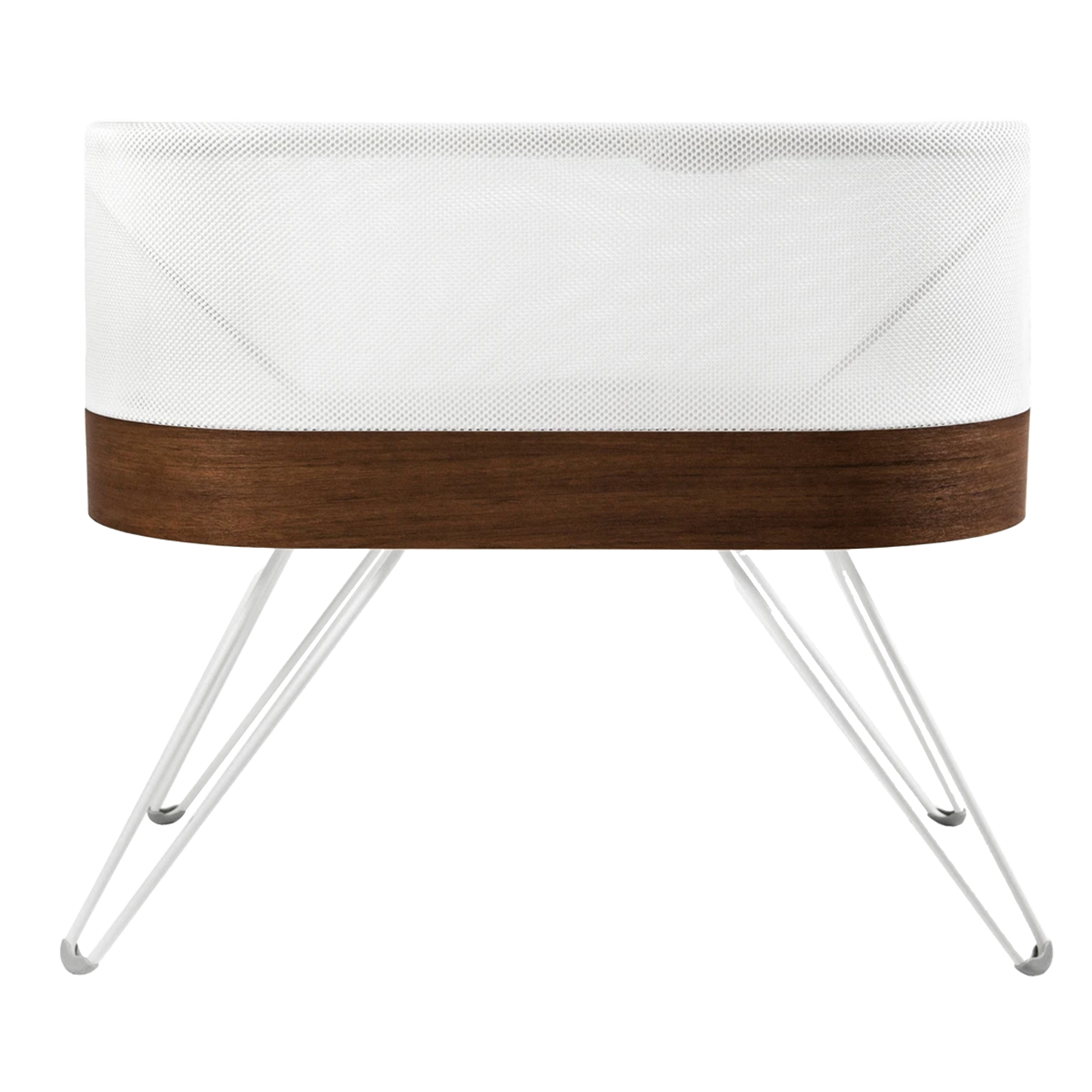
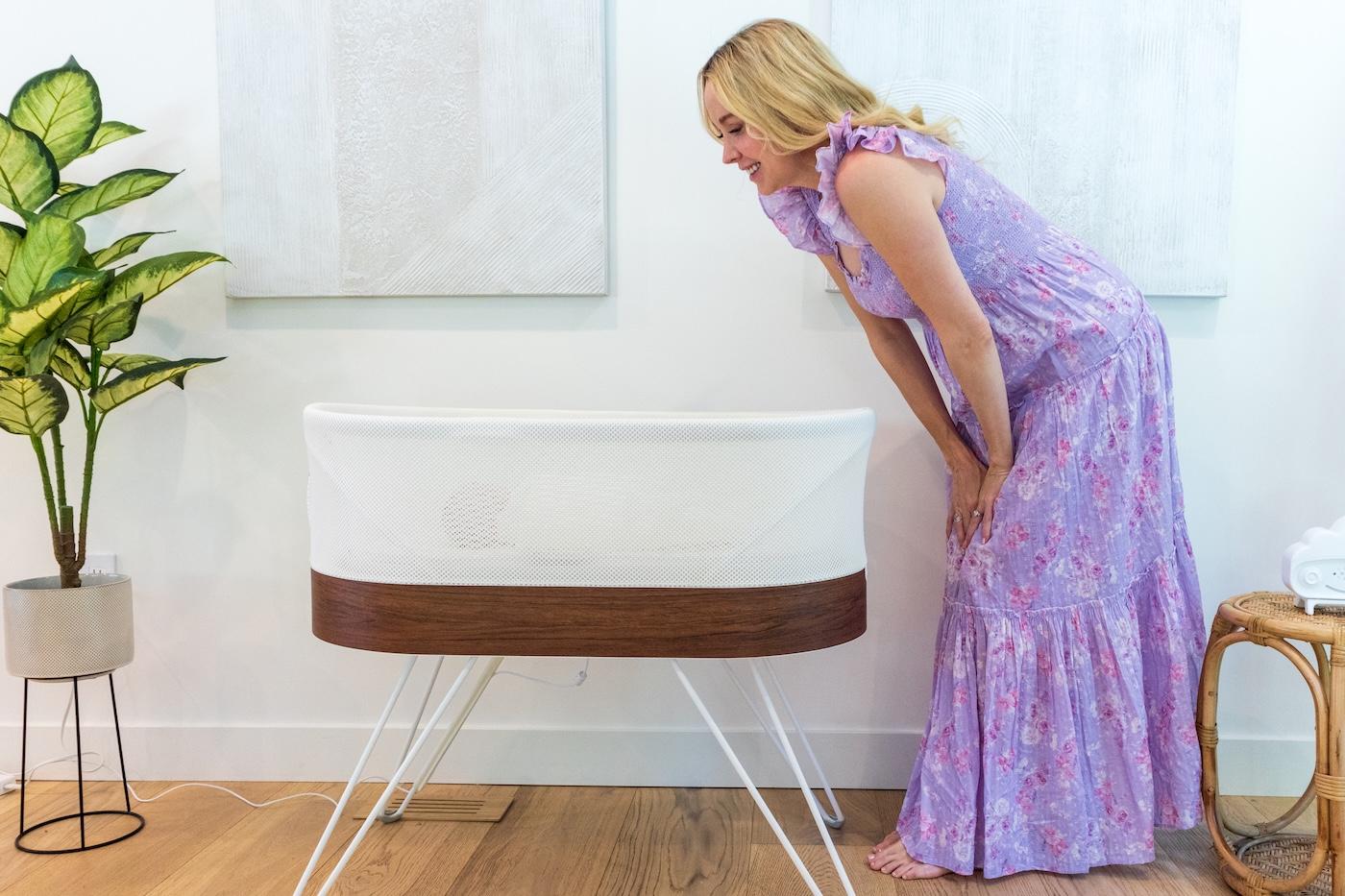
Newborn baby slings are a great way to carry your baby and keep your little lovebug close. With the added benefit of baby slings reducing fussiness, what’s not to love? But if you’re finding that your baby only wants to sleep in the sling, baby carrier, or in your arms, consider renting SNOO. SNOO is the only baby bed that recreates the cozy surroundings, sounds, and motions of the womb to automatically calm crying—often in less than a minute!
More on Baby Safety:
- Safe Sleep for Babies: What Parents Need to Know
- The Only Car Seat Safety Checklist You Need
- Water Safety Rules for Kids...and Parents
- How to Prevent Choking in Little Ones
***
REFERENCES- American Academy of Pediatrics (AAP): Baby-Wearing
- Increased carrying reduces infant crying: a randomized controlled trial. Pediatrics. May 1986.
- An Infant Carrier Intervention and Breastfeeding Duration: A Randomized Controlled Trial. Pediatrics. July 2021
- Consumer Products Safety Commission: CPSC Approves New Federal Safety Standard for Infant Sling Carriers. January 2017
- AAP: Baby Carriers: Backpacks, Front Packs, and Slings
- Hospital for Special Surgery: Babywearing Is Healthy, If Done the Right Way
- Baby Wearing Injuries Presenting to Emergency Departments, 2011-2020: A Dangerous Fashion Trend. Pediatrics. February 2022
- International Hip Dysplasia Institute: Baby Carriers & Other Equipment
- Stanford Medicine Children's Hospital: Tote Your Baby in a Sling—Safely
- National Childbirth Trust (NCT): Baby slings and carriers: a guide
Disclaimer: The information on our site is NOT medical advice for any specific person or condition. It is only meant as general information. If you have any medical questions and concerns about your child or yourself, please contact your health provider.






SHARE THIS ARTICLE
MOST LOVED
Sleepytime Sidekicks