PREGNANCY
What Causes Smell Sensitivity During Pregnancy—and How to Cope
Find yourself pinching your nose a lot these days? Here’s why!

Written by
Happiest Baby Staff
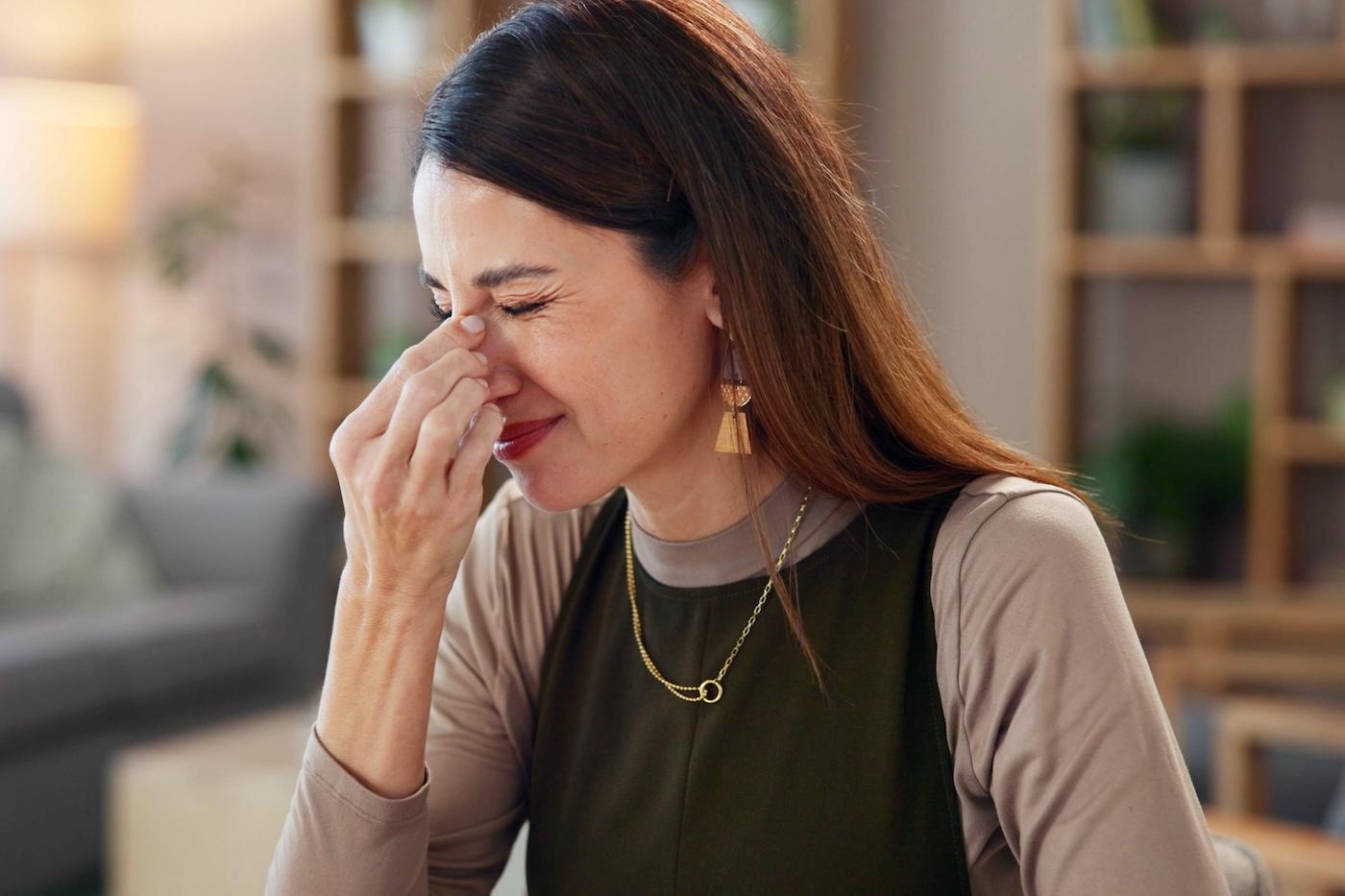
Suddenly your partner's coffee smells like a chemistry experiment, the refrigerator seems to emit a personal insult every time you open it, and even your own shampoo makes you gag in the shower. If your nose has turned into an early-warning system for every scent in a 5-mile radius, you're in good company. Smell sensitivity (aka hyperosmia) is one of the most reported experiences of pregnancy, showing up so quickly for some that it doubles as one of the earliest signs of pregnancy (sometimes even beating out that tell-tale a missed period!). Here's what's going on with your sense of smell, why the science is murkier than you'd expect, and what you can do to get through the day without dry heaving over the funk of your co-worker’s reheated leftovers.
What is smell sensitivity during pregnancy?
Smell sensitivity describes a heightened awareness of and reaction to odors. Scents that once went unnoticed now may feel overpowering, and smells you used to love (hello, morning coffee) can turn your stomach. It's an incredibly common complaint. In fact, in a review of the research on pregnancy and smell, the majority of pregnant women self-reported an increase in olfactory sensitivity, and in one small study, 85% identified at least one specific odor they'd become more sensitive to since becoming pregnant.
What causes a heightened sense of smell during pregnancy?
There are many mysteries of pregnancy—and this is one of them. While nobody knows for certain, the leading theory points to pregnancy hormones, particularly rising estrogen and hCG, as the likely culprits. But when researchers have tried to measure smell sensitivity directly using standardized odor tests rather than self-reported surveys, the results have been inconsistent.
A 2022 systematic review and meta-analysis of the available research found that objective testing hasn't reliably confirmed a true drop in odor threshold. In other words, pregnant people don't necessarily detect fainter smells than anyone else. The one measurable difference researchers did find was that pregnant participants had more trouble pinpointing specific odors by name. That means your nose may not be picking up more than it used to so much as your brain is reacting more strongly to what it smells.
There's also a compelling evolutionary theory: Some researchers hypothesize that heightened smell sensitivity, alongside nausea and food aversions, evolved to help pregnant people detect and avoid potentially harmful substances (think: spoiled food, toxins, or pathogens) during the vulnerable early weeks of fetal development, when protecting the embryo matters most.
When does smell sensitivity start in pregnancy—and how long does it last?
For most people, smell sensitivity enters the chat early, often within the first trimester and sometimes within the first few weeks of pregnancy! It tends to peak alongside nausea, which typically pops up between week 4 and week 9 and is strongest between 7 weeks and 12 weeks of pregnancy, before easing for most people by 12 to 16 weeks. That said, timelines vary widely: Some people notice little to no change, while others find their nose stays on high alert well into the second trimester or beyond.
Common Smells That Bother Pregnant People
Pregnancy-related smell sensitivity doesn't discriminate evenly. Certain odors tend to be repeat offenders, including:
- Coffee
- Cooking meat, fish, or eggs
- Cigarette smoke
- Perfume, cologne, or scented lotions
- Cleaning products and chemical smells
- Garbage/full trash can
- Gasoline
- A partner's natural body odor
Is smell sensitivity linked to morning sickness?
It seems likely! Researchers have long observed a connection between a heightened sense of smell and nausea and vomiting in pregnancy. In one study, women with congenital anosmia (meaning they were born without a sense of smell) reported nausea and vomiting of pregnancy in only one of their pregnancies, suggesting that smell may act as a trigger for morning sickness, rather than simply a symptom occurring alongside it. That may explain why a whiff of a trigger smell can send you running for the bathroom even when nothing else about your stomach has changed.
When should I worry about smell sensitivity in pregnancy?
For most people, smell sensitivity is an unpleasant but harmless part of early pregnancy. It's worth calling your care provider, though, if the accompanying nausea becomes severe. Give your OB/GYN or midwife a heads up if you can't keep food or water down, you're losing weight, you're showing signs of dehydration (dark urine, dizziness, a dry mouth), or your life is significantly disrupted. Severe, persistent vomiting can be a sign of hyperemesis gravidarum, a more serious condition that affects a small percentage of pregnancies and may require treatment.
How to Cope With Smell Sensitivity During Pregnancy
You can't switch off your sense of smell, but you can make daily life more manageable while you wait it out:
- Ventilate everything: Run the exhaust fan while cooking, crack a window, and ask someone else to take out the trash or scoop the litter box.
- Go cold: Warm foods release more aroma than cold ones, so leaning on salads, yogurt, smoothies, and chilled leftovers can cut down on triggers at mealtime.
- Outsource the stinky stuff: Hand off dish duty, diaper changes (if you have another little one at home), and any other odor-heavy chore to your partner or another family member when you can.
- Switch to unscented: Fragrance-free soap, detergent, and lotion can eliminate a source of nausea you might not even think to blame.
- Keep a "rescue scent" on hand: Many people find relief by sniffing a slice of lemon, a stick of gum, or a dab of a mild scent on a tissue to override a trigger smell.
- Stay ahead of nausea: Small, frequent snacks and steady hydration can take the edge off queasiness, so smells don't hit as hard.
- Give yourself grace: This is temporary, even when it doesn't feel that way. Skipping the grocery store's seafood aisle for a few months is a perfectly reasonable form of self-care.
More on Pregnancy Symptoms and Solutions:
- Food Aversions During Pregnancy: How to Cope
- Morning Sickness: What to Know
- How to Satisfy Every Type of Pregnancy Food Craving
- How—and Why!—Your Breasts Change So Much During Pregnancy
- Pregnancy Guide to Better Sleep
***
REFERENCES- Pregnancy and Olfaction: A Review, Frontiers in Psychology, Feb 2014
- Olfaction in Pregnancy: Systematic Review and Meta-Analysis, Chemical Senses, Jan 2022
- Morning Sickness: A Mechanism for Protecting Mother and Embryo, Quarterly Review of Biology, Jun 2000
- Linking Olfaction With Nausea and Vomiting of Pregnancy, Recurrent Abortion, Hyperemesis Gravidarum, and Migraine Headache, American Journal of Obstetrics and Gynecology, May 2002
- The American College of Obstetricians and Gynecologists (ACOG): Morning Sickness: Nausea and Vomiting of Pregnancy
- National Center for Biotechnology Information/MotherToBaby: Nausea and Vomiting in Pregnancy (NVP)
Disclaimer: The information on our site is NOT medical advice for any specific person or condition. It is only meant as general information. If you have any medical questions and concerns about your child or yourself, please contact your health provider.




SHARE THIS ARTICLE