PREGNANCY
Is Hyaluronic Acid Safe to Use While Pregnant?
Don’t toss all the serums in your medicine cabinet without reading this!

Written by
Happiest Baby Staff
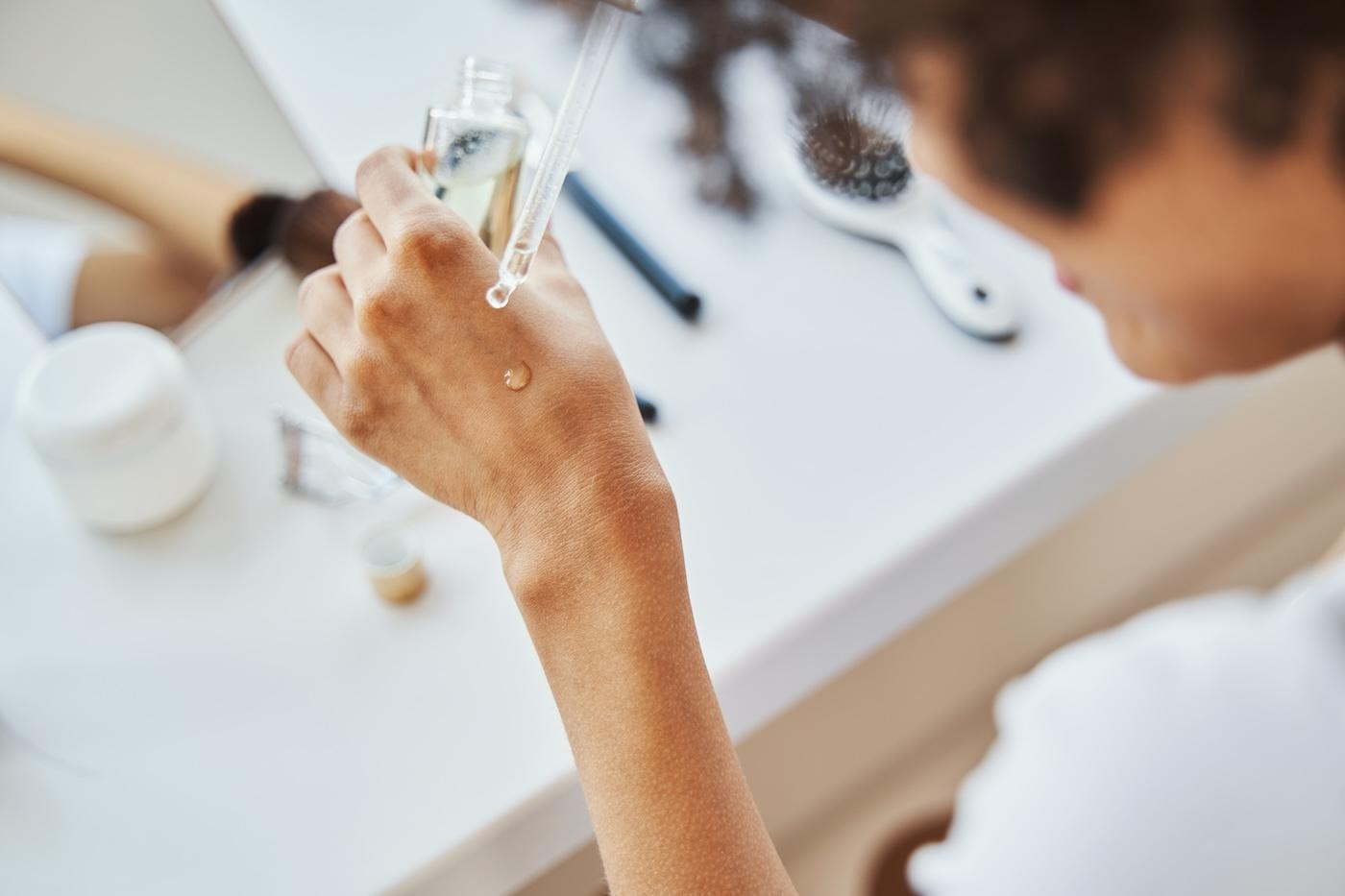
For some pregnant folks, the mere experience of expecting imparts that healthy, dewy glow that others have been chasing through the aisles of Sephora (must be nice!). And those of us who are still turning to skincare lotions and potions for a complexion pick-me-up have no doubt encountered hyaluronic acid. This ingredient darling promises plumper, more hydrated skin—and it’s in just about everything!
But is hyaluronic acid safe during pregnancy?
Before you toss the contents of your medicine cabinet, know that yes, you can use hyaluronic acid during pregnancy. This ingredient is considered safe for topical use because it’s a naturally occurring substance in the body and does not penetrate deeply enough to affect the bloodstream or the baby. Most skincare products containing hyaluronic acid are pregnancy-safe.
Is topical hyaluronic acid safe to use while pregnant?
Topical hyaluronic acid is widely regarded as safe during pregnancy. It works by attracting moisture to the skin’s surface, and its molecular size sometimes limits absorption into the bloodstream. Because of this, it poses little to no risk to pregnant people. But you’re ever second-guessing a specific product—especially if it contains other active ingredients—ask your OB-GYN or dermatologist for guidance.
Benefits of Using Hyaluronic Acid During Pregnancy
- Deep hydration: Helps relieve skin dryness and tightness.
- Skin barrier support: Keeps the skin moisturized and more resilient.
- Soothes irritation: Gentle and non-irritating, even for sensitive skin.
- Enhances other skincare: Boosts the effectiveness of moisturizers and serums.
- Pregnancy-safe alternative: Offers hydration without harsher active ingredients.
Risks or Considerations
- Product additives: The hyaluronic acid itself is safe, but added ingredients (retinoids, strong acids, fragrances) may not be.
- Allergic reactions: Rare, but possible with any skincare product.
- Formulation differences: Not all “hyaluronic acid serums” are the same! Some contain additional actives that may not be pregnancy-safe.
How to Safely Use Hyaluronic Acid While Pregnant
- Choose simple formulas with hyaluronic acid as a primary ingredient.
- Avoid products that combine hyaluronic acid with retinoids or high-strength exfoliating acids (think: professional-strength chemical peels, TCA peels unless cleared by your provider.
- Apply after cleansing and before moisturizing to maximize hydration.
- Patch-test new products if you have sensitive skin.
- Keep your overall skincare routine gentle and minimal.
When to Avoid Hyaluronic Acid
- If it’s part of a product that contains retinoids, professional-strength salicylic acid peels or high-dose oral salicylates, or other ingredients not recommended in pregnancy.
- If you experience redness, burning, or irritation after use.
- If your doctor has recommended avoiding certain topical products due to skin conditions.
What about hyaluronic acid fillers and oral supplements?
The safety guidance above applies to topical hyaluronic acid products like serums, moisturizers, and creams. Non-topical forms of hyaluronic acid—including dermal fillers and oral supplements—require a little more thought during pregnancy.
Dermal Fillers During Pregnancy
Hyaluronic acid-based injectable fillers (such as Juvéderm and Restylane) are not approved by the FDA for use during pregnancy or breastfeeding. While hyaluronic acid itself is a naturally occurring substance, there’s not enough safety data from clinical trials on filler injections during pregnancy. Since these are elective cosmetic procedures, both the FDA and most medical providers recommend putting the brakes on them until after pregnancy and breastfeeding.
Plus, pregnancy-related hormonal changes can affect immune response and skin, which could lead to complications. If you got fillers before you knew you were pregnant, chat with your doctor—accidental early-pregnancy exposure is generally not considered cause for alarm, but your care team should know about it.
Oral Hyaluronic Acid Supplements During Pregnancy
Hyaluronic acid is also available via pill or powder, but there’s a lack of studies on its safety during pregnancy. Although hyaluronic acid is not known to be toxic when ingested, and one small pilot study found promising results when high-molecular-weight HA was included in a multi-ingredient oral supplement given to pregnant women, the evidence remains preliminary. Until more robust research is available, it is best to consult your healthcare provider before taking any oral HA supplements during pregnancy.
Bottom Line
Your favorite HA serum is likely safe to use throughout pregnancy, and can be helpful for keeping your skin hydrated—so go ahead and get your glow on! Just be sure to take a peek at the full ingredient list for other actives that may not be pregnancy-safe, steer clear of injectables and supplements, and stick with gentle, reputable products as part of a balanced skincare routine.
More on Pregnancy-Safe Self-Care:
- Your Guide to Pregnancy Safe Skincare
- Hair Care During Pregnancy: Safety Dos and Don’ts
- Taking Baths While Pregnant: Is It Safe?
- Is Retinol Safe While Breastfeeding?
***
REFERENCESSkin Changes and Safety Profile of Topical Products During Pregnancy, Journal of Clinical and Aesthetic Dermatology, Feb 2022Hyaluronic Acid: A Key Molecule in Skin Aging, Dermato Endocrinology, Jul 2012American College of Obstetricians and Gynecologists: Skin Conditions During PregnancyNational Institutes of Health: MotherToBaby Fact Sheet: Topical TretinoinSafety of Skin Care Products During Pregnancy, Canadian Family Physician, Jun 2011National Institutes of Health: MotherToBaby Fact Sheet: Topical Acne TreatmentsAmerican Academy of Dermatology: Is Any Acne Treatment Safe to Use During Pregnancy?A Review of the Safety of Cosmetic Procedures During Pregnancy and Lactation, International Journal of Women’s Dermatology, Feb 2017MothertoBaby: Maintaining Your Glow: Navigating Cosmetic Procedures While Pregnant or BreastfeedingEffect of Oral High Molecular Weight Hyaluronic Acid (HMWHA), Alpha Lipoic Acid (ALA), Magnesium, Vitamin B6 and Vitamin D Supplementation in Pregnant Women: A Retrospective Observational Pilot Study, Clinics and Practice, Sep 2023Disclaimer: The information on our site is NOT medical advice for any specific person or condition. It is only meant as general information. If you have any medical questions and concerns about your child or yourself, please contact your health provider.






SHARE THIS ARTICLE
MOST LOVED
Sleepytime Sidekicks