PARENTS
Exclusive Pumping: A Complete How-to Guide
Exclusive pumping comes with so many benefits. But it also comes with a learning curve.

Written by
Happiest Baby Staff
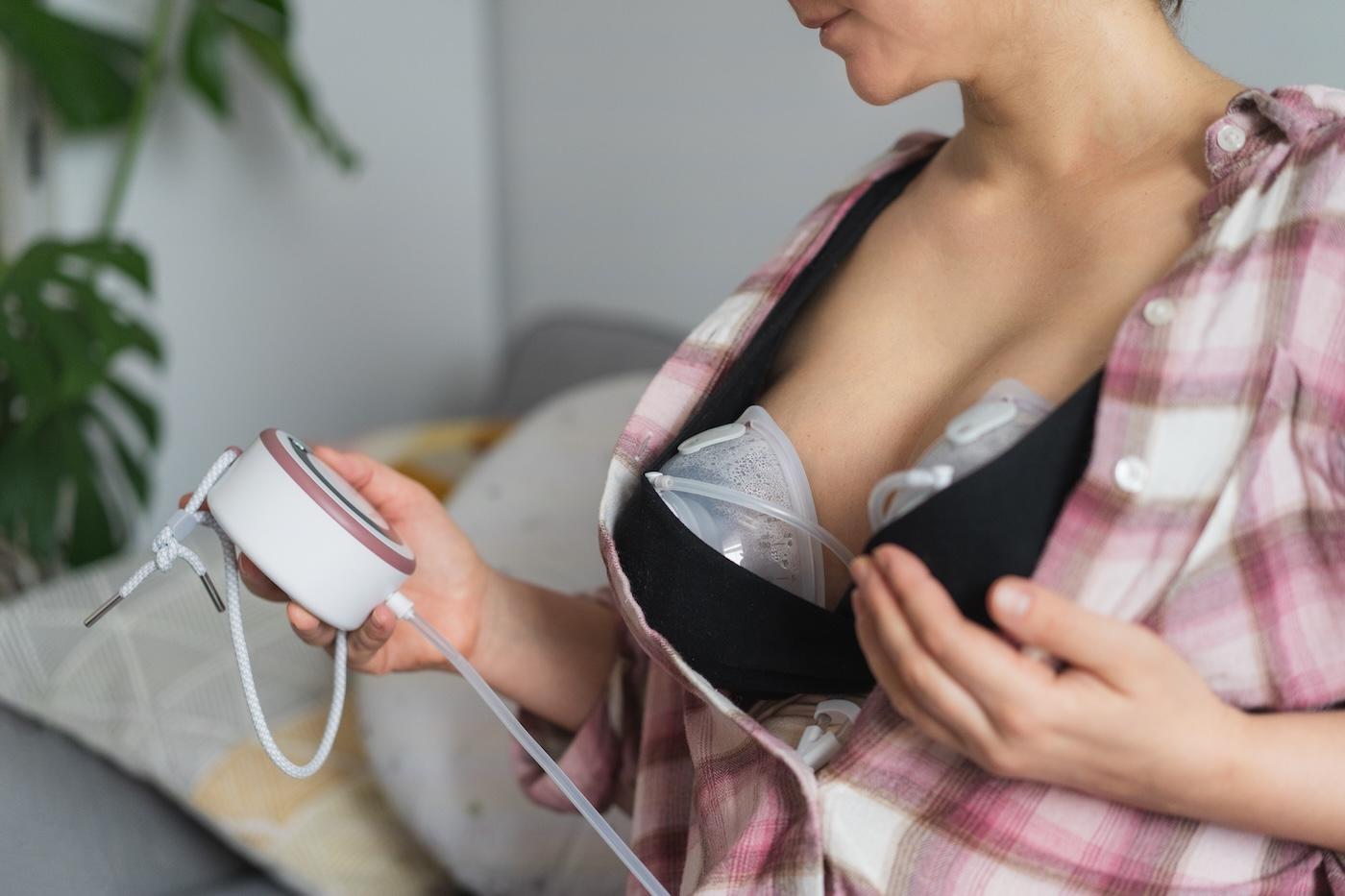
Maybe you imagined nursing your baby at the breast, but things didn't go as planned—a NICU stay, latch difficulties, a low milk supply, or simply a personal choice changed the path. Or maybe you're returning to work and need a reliable way to keep breast milk flowing. Whatever brought you here, exclusive pumping is a fully valid, genuinely demanding, and deeply loving way to feed your baby.
Exclusive pumping offers all the nutritional and immunological benefits of breastmilk while giving you (and other caregivers) more flexibility. But it also comes with a learning curve. This guide covers everything you need to know: how to get started, how to protect your supply, how to troubleshoot, and how to take care of yourself along the way.
What is exclusive pumping?
Exclusive pumping means your baby receives only expressed breast milk—no direct nursing, and (depending on your goals) no formula supplementation. Some parents exclusively pump from day one, while others transition to it after weeks or months nursing. Either way, the goal is the same: Give your baby the benefits of breast milk in a way that works for your family.
The American Academy of Pediatrics (AAP) recommends exclusive breast milk feeding for the first six months of life, followed by continued breast milk alongside solid foods through at least 12 months—and longer if desired by the parent and child. For parents who cannot or choose not to nurse at the breast, exclusive pumping is one way to meet that recommendation.
Why Choose Exclusive Pumping
Parents make this choice for many reasons, including:
- Latch difficulties: Some babies have a shallow latch, tongue tie, or oral anatomy that makes nursing painful or ineffective.
- Premature birth or NICU stay: Preemies often can't nurse directly at first, and pumping helps establish and maintain supply until they're able.
- Low milk supply: Some parents find that pumping—especially with a hospital-grade pump—stimulates supply more predictably than nursing alone.
- Medical conditions: Certain medications, surgeries, or health conditions (in the parent or baby) can make direct nursing difficult or temporarily impossible.
- Personal preference: Some people simply prefer the flexibility and visibility that bottle feeding provides.
- Return to work: Some parents start partial pumping for work and transition to exclusive pumping when nursing at the breast becomes logistically difficult.
If you're in the thick of a difficult nursing relationship and wondering whether to switch, talking with an International Board Certified Lactation Consultant (IBCLC) can help you weigh your options and make a plan that fits your life.
What You Need to Start Exclusive Pumping
The Right Pump
Your pump is your most important tool. For exclusive pumping, a double electric pump is essential—single pumps or manual pumps are generally not efficient enough to maintain supply when you're pumping eight or more times a day.
- Hospital-grade pumps are the gold standard, especially in early weeks. They're available to rent from hospitals, lactation centers, and some pharmacies.
- Personal-use double electric pumps are effective for most people once supply is established. Under the Affordable Care Act, most insurance plans are required to cover a breast pump—check with your insurer before purchasing.
- Wearable pumps offer hands-free convenience but may not be as effective as traditional pumps for building supply from scratch. Many exclusive pumpers use a wearable pump for some sessions and a traditional pump for others.
Correctly Sized Flanges
Flange fit is one of the most overlooked factors in pumping comfort and output. The flange (aka a breast shield) is the funnel-shaped cup that fits over your nipple. If it's too small, your nipple rubs against the tunnel and causes pain. Too large, and too much areola tissue is pulled in, reducing efficiency.
Most pumps come with 24mm or 27mm flanges, but many people need a different size. A general rule of thumb: your nipple should move freely in the tunnel without rubbing the sides, and little to no areola should be pulled in. Your IBCLC can help you measure and size properly.
Pumping Supplies
Before you start, gather:
- Extra pump parts (valves and membranes wear out and affect output)
- A hands-free pumping bra
- Breast milk storage bags or BPA-free bottles
- A small cooler or dedicated fridge space for stored milk
- Nipple cream or coconut oil to lubricate flanges and protect nipples
- A way to track pump sessions (a notebook or app, like the Happiest Baby App!)
How often should you pump?
Frequency is everything in exclusive pumping. Breastmilk production works on a supply-and-demand basis: the more milk that's removed, the more your body makes. Research published in Frontiers in Pediatrics confirms that pumping frequency in the early weeks is one of the strongest predictors of long-term milk supply—mothers who pumped six or more times per day had significantly greater milk output at seven, 14, and 42 days postpartum.
General Pumping Guidelines
In the newborn stage (0–12 weeks): The Academy of Breastfeeding Medicine recommends that newborns feed approximately 8–12 times per 24 hours, and pumping guidance mirrors this exactly. Aim for 8–12 sessions per day, roughly every two to three hours. This is the most critical window for establishing supply. Try not to go more than four to five hours between sessions, even at night, in these early weeks.
As supply stabilizes (roughly 3–6 months): This will vary from family to family, but a peer-reviewed integrative review of exclusive pumping notes that once supply is well established, many pumping parents are able to gradually reduce session frequency while maintaining output, provided total daily milk removal stays consistent. Most lactation consultants advise dropping sessions slowly, one at a time, and monitoring supply closely. Work with an IBCLC to find a schedule that fits your life without compromising your milk.
Later stages (6+ months): As your baby begins eating solids and their breastmilk intake naturally decreases, further reductions are often possible. Again, this varies widely from person to person—your output, your baby's intake, and your body's response to reduced stimulation are all individual. Let supply and your baby's needs guide you, rather than any fixed number.
One useful framework many pumpers rely on: aim for roughly 100–120 minutes of total pump time per 24 hours, divided across your sessions. Research on exclusive pumping suggests that consistent, frequent milk removal matters more than any single session length or rigid schedule.
Don't Skip Overnight Pumps Early On
This is the piece most new exclusive pumpers wish they'd known. Prolactin—the hormone that drives milk production—rises significantly during the overnight hours, and its circadian rhythm persists throughout lactation. That means nighttime pumping sessions carry real weight for your supply, especially while it's still being established. Skipping them in the first several weeks can significantly undercut your long-term output. Set an alarm. It's temporary.
How to Pump Effectively
Get comfortable.
Find a quiet, comfortable spot where you can relax. Research confirms that stress can reduce oxytocin pulses during milk expression—even relatively minor stressors like noise or mental distraction—inhibiting letdown and reducing output. Some people keep a photo or video of their baby nearby to trigger oxytocin release. Others find that looking away entirely helps. Do whatever works for you!
Use the two-phase technique.
Most modern double electric pumps have two modes, designed to mimic how a baby actually nurses. This two-phase design reflects the distinct phases of infant sucking:
- Stimulation phase: Short, rapid cycles that mimic a baby's initial fast sucking to trigger letdown. Use this for one to two minutes at the start of a session.
- Expression phase: Slower, deeper cycles that mimic a baby's nutritive sucking once milk begins flowing.
Many lactation consultants also advise switching back to stimulation mode when milk flow slows mid-session, to attempt a second or third letdown—which is a normal physiological occurrence during nursing. This is sometimes called "cycling." It's worth experimenting with, though it hasn't been studied in a clinical trial specifically for pumping.
Try hands-on pumping.
Research from Stanford has shown that combining breast massage with pumping can significantly increase milk output and fat content. While pumping:
- Massage your breasts in circular motions toward the nipple
- Compress your breast gently when flow slows
Finish with a brief hand expression to empty the breast more fully
Don't watch the bottles.
Watching the output drip can spike anxiety and actually inhibit letdown. Cover the bottles with a cloth, listen to a podcast, scroll your phone—anything to keep your mind elsewhere.
Breastmilk Storage Basics
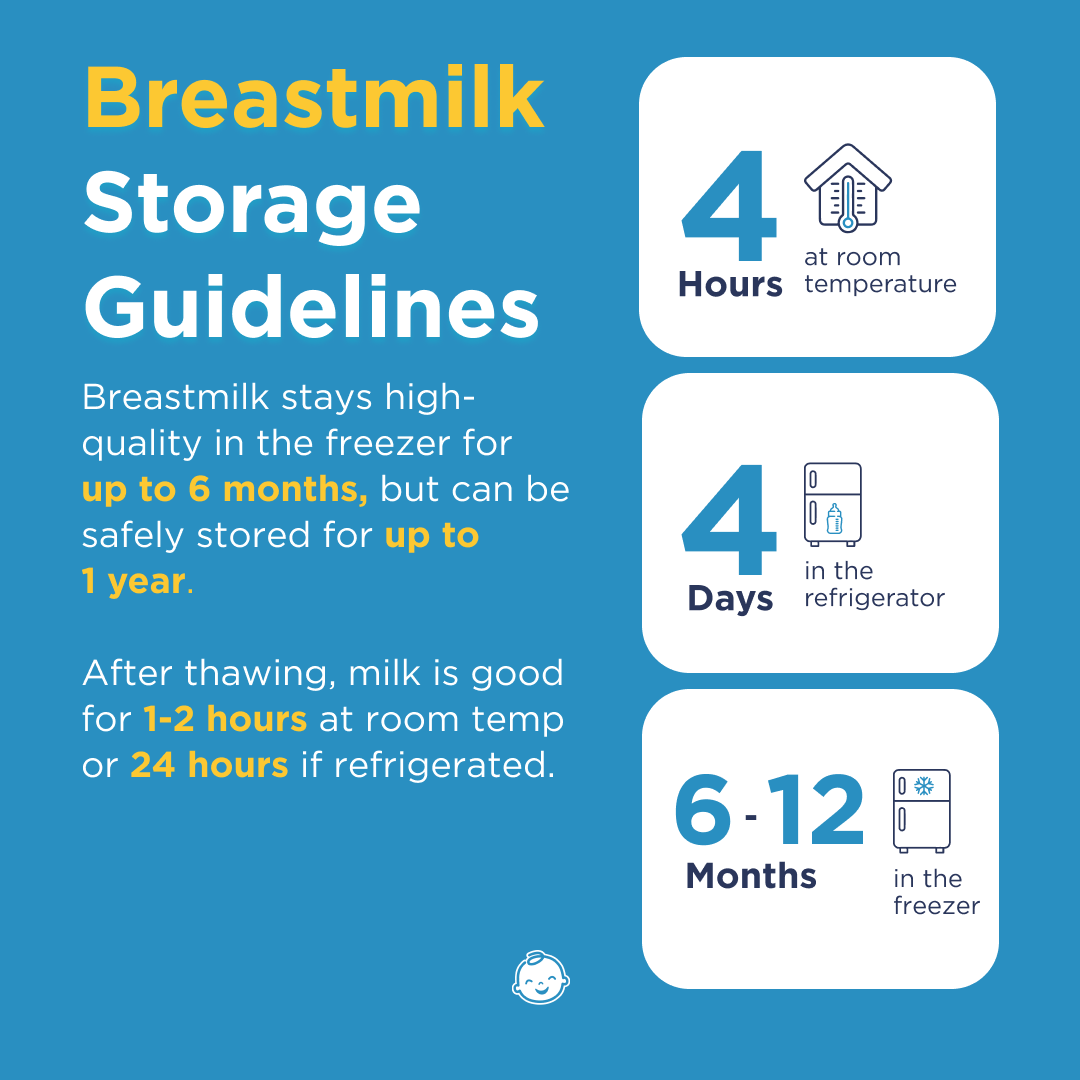
Proper storage protects the nutritional and immune properties of your milk. The CDC offers these safe storage guidelines:
- At room temperature: up to 4 hours
- In the fridge: up to 4 days
- In the freezer: up to 12 months (but best quality within 6 months)
A few important tips:
- Label every bag or bottle with the date and volume.
- Store milk in small amounts (2 to 4 ounces) to minimize waste—only defrost what you need.
- Thaw frozen milk in the fridge overnight or under warm running water. Never microwave breastmilk! Microwaving creates hot spots and destroys beneficial proteins.
- Previously frozen and thawed milk should be used within 24 hours if refrigerated, and never refrozen.
- Freshly pumped milk can be added to already-refrigerated milk of the same day. Cool freshly pumped milk in the fridge first before adding to frozen milk.
Protecting and Building Your Milk Supply
Feed (or pump) on demand.
In the early weeks especially, never wait until your breasts feel "full" to pump—that full feeling means you're already behind on emptying! Empty breasts signal your body to make more milk, while full breasts signal it to slow its roll.
Stay hydrated and nourished.
This sounds obvious, but exclusive pumping is physically demanding. You need approximately 500 extra calories per day while producing milk, along with adequate hydration. Keep water nearby during every session. (More on the nutrients you need while breastfeeding.)
Consider power pumping.
Power pumping mimics cluster feeding and can help boost supply during a dip. One common schedule: pump for 20 minutes, rest 10, pump 10, rest 10, pump 10—all within one hour. Do this once a day for several days during a dip.
Talk to your provider about galactagogues.
Some parents find that certain foods (oats, brewer's yeast, fenugreek) or medications (domperidone, metoclopramide) help support supply. Evidence is mixed, and some options carry risks. Always talk to your healthcare provider before trying any supplement or medication to support lactation. An IBCLC can also help you troubleshoot supply concerns before reaching for a supplement.
Watch for supply dips.
Many exclusive pumpers notice supply dips around:
- 3–4 weeks (when newborn feeding patterns shift)
- 3 months (when hormonal milk production transitions to supply-and-demand driven production)
- The return of your period
- Illness, stress, or travel
A temporary dip is normal. Increase pump frequency, stay hydrated, rest when you can, and give it a few days before panicking.
Troubleshooting Common Pumping Problems
Low Output or Declining Supply
First, check your pump parts. Worn valves and membranes are a leading cause of reduced output—many pumping parents don't realize these need to be replaced every one to three months. Replace them and see if output improves before assuming your supply has dropped. Then check flange fit, pump settings, and session frequency. If those are all in order, connect with your provider or a lactation consultant for personalized support.
Clogged Ducts
Exclusive pumpers can be prone to clogged ducts, especially if sessions are missed or spacing is uneven. Signs include a tender lump, localized hardness, or a decrease in output from one breast.
To address a clog:
- Apply a cold compress before pumping
- Massage the lump during your pump session, moving toward the nipple
- Try pumping or hand expressing more frequently on the affected side
- Some people find that vibration (an electric toothbrush held against the lump) helps
If a clog doesn't resolve within 24–48 hours, or if you develop fever, chills, or flu-like symptoms, contact your healthcare provider. These can be signs of mastitis, a breast infection that may require antibiotics.
Mastitis
Mastitis is an inflammation of breast tissue, sometimes involving infection, that causes breast pain, swelling, warmth, redness, and often fever and body aches. It's more common in people who are pumping exclusively, because missing sessions or incomplete emptying can create the conditions for it. Continuing to pump (or nurse) through mastitis is generally recommended—stopping abruptly can make things worse. See your provider promptly if you suspect mastitis.
Nipple Pain
Some nipple soreness in early pumping is normal as your body adjusts. Persistent pain, cracked nipples, or a burning sensation after pumping can indicate:
- Suction too high (start lower than you think and work up to the highest comfortable setting—more suction is not more milk)
- Wrong flange size
- Thrush (a yeast infection that can affect nipples and manifest as sharp, shooting pain)
If pain is severe or persistent, a lactation consultant can assess flange fit, pump settings, and help rule out other causes.
Feeding Your Pumped Milk
Because exclusive pumpers use bottles for every feed, it’s a good idea to familiarize yourself with paced bottle feeding. It's a technique that mimics the pace and effort of breastfeeding, prevents overfeeding, and can reduce gas and spit-up. The short version: Hold your baby semi-upright, use a slow-flow nipple, let your little one take breaks, and watch for hunger and fullness cues rather than pushing them to finish the bottle. Learn more about paced bottle feeding here.
How long should you exclusively pump?
There's no single right answer. The AAP recommends breast milk as the primary nutrition source for the first year of life, but any amount of breastmilk—for any length of time—confers benefits. Whether you pump for two weeks, six months, or two years, you're doing something meaningful for your baby.
Some exclusive pumpers set a goal and re-evaluate as they go. Others wean from the pump when it stops feeling sustainable. Both approaches are valid. If you decide to wean, do it gradually—dropping one session at a time over days to weeks—to reduce the risk of clogged ducts, mastitis, and engorgement.
Taking Care of Yourself
Let's be real: Exclusive pumping is a lot. You're essentially doing two jobs—making milk and feeding your baby. The time commitment, the cleaning, the middle-of-the-night alarms, the mental load of tracking output and storage… it adds up.
A few things that help:
- Accept help. Let someone else wash pump parts, prep bottles, or hold the baby while you pump.
- Set up pumping stations. Keep everything you need at each location where you pump—you shouldn't have to search for parts at 3am.
- Protect your sleep. This is genuinely hard when you're setting alarms to pump, but even consolidated rest helps your mental health and supply.
- Find community. Online groups for exclusive pumpers (many exist on Reddit, Facebook, and dedicated apps) offer practical advice, troubleshooting, and solidarity from people who truly understand what you're doing.
- Talk to someone if you're struggling. Postpartum mood disorders affect many new parents, and the added burden of exclusive pumping can contribute. If you're feeling overwhelmed, anxious, or depressed, please reach out to your healthcare provider. You deserve support too.
When to Seek Help
Reach out to an IBCLC or your healthcare provider if:
- Your output drops significantly and doesn't recover with increased frequency.
- You're experiencing persistent or severe nipple pain.
- You develop signs of mastitis (fever, flu-like symptoms, red/warm breast).
- You have a plugged duct that doesn't resolve within 48 hours.
- You're struggling emotionally and need support navigating pumping decisions.
The Bottom Line
Exclusive pumping is one of the hardest things many parents do in the newborn period—and one of the most under-acknowledged. It requires commitment, knowledge, and a whole lot of patience with yourself. But with the right pump, a good schedule, solid support, and some troubleshooting know-how, many parents pump successfully for months. Whatever path brought you to exclusive pumping, know that the effort you're putting in matters!
More on feeding your baby:
- How to Supplement Breast Milk With Formula
- Proven Ways to Increase Milk Supply
- The Best Foods to Eat While Breastfeeding
- A Stress-Less Guide to Pumping While Traveling
***
REFERENCESAmerican Academy of Pediatrics: Breastfeeding OverviewSuccessful Full Lactation Achieved by Mothers of Preterm Infants Using Exclusive Pumping, Frontiers in Pediatrics, May 2020Academy of Breastfeeding Medicine Clinical Protocol #37: Physiological Infant Care—Managing Nighttime Breastfeeding in Young Infants, Breastfeeding Medicine, Mar 2023Exclusive Breastmilk Pumping: A Concept Analysis, Maternal & Child Nutrition, Oct 2022The Physiological Basis of Breastfeeding, Infant and Young Child Feeding: Model Chapter for Textbooks for Medical Students and Allied Health Professionals, Geneva: World Health Organization 2009Maternal plasma levels of oxytocin during breastfeeding—A systematic review, PLOS ONE, Aug 2020Comparison of Maternal Milk Ejection Characteristics During Pumping Using Infant-Derived and 2-Phase Vacuum Patterns, International Breastfeeding Journal, Nov 2019Centers for Disease Control and Prevention: Proper Handling and Storage of Human MilkCombining Hand Techniques With Electric Pumping Increases Milk Production in Mothers of Preterm Infants, Journal of Perinatology, Nov 2009American College of Obstetricians and Gynecologists: Breastfeeding Your BabyAmerican Academy of Pediatrics: Mastitis What Breastfeeding Parents Need to KnowDisclaimer: The information on our site is NOT medical advice for any specific person or condition. It is only meant as general information. If you have any medical questions and concerns about your child or yourself, please contact your health provider.






SHARE THIS ARTICLE
MOST LOVED
Sleepytime Sidekicks