TODDLER
Toddler Lying: When It Starts and How to Handle It
Believe it or not, your tot's fibs are actually a sign of healthy brain development. Here's when lying starts, what it means, and how to gently encourage honesty.

Written by
Happiest Baby Staff
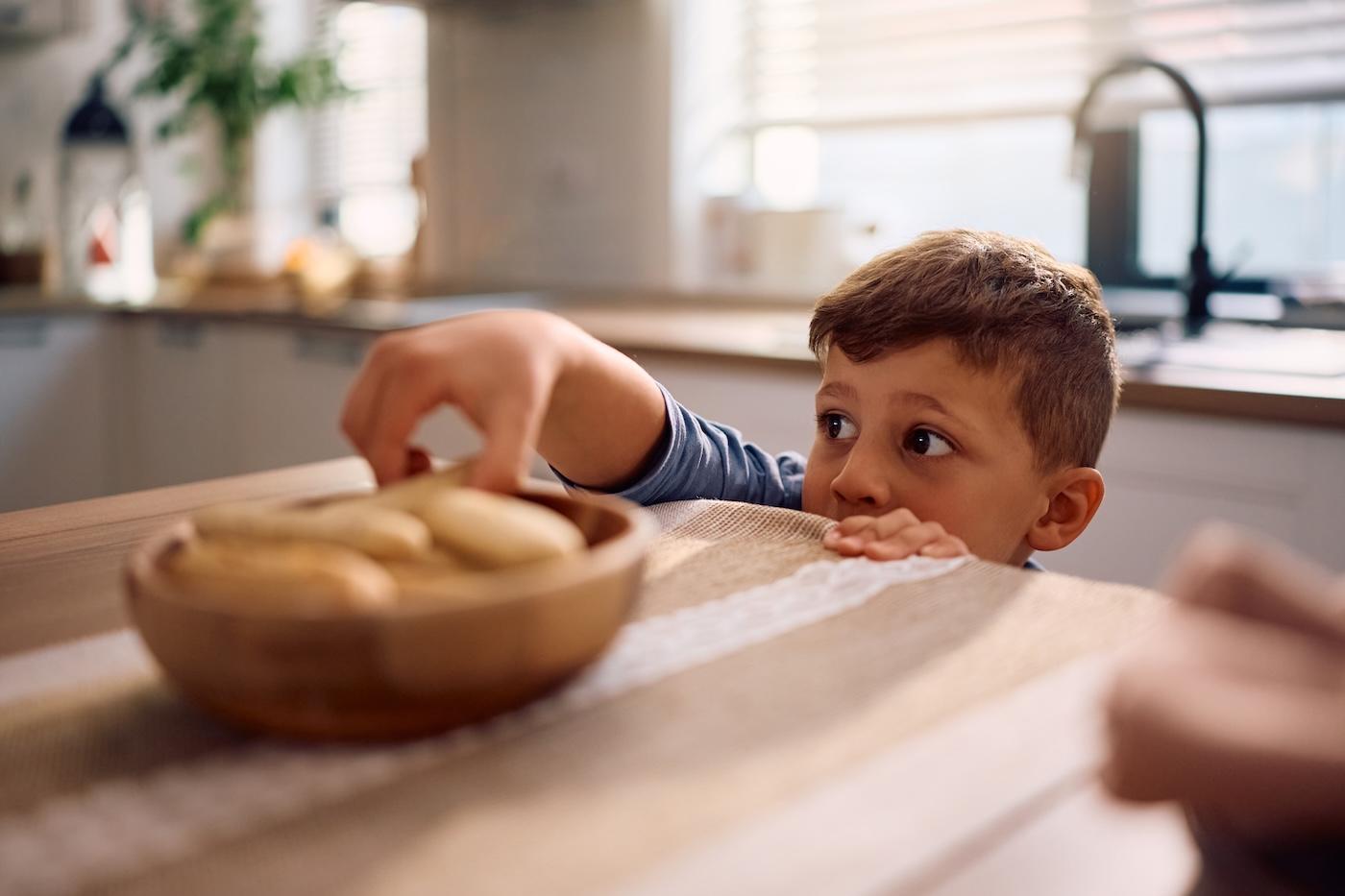
You're tidying up the kitchen when you notice chocolate smeared across your 3-year-old's face. "Did you eat a cookie?" you ask. Your little one looks you dead in the eyes and says, "No." It's almost comical—the evidence is right there—but it can also catch you off guard.
But before you crash out worrying about your tot becoming the world’s youngest con artist, know that your toddler's first fibs are not a sign of bad character! In fact, they're a sign that some pretty impressive brain development is underway. Let's dig into when lying starts, why it happens, and what you can do to raise an honest little human.
When do toddlers start lying?
Research shows that children can begin telling simple lies as early as age 2, though most 2-year-olds are still overwhelmingly honest. By the time kids approach their fourth birthday, things shift significantly—studies have found that more than 70% of 4-year-olds will lie in certain situations.
Of course, a 2-year-old's fib looks very different from the kinds of lies older kids tell. Early lies tend to be super simple—a flat-out denial like "I didn't do it!"—and toddlers aren't really thinking about whether you believe them or not. They're mostly just trying to make the "bad thing" disappear.
Why do toddlers lie?
The ability to lie is actually considered a developmental milestone. Researchers have found that lying is closely connected to the development of two key cognitive skills:
Theory of Mind
This is your child's growing ability to understand that other people have different thoughts, beliefs, and knowledge than they do. When your little one lies about eating that cookie, they're demonstrating—however clumsily—that they understand you might not know what they know. That's a big cognitive leap! Research published in Psychological Science has shown that when 3-year-olds were trained in theory-of-mind concepts, children who previously never lied began to do so, confirming the direct link between understanding other people's minds and the ability to deceive.
Executive Function
Lying also requires inhibitory control—the ability to hold back a truthful response and replace it with a false one. That takes real brainpower! Studies have found that kids with stronger executive functioning skills tend to start lying a bit earlier than their peers, not because they're "naughtier," but because they've developed the cognitive tools to do it.
So, while no parent wants to hear their toddler fib, it's worth remembering that these early lies signal that your child's brain is growing in complexity. The same skills that make lying possible—perspective-taking, impulse control, and flexible thinking—are the very same ones that fuel empathy, cooperation, and social understanding.
What kinds of lies do toddlers tell?
Not all whoppers carry the same weight! Here are the most common types of toddler untruths you're likely to encounter:
- Denial lies: These are the classic "I didn't do it!" when your child clearly did do it. They’re typically the first lies to emerge, and they're all about avoiding trouble.
- Wishful thinking: Sometimes what looks like a lie is your toddler's way of wishing reality were different. If they say "I already brushed my teeth" when they haven't, they may genuinely be blurring the line between what they want to be true and what is true. Kids under 4 often have a fuzzy boundary between fantasy and reality.
- Tall tales and imaginative stories: Your 3-year-old insists a dragon visited the backyard last night? That's not lying, it's creative imagination at work. Young children ages 4 to 5 often make up stories and tell tall tales, and this is perfectly normal. There's no need to treat these as lies, especially for kids under 4.
How should you handle toddler lying?
Nobody likes the feeling of being to be lied to, but usually, less reaction is more effective. Here's how to navigate it:
Stay calm and skip the interrogation.
When you know what happened (you saw the cookie crumbs with your own eyes!), resist the urge to ask, "Did you eat a cookie?" That question essentially sets your child up to lie. Instead, try stating what you know: "I see you ate a cookie. We're saving those for after dinner." This approach keeps things straightforward and avoids turning the moment into a showdown.
Avoid harsh punishment.
Harsh punishment is typically not very effective when it comes to lying—and may make things worse. When kids fear an over-the-top reaction, they become more motivated to lie, not less. Parents who overreact may push their child into feeling they need to lie again and again to protect themselves.
Make honesty feel safe.
If you want your child to tell the truth, they need to feel that being honest won't lead to an explosion. Try saying something like, "I'm glad you told me the truth. That was brave." When kids learn that honesty is met with calm and understanding—rather than anger—they're far more likely to choose it next time.
Use stories and role-play.
Dr. Harvey Karp recommends using fairy tales and role-play to plant "seeds of kindness" through the "side door" of your child's mind. You can create a little story about a bunny who told a fib and then felt much better when they told the truth. Toddlers love hearing stories—and the lessons sink in without your child feeling lectured. You can also role-play the scenario with dolls or stuffed animals, which lets your tot practice "choosing honesty" in a pressure-free, playful way.
Model honesty yourself.
Kids are always watching. Parents are the most important role models when it comes to honesty. If your child sees you telling "little white lies"—like saying you have other plans when someone asks if you’re free—it sends a confusing mixed message. When you make a mistake, own up to it in front of your child. It's one of the most powerful ways to teach truthfulness.
Praise honest moments.
When your toddler fesses up—especially about something they could have lied about—make sure they know you noticed. A simple "Thank you for telling me the truth, even though it was hard" goes a long way. This kind of positive reinforcement helps your child learn that honesty is valued and appreciated. And remember, “gossiping” about your tot’s honest behavior makes that praise way more effective! So the next time your little one comes forward with the truth, whisper loudly to your partner, Grandma, or even a stuffie about how impressed you were with their behavior.
When should you be concerned about lying?
For most toddlers and preschoolers, lying is a normal and temporary part of development. However, if you notice a pattern of chronic or repetitive lying from your child—especially if it's paired with other behavioral concerns—experts recommend getting them evaluated by a healthcare provider or mental health professional. This is uncommon in the toddler years, but it's worth keeping in your back pocket if lying persists beyond what feels age-appropriate.
The Bottom Line on Toddler Lying
Your toddler's first lie can feel like a gut punch, but try to see it for what it really is: a sign that your little one's brain is developing the capacity for perspective-taking, self-control, and complex social thinking. So, the goal isn't to stomp out every fib with an iron fist, it's to create a home where honesty feels safe, valued, and rewarded. With patience, warmth, and maybe even a few fairy tales, you'll help your child build a foundation of trust and integrity that lasts well beyond the toddler years.
More on Toddler Behavior:
- When Do Toddlers Learn to Share?
- An Age-by-Age Guide to Your Child's Attention Span
- 10 Ways to Teach Kids Gratitude
- How to Encourage Good Toddler Behavior
Disclaimer: The information on our site is NOT medical advice for any specific person or condition. It is only meant as general information. If you have any medical questions and concerns about your child or yourself, please contact your health provider.
SHARE THIS ARTICLE
MOST LOVED
Sleepytime Sidekicks