TODDLER
The Playground Safety Tips Every Toddler Parent Needs to Know
A few simple habits can prevent most playground injuries. Here's what to know before your next park visit.

Written by
Happiest Baby Staff
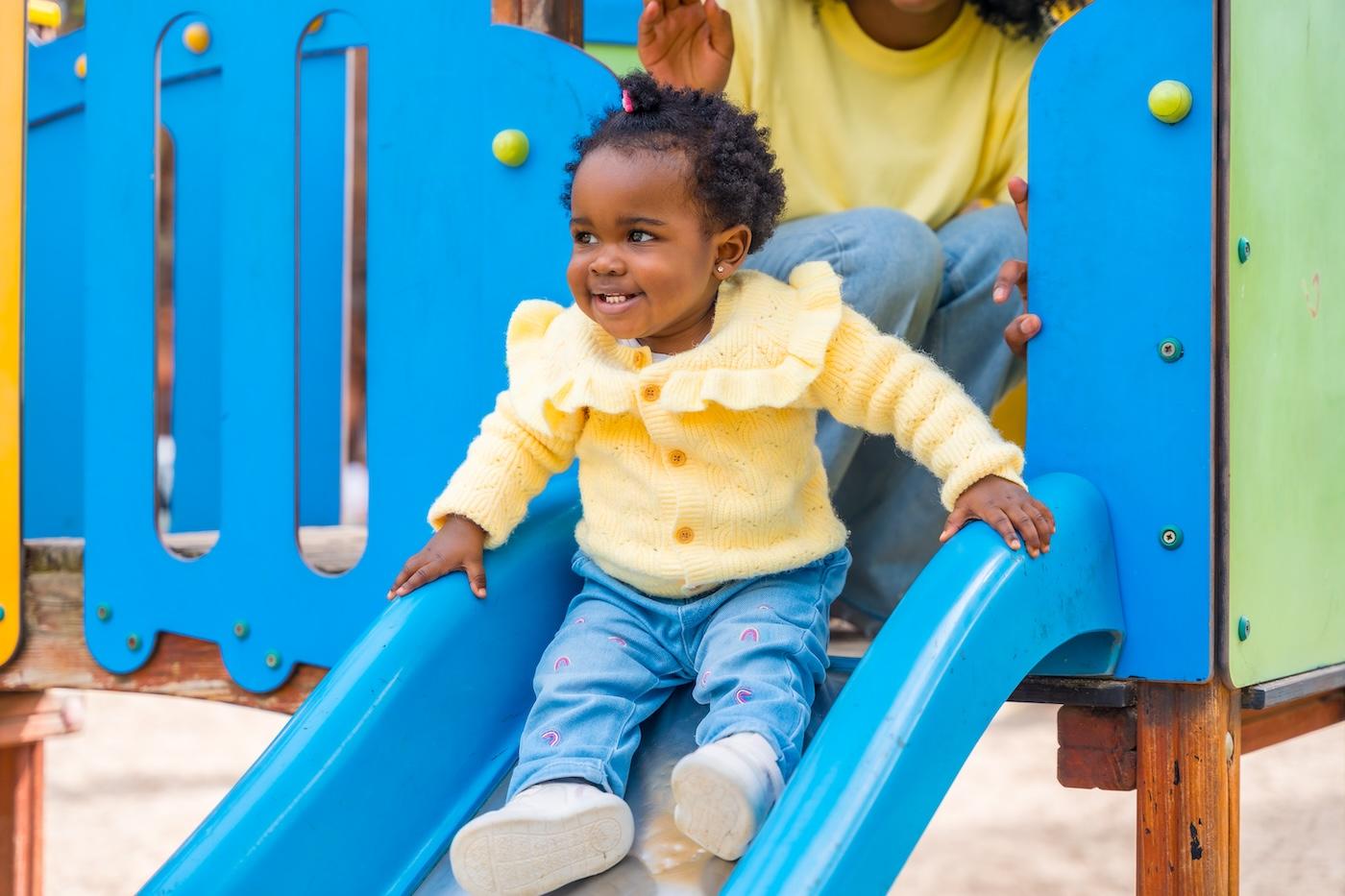
There's nothing quite like watching your toddler sprint toward a playground with unbridled joy. The wind-in-their-hair freedom of the swings, the triumphant grin at the top of the slide, the sensory delight of sand between their fingers—it's one of childhood's purest pleasures. And while playgrounds are genuinely wonderful for your little one's physical development, coordination, and social skills, they're also one of the most common places where young children get hurt.
In the United States, an average of more than 218,000 children are treated in emergency departments for playground-related injuries every year, according to a study published in Clinical Pediatrics analyzing data from 1990 to 2012. Preschool-aged children account for more than a third of those visits. But worry-wart parents can breathe a sigh of relief knowing that the majority of playground injuries are preventable!
With a little know-how—and a watchful eye—you can help your toddler explore, climb, and tumble through their playground years with far fewer trips to urgent care. Here's what every toddler parent needs to know.
Why Toddlers Face Unique Playground Risks
Toddlers between the ages of 1 and 4 are in a developmental sweet spot that's amazing and terrifying in equal measure. They're newly mobile, increasingly bold, and absolutely convinced they can tackle whatever the 7-year-old next to them is doing. But their depth perception is still developing, their coordination is a work in progress, and their ability to assess risk is essentially nonexistent. They simply don't yet understand that the wobbly platform at the top of the climber is different from the solid floor at home.
According to the American Academy of Pediatrics (AAP), falls are the leading cause of playground injuries in young children, and most serious injuries involve falls from equipment—particularly climbers, slides, and overhead ladders. Understanding where the dangers lie is the first step toward preventing them.
How to Prevent Playground Injuries
Look for age-appropriate equipment.
Equipment designed for older children (think: tall climbing structures, monkey bars, and rope courses) is physically and cognitively beyond what most toddlers can safely handle. The Consumer Product Safety Commission (CPSC) recommends that playgrounds include separate equipment areas for toddlers (under 2) and older children, but in practice, many public playgrounds serve a wide age range on the same equipment. That means the job of matching your child to the right equipment falls largely to you.
When you show up at a new playground, take 30 seconds to look for posted age-range signs before your child takes off running. If the playground isn't clearly marked, look for these signals that equipment is appropriate for toddlers:
- Lower platforms (no more than 18 to 24 inches off the ground for the youngest toddlers)
- Enclosed areas or guardrails on elevated surfaces
- Smaller openings between rails and platforms (too-wide openings can trap heads; openings should be less than 3.5 inches or greater than 9 inches to avoid entrapment)
- Gentle slides rather than steep, fast ones
Don't go down the slide with your toddler on your lap.
Holding your little one on your lap for a slide ride may seem safer than sending them down alone, but research presented at the American Academy of Pediatrics National Conference found the opposite is true. Analyzing slide injuries in more than 350,000 children under age 6, researchers found that when a child's foot catches the edge or bottom of the slide, the adult's weight and momentum behind them dramatically increases the force on the lower leg—enough to fracture the tibia. Toddlers ages 12 to 23 months had the highest percentage of injuries, and when a child was on an adult's lap, 94% of injuries involved the lower extremities. The fix is simple: Let your toddler slide independently, and stand at the bottom to catch them. If your child isn't yet ready to slide alone, skip the slide for now!
Check the surface under the equipment.
As far as safety goes, the surface underneath the equipment matters as much as the equipment itself. Falls are inevitable with toddlers, so a cushy landing really counts!
The CPSC recommends that playground equipment be surrounded by impact-absorbing surfaces, including:
- Engineered wood fiber or wood chips (at least 9 inches deep)
- Shredded rubber mulch (at least 6 inches deep)
- Sand or pea gravel (at least 9 inches deep)
- Rubber tiles or mats specifically designed for playgrounds
Hard-packed dirt, grass, and asphalt are not adequate protective surfaces—yet they're still common in older or underfunded playgrounds. The protective surface should extend at least 6 feet in all directions from the equipment (and further for swings and slides, where children tend to travel farther when they fall).
Before you settle in, take a quick look at what's underfoot. If the surface looks thin, compacted, or like plain dirt, it may be worth moving to a different piece of equipment.
Inspect equipment before your toddler climbs on.
A quick, 60-second check before playtime can catch hazards that aren't always obvious at first glance. The AAP and CPSC recommend watching for:
- Rust, splinters, or broken parts on metal or wooden equipment
- Protruding bolts or hardware that can snag clothing or skin
- Entrapment hazards—openings between 3.5 and 9 inches can trap a child's head. Check between ladder rungs, railing gaps, and platform openings.
- Entanglement hazards: ropes, cords, or drawstrings (including those on your child's clothing!) that could loop around a neck. Remove any hood strings or neck-level drawstrings from your toddler's jacket before playground visits
- Broken or missing guardrails on elevated platforms
- Standing water or slippery surfaces after rain
If you spot broken or unsafe equipment, skip it and report it to your local parks department. Many municipalities have online reporting tools. It takes two minutes and could thwart a serious injury!
Stay close and supervise actively.
There's a meaningful difference between watching your child from a bench while you scroll your phone (passive supervision) and staying close enough to spot and respond to hazards in real time (active supervision). For toddlers especially, the AAP recommends active, hands-on supervision—being close enough to physically intervene if needed. After all, Most serious playground injuries occur when there is no adult actively watching, so your presence is your child's most important safety tool!
This doesn't mean helicoptering your child through every step of the climbing structure. Toddlers genuinely benefit from the freedom to explore, take manageable risks, and problem-solve independently—it's how they build confidence and physical competence. But it does mean:
- Staying within arm's reach of very young toddlers (ages 1 to 2)
- Watching for equipment that's beyond your child's current skill level and gently redirecting rather than lifting them up to it
- Keeping an eye on other children nearby, especially older kids who may not realize how fragile a 2-year-old is
- Putting your phone away for the bulk of playground time
Dress your toddler for the playground.
Your playground fit check should include making sure it’s playground safe! The AAP specifically flags clothing-related entanglement as a meaningful risk:
- Remove hood drawstrings and neck cords from jackets and sweatshirts—these can catch on equipment and pose a strangulation risk
- Avoid loose scarves or necklaces
- Skip flip-flops—closed-toe shoes with good grip are safest for climbing and running
- In summer, check metal slides before your child goes down—metal surfaces can cause contact burns in hot weather. A quick touch test with your hand first goes a long way
Hot Weather and Sun Protection
Playgrounds in summer come with their own hazards beyond the equipment itself. Metal, plastic, and rubber surfaces can heat to temperatures that cause burns, even on mild sunny days. According to the CPSC's burn safety guidance, playground equipment doesn't have to be hot outside to cause thermal burns—one reported incident resulted in a child receiving second-degree burns from a plastic slide on a 74-degree day.
Before warm-weather playground visits:
- Check slide surfaces, metal platforms, and rubber mats with your hand before letting your toddler touch them
- Apply broad-spectrum sunscreen (SPF 30 or higher) at least 15 minutes before heading outside, per AAP sun safety guidance
- Bring water—toddlers can become dehydrated quickly in warm weather
- Consider morning or late afternoon visits when surfaces are cooler
Water Feature and Splash Pad Safety
Many modern playgrounds include splash pads, spray features, and water tables—wonderful for hot days, but worth a safety note. Even very shallow water poses a drowning risk for toddlers, who can drown in less than 2 inches of water. For splash pad safety:
- Always stay within arm's reach of toddlers near any water feature
- Check for slip hazards on wet surfaces
- Make sure your child isn't drinking the water (splash pad water can carry germs)
- For a deeper dive, check out our Water Safety Guide!
When to Go to the ER After a Playground Fall
Most tumbles at the playground result in nothing worse than a few tears and a scraped knee. But some falls—particularly from heights—can cause injuries that need medical attention. Head to the emergency room or call your pediatrician right away if your toddler:
- Loses consciousness, even briefly
- Seems unusually confused, drowsy, or difficult to wake
- Vomits more than once after a fall
- Has a visible injury of an arm or leg, or refuses to use a limb
- Has a deep cut or wound that won't stop bleeding
- Complains of neck or back pain after a fall
When in doubt, call your child's pediatrician. They can help you assess the severity and whether your child needs to be seen.
The Bottom Line
The bumps and tumbles that come with playground play are part of childhood, and a certain amount of risk-taking is developmentally healthy and important! You don’t need to wrap your toddler in bubble wrap, but it is a good idea to make sure the environment around them is as safe as it reasonably can be.
The checklist is simple: age-appropriate equipment, impact-absorbing surfaces, a quick safety scan before climbing, and active supervision. Add proper footwear, sun protection, and the confidence to redirect your toddler from equipment that's beyond their current abilities—and you're doing everything right. Now go enjoy the swings!
More on Toddler Safety:
- Water Safety Rules for Children
- Bath Safety Tips for Babies
- Household Hazards and Baby Safety
- Childproofing Checklist
- Fire Safety for Families
Disclaimer: The information on our site is NOT medical advice for any specific person or condition. It is only meant as general information. If you have any medical questions and concerns about your child or yourself, please contact your health provider.




SHARE THIS ARTICLE