PARENTS
The Breastmilk Gap Is Real—But These Co-Founders Are Closing It
Meet the moms behind Leche, a startup that’s freeze-drying breastmilk.

Written by
Happiest Baby Staff

When Jenney Korasick and Trish Clifford had their babies less than a month apart, they found themselves living parallel postpartum lives—oversupply, milk donation, freezer overflow, and the nagging sense that the infrastructure around breastfeeding hadn't kept pace with modern parenthood. So, they did what founders do: They looked at the gap and decided to build something.
That something is Leche, a female-founded company that's modernizing the way families preserve, access, and use breastmilk. Leche offers a freeze-drying service that transforms a parent's pumped milk into a shelf-stable powder, extending its usable life up to three years and making it far more travel- and caregiver-friendly than a frozen stash. The company also runs a screened, compensated donor milk network, offering families a safer and more accessible alternative to informal milk sharing or the limited geographic reach of traditional milk banks.
The numbers behind Leche's mission are hard to ignore: 60% of parents don't breastfeed as long as they intend to, and one in four return to work just two weeks postpartum. For Jenney and Trish, those statistics aren't just data points—they're a description of what they lived. We caught up with the co-founders to talk about the science of freeze-drying, the emotional weight of infant feeding culture, and why they believe feeding support should adapt to real life, not the other way around.
Happiest Baby: You two had your babies less than a month apart! What was it like navigating new motherhood together, and what was the "we have to do something about this" moment for Leche?
Jenney Korasick: It honestly felt like we were living parallel lives. We both experienced oversupply, both became milk donors, and both quickly realized how little infrastructure existed to actually support moms through the logistics of feeding, storing, preserving, and sharing breastmilk.
We were pumping constantly, navigating sleep deprivation, identity shifts, returning to work, and all the invisible labor that comes with early motherhood. Even as women with strong support systems and resources, it still felt incredibly hard to manage.
I remember wondering during my first postpartum experience: If we can preserve other dairy-based products and proteins for convenience and longevity—everything from milk powder to whey protein—why hasn’t anyone modernized this for breastmilk in a meaningful way?
Breastmilk is considered incredibly valuable biologically, yet the systems surrounding it felt completely outdated. So much of motherhood had modernized, but feeding support still felt stuck in a different era.
There was this huge disconnect between modern motherhood and modern feeding infrastructure. Storage, travel, freezer overflow, returning to work, donor milk access—everything felt unnecessarily difficult for moms already carrying so much.
Trish Clifford: For me, the “we have to do something about this” moment came from seeing how much breastmilk was being wasted simply because parents didn’t have practical ways to preserve or use it long term.
As donors ourselves, we understood both sides of the equation — the emotional value of breastmilk and the logistical reality of managing it. Moms were putting so much time, energy, and physical effort into producing milk, yet there were very few systems designed to help them use it more flexibly or sustainably.
I’ve always approached problems from a systems and science perspective, and I kept thinking: the technology already exists to preserve delicate biological components in other industries—why hasn’t anyone built this thoughtfully for families?
At the same time, we were hearing from so many moms who felt isolated, overwhelmed, or unsupported in their feeding journeys. That’s when we realized this wasn’t just a product opportunity. It was a much bigger infrastructure and support problem around modern motherhood.
For parents who've never heard of breastmilk freeze-drying, can you walk us through what happens to the milk? What do parents need to know about what's preserved?
Trish: Freeze-drying removes water from breastmilk under low temperature and low pressure conditions, which helps preserve many of the beneficial bioactive components parents care about—things like HMOs, antibodies, lactoferrin, fats, proteins, and nutrients.
The process starts with careful handling and testing, followed by pasteurization for donor milk, and then the milk is freeze-dried into a shelf-stable powder that can later be reconstituted with water.
What’s exciting is that it dramatically improves convenience and flexibility for families without requiring traditional frozen storage the entire time.
Jenney: From a parent perspective, the biggest thing to understand is that it allows breastmilk to fit more realistically into everyday life.
Parents can travel with it, caregivers can use it more easily, moms returning to work have more flexibility, and families can reduce freezer overflow and waste. We hear from so many parents who say it gives them peace of mind knowing they have breastmilk available when life inevitably gets chaotic.
Sixty percent of moms don't breastfeed as long as they intend to, and 1 in 4 go back to work just two weeks postpartum. How does Leche's service change the math for moms who want to give their baby breastmilk but keep hitting logistical walls?
Jenney: A lot of parents don’t stop breastfeeding because they want to, they stop because the logistics become overwhelming. The mental load is enormous: pumping schedules, freezer space, milk transport, work schedules, supply fluctuations, childcare transitions. It can feel like a second full-time job layered on top of everything else motherhood already requires.
And honestly, a lot of breastfeeding support systems were developed during a very different era—when households operated differently, more families lived near extended support systems, and often one parent stayed home full time. Modern parenthood looks very different. Most families now rely on two working parents, many moms return to work incredibly early, and people are often raising kids far away from their “village.” Motherhood can feel really isolating at times.
We built Leche around the idea that feeding support should adapt to real life, not the other way around. Whether that’s freeze-drying a parent’s own milk, accessing donor milk, or simply creating more flexibility while traveling, working, or navigating supply changes, we want parents to feel supported instead of constantly behind.
Trish: We also think flexibility helps create sustainability. Parents often assume feeding has to be all-or-nothing, but in reality, combination feeding and supplemental support can help many families continue breastfeeding longer overall.
Sometimes having a backup plan reduces stress enough to make the entire feeding journey more successful. The goal isn’t perfection, it’s creating systems that help families keep going in a way that feels manageable and supportive.
Infant feeding can be such a charged, emotional topic for new parents. How do you navigate being advocates for breastmilk access without adding to the pressure that so many moms already feel?
This is something we think about constantly. The last thing we want is to contribute to guilt or shame. Our philosophy has always been that parents deserve more support, more flexibility, and more options, not more pressure.
We’re very intentional about speaking to modern feeding realities. Low supply is real. Exclusive pumping is breastfeeding. Combination feeding is real. Returning to work is real. Mental health matters. We want to meet parents where they are instead of telling them what their journey “should” look like.
Trish: The goal isn’t perfection. The goal is support. A lot of the existing feeding conversation becomes polarized, but most families are just trying to do the best they can with the resources, time, and support available to them. We believe expanding access and reducing friction helps everyone.
Running a startup while raising young kids is no small thing. What does a typical day look like for each of you right now, and how do you strike a balance that works for your family?
Jenney: Most mornings start around 5 or 5:30am so I can handle urgent issues before the kids wake up. From about 6:30–8am, I try to be fully present with our kids—breakfast, school prep, the normal morning chaos. After drop-off, I usually reset with a workout, heated yoga class, or a walk with the dog before the founder day really begins.
Then it’s a mix of donor recruitment strategy, partnerships, marketing, creative reviews, investor conversations, and constantly problem-solving across the business. I’ve become much more protective of my time and energy since becoming a mom. I think balance looks less like perfection and more like being intentional about where your attention goes.
Honestly, I think moms are some of the best operators in the world. Motherhood requires constant prioritization, responsiveness, emotional intelligence, multitasking, adaptability, and decision-making under pressure all while functioning on very little sleep. You’re essentially dropped into one of the most demanding leadership roles imaginable overnight. A lot of those skills translate directly into building and scaling a company.
Trish: My days tend to be very operations and systems-focused. I’m deeply involved in production, food science, process development, quality control, and making sure the infrastructure behind Leche scales responsibly. At the same time, I’m navigating all the normal parenting realities—life with a 6 month old, school pickups, sleep schedules, sick kids, snack negotiations…all of it.
I think motherhood has made both of us significantly better operators. You become incredibly efficient, adaptable, and clear on priorities very quickly because you simply have to. There’s very little wasted motion once you become a parent. I also think motherhood teaches you how to function within constant demand while still staying deeply connected to purpose and people and that’s a surprisingly valuable skill set when building something from the ground up.
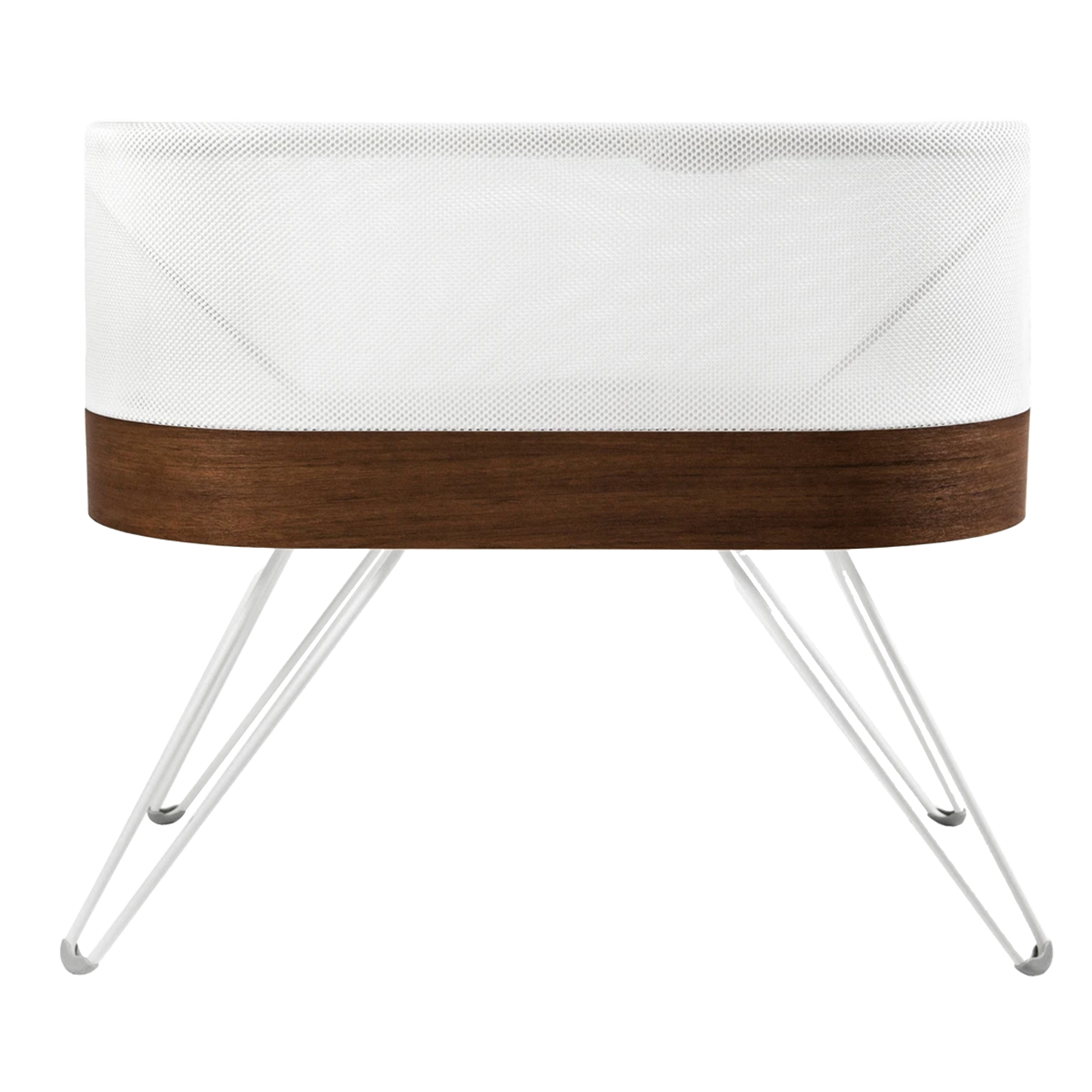
Trish, you just wrapped up your SNOO journey with your little one, but it’s my understanding that you've used SNOO with more than one of your kids. What has been different about the newborn stage for you with the tools and knowledge you've built up over multiple babies?
Trish: With my first baby, everything felt high stakes and overwhelming because it was all new. By the time I had additional kids, I realized how important it is to build systems and tools that reduce friction wherever possible.
The biggest difference now is confidence. You realize babies don’t need perfection—they need consistency, responsiveness, and parents who are supported too. I’m also much quicker to accept help now. Whether that’s technology, feeding support, childcare, or sleep tools like SNOO, I think modern parenting works better when we stop expecting moms to do everything unsupported.
What's one thing you wish someone had told you in the first weeks postpartum that you know now?
Jenney: I wish someone had told me how much care and compassion moms need postpartum too. There’s so much focus on the baby—feeding schedules, sleep, milestones—but very little acknowledgment that moms are recovering from something physically and emotionally enormous while simultaneously being expected to jump right back into managing life at full capacity.
Whether you’ve gone through birth, surgery, complications, sleep deprivation, hormonal shifts, or all of the above, there’s this pressure to immediately “handle it” while healing in real time. I think so many women feel like they’re supposed to bounce back physically, mentally, professionally, and emotionally almost overnight. I wish someone had normalized slowing down, asking for help, protecting your nervous system, and recognizing that caring for mom is part of caring for the baby too.
Trish: I wish someone had told me how much the logistical load impacts maternal wellbeing and mental health. Everyone talks about sleep deprivation, but fewer people talk about the constant operational side of early motherhood—pumping schedules, washing parts, milk storage, tracking feeds, coordinating care, doctor appointments, managing recovery while still running a household.
The invisible labor adds up quickly, especially during a period when your body and brain are still healing. Reducing friction wherever possible genuinely matters — not because moms can’t do hard things, but because they shouldn’t have to carry all of it unsupported.
Looking ahead, what do you hope Leche changes about the way the world thinks about breastmilk?
Jenney: I hope we help normalize the idea that feeding support should evolve alongside modern parenthood. Parents today are balancing work, caregiving, identity, finances, mental health, and community in ways that look very different from previous generations. We want breastmilk access to feel more flexible, accessible, and realistic within that reality.
Trish: I hope we shift breastmilk from something fragile and logistically limiting into something families can preserve, access, and use more flexibly over time. And ultimately, I hope we help create a future where parents feel more supported overall—because feeding a baby should not feel this hard.
Disclaimer: The information on our site is NOT medical advice for any specific person or condition. It is only meant as general information. If you have any medical questions and concerns about your child or yourself, please contact your health provider.






SHARE THIS ARTICLE
MOST LOVED
Sleepytime Sidekicks