BABY
When Do Babies Crawl?
Parents start your engines: Once your baby masters this one, you’ll be on the move, too!

Written by
Happiest Baby Staff
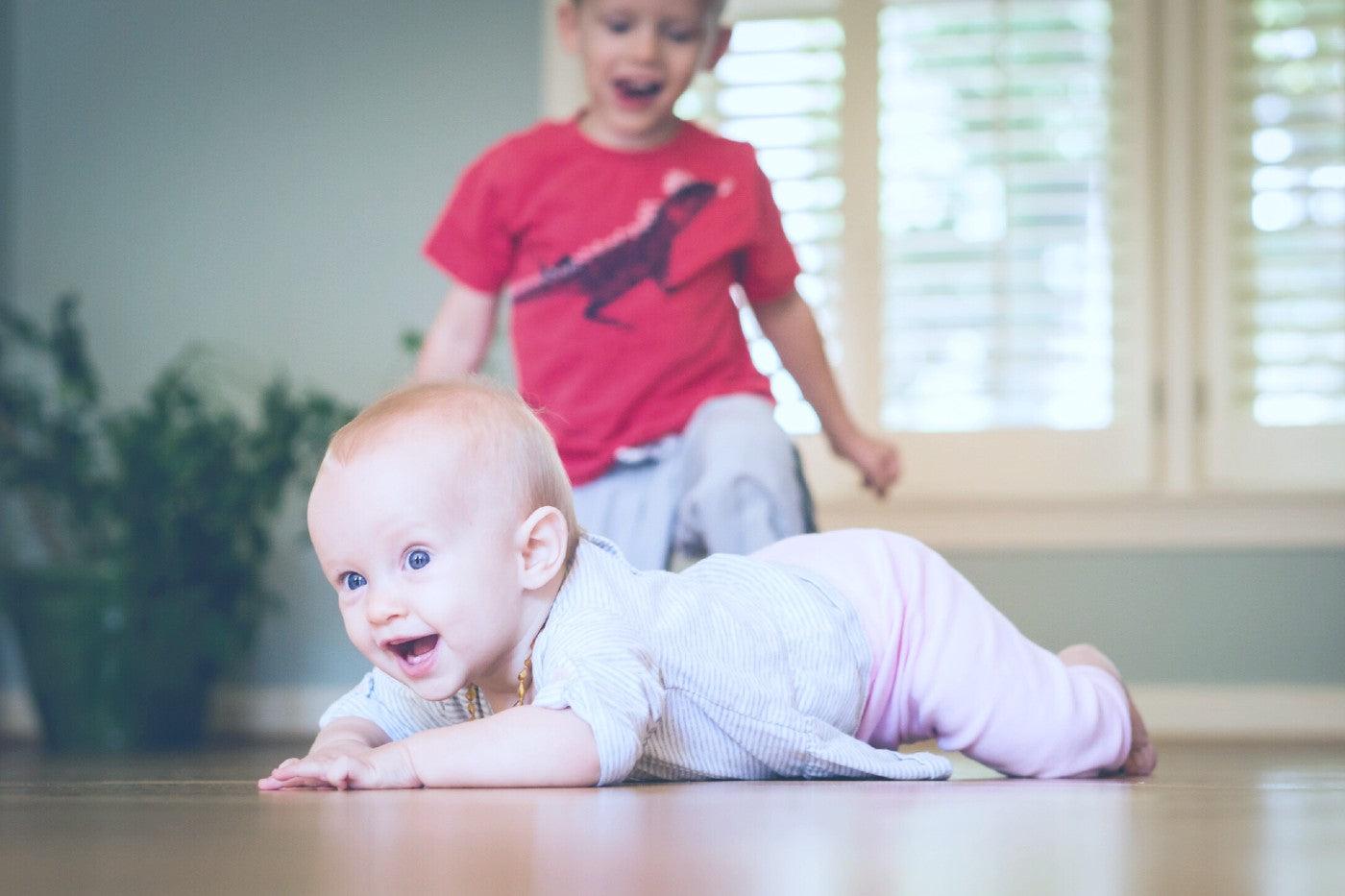
Parents, start your engines: Your baby learning to crawl means you’ll be on the move, too! It’s never too early to think about baby-proofing the house so that you will be ready to go when your little one becomes mobile. Not only is crawling a good physical workout, but it also helps work your baby’s cognitive and spatial awareness skills. As for when exactly your nugget will be ready to crawl, there is a pretty wide timeline—plus, not all crawling looks the same!
When do babies start to crawl?
On average, babies first crawl between 7 and 10 months (and some experts put this range even wider at 5 to 13 months). Or, just to keep you on your toes, some babies will skip crawling altogether!
As you will quickly observe during the first year (and beyond!) of your baby’s life, there is a logical order to the milestones they hit. Especially with gross motor skills, your baby’s abilities will advance as they develop strength, coordination, and focus. By the time they are ready to crawl, they are likely using the skills they fostered during tummy time, from rolling, and by sitting independently. For that reason, the age at which your baby hits those milestones can help predict whether they will be earlier or later to crawl.
Why isn’t crawling an official milestone anymore?
For a long time, crawling was on the Centers for Disease Control (CDC) and American Academy of Pediatrics (AAP)’s list of 9-month milestones. However, after re-evaluating the evidence in 2022, the AAP determined that there was “little to no normative data regarding when the milestone should be achieved by 75% or more of children,” which is the threshold that the AAP uses to determine milestone ages. The CDC and AAP landed on 75% in an effort to encourage providers to act early at even one missing milestone (if the bar was set at 50%, they could reasonably take a wait-and-see approach, which could neglect issues and kids that need attention.) With that, both the CDC and AAP decided to remove crawling as a developmental milestone altogether.
What might crawling look like at first?
When you think of crawling, you probably picture a baby on their hands and knees—moving forward by alternating right hand/left knee and left hand/right knee. While this is known as the “classic crawl” position because it’s so common, it’s definitely not the only mode of transportation for little crawlers.
Other crawling styles include...
- Belly crawl: Also known as the Army crawl or commando crawl, this style involves the baby laying on their stomach and pulling themselves forward with their arms. Babies who use this method may graduate to the classic crawl position—or not!
- Bottom scoot: From seated position, the baby scoots themselves across the floor. It may not seem particularly efficient to you, but it can still be quite effective!
- Tripod crawl: Similar to the classic crawl, except the baby favors one leg for propulsion.
- Bear crawl: You know this one! Baby crawls on hands and feet rather than down on their knees.
- Crab crawl: Rather than moving forward, the baby pushes themselves back or sideways. This is more typical at the beginning of the crawling journey before they get the hang of moving in their intended direction.
How can I help my baby learn to crawl?
Because crawling is in a chain of common motor skills that develop, you can help your baby learn to crawl by also helping them achieve the earlier developmental milestones of rolling over, sitting unsupported, and learning to get themselves into seated position. Your baby may be on the cusp of crawling if you notice them rocking forward onto their hands and knees while in the seated position. From there, they will lean on their ever-improving coordination skills to get themselves moving.
If you want to encourage your baby’s crawling efforts, know that the keyword is “encourage.” Give them ample opportunities for seated play. Get down on the floor with them and cheer them on. Put interesting toys or objects just beyond their reach. And, lastly, keep it fun! You really can’t make a baby do something they aren’t ready to do. If they aren’t ready at 8, 9, 10 months—or more!—then give it some more time.
Should I worry if my baby doesn’t crawl?
Skipping crawling is not usually a cause for concern (maybe your baby is ready to hit the ground walking first!). What you should look for instead is a bigger pattern: Although it’s not a big deal if your baby doesn’t crawl, it could signify a larger problem if they can’t bear weight on their legs or arms, aren’t engaging with their surroundings, or are behind with other developmental milestones.
When it comes to milestones for your baby, there is a range of what’s considered “normal.” Because milestones are based on averages, many babies will hit milestones “early,” while others will achieve them later. If you have any concerns, don’t be afraid raise them with your child’s pediatrician!
More on Baby Milestones:
- When Do Babies Talk?
- When Do Babies Walk?
- When Do Babies Need Shoes?
- When Do Babies Start to Climb?
- What's "Normal" Talking for a 12-Month-Old?
***
REFERENCES
- Michigan State University Extension: Why Crawl?
- The American Academy of Pediatrics: Movement: Babies 8 to 12 Months
- Age for Onset of Walking and Prewalking Strategies, Early Human Development, April 2013
- Evidence-Informed Milestones for Developmental Surveillance Tools, Pediatrics, February 2022
- Centers for Disease Control and Prevention: Learn the Signs, Act Early
- The American Academy of Pediatrics: Crawling Styles
Disclaimer: The information on our site is NOT medical advice for any specific person or condition. It is only meant as general information. If you have any medical questions and concerns about your child or yourself, please contact your health provider.
SHARE THIS ARTICLE