PARENTS
How to Clean Baby Toys
(But don't worry, it doesn't mean scrubbing every single toy every single day!)

Written by
Happiest Baby Staff
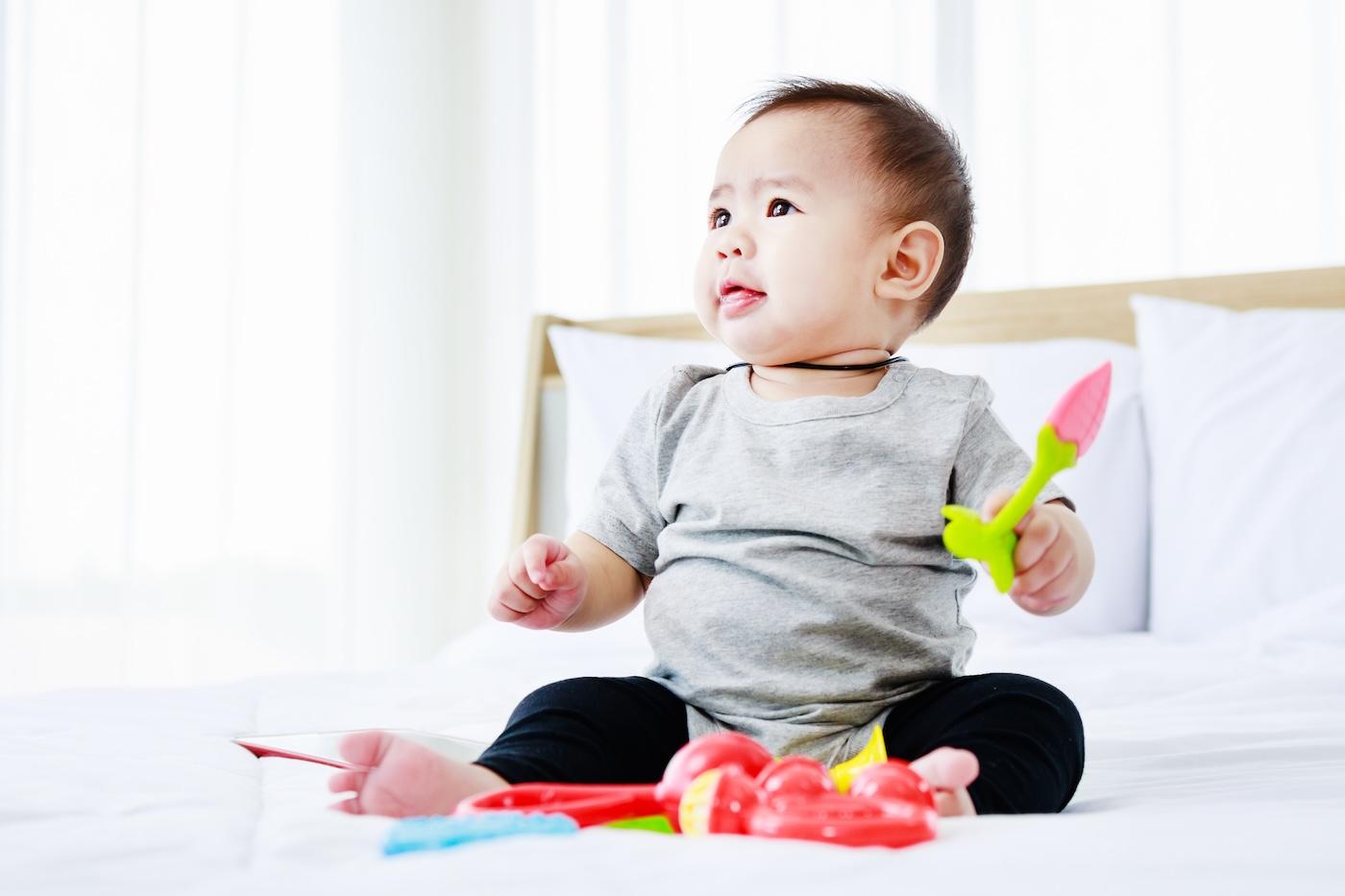
Between drool, snack crumbs, sneezes, and the occasional trip across a public floor, your baby's toys pick up more than they let on. And because babies and toddlers explore the world mouth-first, whatever's living on that stacking cup or teether is probably headed straight for their tongue. Studies looking at daycare classrooms have found a surprising diversity of bacteria on shared toys, a reminder that regular cleaning can offer a real line of defense against colds, stomach bugs, and other everyday illnesses.
Fortunately, keeping toys clean doesn't have to mean scrubbing every plaything daily or reaching for harsh chemicals. Below, we'll walk through how often to clean, the safest method for each material, and what to check before a toy goes anywhere near soap and water.
How often should you clean baby toys?
Not every toy needs the same level of attention. The Centers for Disease Control and Prevention (CDC) distinguishes between cleaning (removing dirt and germs with soap and water), sanitizing (reducing germs to safe levels), and disinfecting (destroying germs with a stronger solution)—and recommends sanitizing anything that regularly ends up in a child's mouth, including toys.
A quick cleaning frequency guide:
- Mouthed toys (teethers, rattles, chew toys): Wipe down or wash after each use, and sanitize at least once a week.
- Everyday toys (blocks, cars, stacking cups): Clean weekly, or immediately after a cold, stomach bug, or other illness in the house.
- Occasional or shared toys (visiting cousin's toys, library board books, doctor's office playthings): Wipe down before and after use.
- Outdoor and shared-space toys: Clean after every outing, since these pick up germs from other children and surfaces.
If your child has recently been sick, skip the wait and sanitize favorite toys right away, since illness increases the concentration of germs on frequently handled items.
How to Clean Baby Toys by Material
Different materials call for different methods. Always check the manufacturer's label first. When in doubt, a quick look at the toy's original packaging or website can tell you whether it's dishwasher- or machine-safe.
Hard Plastic and Rubber Toys
Most hard plastic and rubber toys can be cleaned in one of a few ways:
- Soap and water: Wash with warm, soapy water and a clean cloth or brush, then rinse thoroughly.
- Dishwasher: Many hard plastic toys are dishwasher-safe on the top rack. Use a mesh laundry bag to keep small pieces from falling through or getting lost.
- Diluted bleach solution: For a deeper sanitize, the CDC recommends one tablespoon of unscented bleach per gallon of water. Submerge the toy for at least two minutes, then let it air-dry completely on a clean towel; there's no need to rinse, since any remaining bleach breaks down as it dries.
Soft and Plush Toys
Check the tag first. If a plush toy is machine-washable, launder it in warm water and dry it thoroughly on a low or medium heat setting to help kill germs. If it's not machine-safe, spot-clean with a damp cloth and mild soap, then air-dry completely before returning it to the crib or playroom. For a full walkthrough, including how to handle toys with electronic parts or delicate embellishments, see our guide on how to wash stuffed animals.
Wooden Toys
Wooden toys should never be submerged in water or run through the dishwasher, since soaking can warp the wood or damage any paint or finish. Instead, wipe them down with a cloth dampened in warm, soapy water, then dry immediately with a clean towel. For toys with a natural oil finish, a light coat of food-grade mineral oil every few months can help keep the wood from drying out.
Board Books and Cloth Books
Board books can typically be wiped clean with a damp cloth and mild soap. Avoid soaking the pages, which can cause warping or mold. Cloth books are often machine-washable on a gentle cycle—check the tag to confirm, and air-dry when possible to preserve the fabric.
Battery-Operated and Electronic Toys
Unplug the toy or remove the batteries before cleaning, and never submerge electronic toys in water. Wipe down the exterior with a cloth lightly dampened with soapy water or a baby-safe disinfecting wipe, taking care to keep moisture away from speakers, buttons, and battery compartments. Let the toy air-dry fully before replacing the batteries.
Check Before You Clean: Small Parts, Batteries, and Recalls
Before you clean a toy—or hand it back to your child afterward—it's worth a quick safety check. Look for cracked or splintering plastic, loose buttons or eyes on stuffed animals, fraying seams, and battery compartments that no longer close securely. These are the same things to watch for when choosing safe toys in the first place, and cleaning time is a natural opportunity to catch a toy that's started to break down.
It's also a good moment to check the U.S. Consumer Product Safety Commission's recall list if you haven't in a while, especially for secondhand or hand-me-down toys. And if a toy is genuinely damaged beyond a simple repair, toss it rather than continuing to clean and reuse it; a cracked seam or loose part is a choking hazard no amount of washing will fix.
How to Keep Toys Clean Between Washes
A few small habits go a long way toward cutting down on how often deep cleaning is needed:
- Wash hands before and after playtime, especially before meals or after time outdoors.
- Keep a "wash me" bin or basket for toys that get mouthed, so they don't go straight back into the mix unwashed.
- Rotate toys in and out of use. A smaller, rotating collection is easier to keep clean than one giant, overflowing bin—and it can also make old favorites feel new again.
- Store toys dry. Damp toys tucked into bins or baskets are an invitation for mold, so let everything air-dry fully before it goes back on the shelf.
- Do a seasonal purge. Outgrown, broken, or rarely touched toys are just more surface area to clean; consider passing along what your child has outgrown to keep the collection manageable.
Cleaning baby toys doesn't need to be complicated—a little soap, water, and a regular rhythm will handle most of it. Save the deeper sanitizing sessions for mouthed toys, illness in the house, or anything that's been out in public, and you'll keep germs in check without turning it into a full-time job.
More Cleaning Tips:
- How to Clean Bath Toys
- How to Clean a Baby's Room
- How to Wash Stuffed Animals
- How to Choose Safe Toys for Babies and Toddlers
- Clever Ways to Corral Toy Clutter
Disclaimer: The information on our site is NOT medical advice for any specific person or condition. It is only meant as general information. If you have any medical questions and concerns about your child or yourself, please contact your health provider.

SHARE THIS ARTICLE
MOST LOVED
Sleepytime Sidekicks