PREGNANCY
Can I Get a Tattoo While Pregnant?
Think before getting inked—here’s what to know.

Written by
Happiest Baby Staff
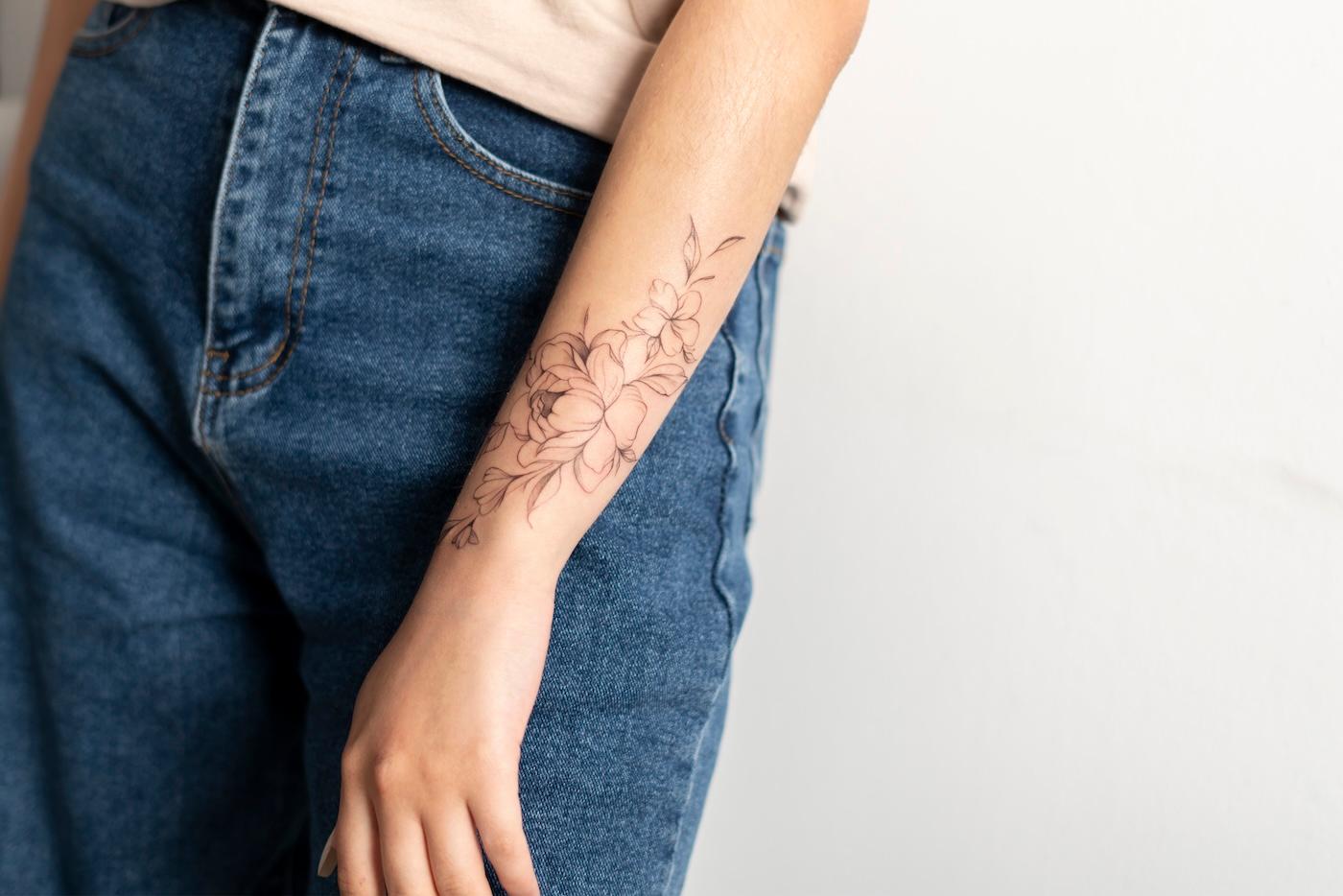
The Short Answer: Most experts suggest waiting. There are no studies on tattoos during pregnancy, so no one can say for sure that getting inked is safe for a developing baby. The biggest known risk is infection—including blood-borne infections like hepatitis B and C that can pass to your baby. Pregnancy also stretches and changes your skin, which can affect how new ink looks later. If you already got a tattoo before you knew you were pregnant, don't panic—just let your healthcare provider know.
Maybe you want to honor your growing family with a tiny heartbeat line or your baby's due date. Maybe you booked a long-awaited appointment with your favorite artist months before that second pink line showed up. Either way, you're probably wondering: Can I get a tattoo while pregnant? Here's what the science says—and what it doesn't—about getting inked while you're expecting.
Is it safe to get a tattoo while pregnant?
No one knows for sure. According to the teratology experts at MotherToBaby, there are no studies on tattoos during pregnancy or breastfeeding. Experts agree that very little tattoo ink likely gets into your bloodstream, but no one is sure what effect even a little ink would have on a developing baby.
That uncertainty—not proof of harm—is why most healthcare providers suggest holding off until after your baby arrives. The good news? If you already have tattoos, a review of body art and pregnancy found that in most cases, pregnancy is uneventful for people with existing tattoos or piercings.
What are the risks of getting a tattoo while pregnant?
Getting a tattoo means a needle pierces your skin over and over, depositing tiny drops of ink with each puncture. That breaks the skin barrier, which opens the door to a few potential problems.
Infection
This is the clearest, best-documented risk:
Blood-borne infections: If tattoo equipment has infected blood on it, you can contract hepatitis B, hepatitis C, or MRSA (a drug-resistant staph infection). The CDC notes that hepatitis C can spread through tattoos done in unlicensed facilities, informal settings, or with non-sterile instruments.
Contaminated ink. Even a spotless studio can't fully control what's in the bottle. The FDA reports that even unopened, sealed tattoo inks can harbor bacteria and other microorganisms, and there's no surefire way to tell if an ink is safe without testing. Aggressive infections may require antibiotics—sometimes for months—or even hospitalization or surgery.
Why does this matter more when you're pregnant? Some of these infections can be passed to your baby. About 6% of infants born to people with hepatitis C will get the virus—and standard hepatitis C treatment is recommended for nearly everyone except pregnant people. Hepatitis B is especially serious for newborns: Infants who contract the virus have about a 90% chance of developing a chronic infection.
Unknown Effects of Tattoo Ink
Tattoo ink isn't as simple as it looks. Research has found that some inks contain pigments used in printer toner or car paint, and the FDA has not approved any pigments for injection into the skin for cosmetic purposes. The agency also notes there are still a lot of open questions about the long-term effects of tattoo pigments and possible contaminants.
Ink doesn't always stay put, either. A study of tissue from tattooed donors found that pigments, heavy metals, and titanium dioxide traveled from the skin to nearby lymph nodes. What that means for a developing baby simply hasn't been studied.
Allergic Reactions and Other Skin Problems
Tattoo ink can trigger an itchy, allergic rash—sometimes even years later—and red ink is more prone to causing reactions than other colors. Tattooing can also lead to granulomas (small bumps of inflammation around ink) and keloids (raised overgrowths of scar tissue). And if your ink contains p-phenylenediamine (PPD), you may become allergic to other products, like hair dye. (More on pregnancy-safe hair care.)
Is there a safe trimester to get a tattoo?
Unfortunately, no. Because there are no studies on tattooing during pregnancy, there's no trimester that's been shown to be lower-risk than another. The only way to sidestep the unknowns entirely is to wait until after your baby is born (and, ideally, until you're done breastfeeding—more on that below).
Can you get an epidural if you have a lower-back tattoo?
Yes! This is one of the most common tattoo-and-pregnancy worries, but a review in an anesthesiology journal found that no serious complications have been reported after an epidural placed through a tattoo. It concluded that epidurals should not be denied to people with lower-back tattoos.
The theoretical concern is something called "tissue coring," where the needle could carry a tiny plug of pigmented skin inward. To be extra cautious, anesthesiologists may aim the needle through a spot without ink or make a tiny nick in the skin first. In one recent case report, a modified technique was used for a patient with a large lower-back tattoo, and she had no complications over 18 months of follow-up.
A fresh lower-back tattoo is a different story. Most tattoos take about two weeks to heal, and infection at the injection site is a reason anesthesiologists won't place an epidural. If you have new or healing ink anywhere on your lower back, mention it to your care team well before your due date. (Learn more about your labor pain relief options.)
How to Lower the Risks If You Get a Tattoo While Pregnant
If you decide to move forward, talk with your OB or midwife first, then take these steps to keep yourself and your baby as safe as possible.
- Choose a licensed studio: Tattoo licensing rules vary from state to state, so check with your local or state health department. Never use a DIY tattoo kit—the FDA notes these have been linked to infections and allergic reactions.
- Watch the setup: Your artist should wash their hands and put on a fresh pair of disposable gloves, take needles and tubes from sealed packages, and pour ink into new, single-use cups.
- Ask about sterilization: The studio should use a heat-sterilization machine (called an autoclave) for any reusable equipment.
- Tell your artist you're pregnant: This helps them plan positioning, breaks, and aftercare.
- Check your hepatitis B protection: Mayo Clinic recommends being vaccinated against hepatitis B before getting a tattoo. Ask your provider whether you're protected.
- Pick your spot wisely: Skip areas that stretch the most during pregnancy, like the belly, breasts, and hips—and avoid your lower back late in pregnancy.
- Follow aftercare to the letter: Wash the area gently twice a day, moisturize, keep it out of the sun, and stay out of pools and hot tubs until it heals. (Pregnant people should limit hot-tub time anyway. Learn more about taking baths while pregnant.)
Are temporary tattoos and henna safe during pregnancy?
Temporary body art can be a fun way to try out a design while you wait—but "temporary" doesn't automatically mean risk-free.
- Decal tattoos: The FDA has received reports of reactions to some decal temporary tattoos, so it's smart to test one on a small, inconspicuous patch of skin first.
- Henna (mehndi): Henna is plant-based, but it's actually only FDA-approved for use as a hair dye, not for direct application to skin. Even brown products labeled "henna" may contain other ingredients to darken the stain.
- "Black henna:" Skip this one entirely. "Black henna" often contains PPD, a coal-tar hair dye ingredient that can cause dangerous skin reactions and isn't permitted in cosmetics applied to skin.
If you're set on henna for a baby shower or maternity shoot, check with your healthcare provider and ask the artist exactly what's in their paste. (More on pregnancy-safe skincare.)
Can you get a tattoo while breastfeeding?
There's not much data here either. According to the National Library of Medicine's LactMed database, no data are available on the safety of tattooing during breastfeeding. The theoretical concerns are that pigments or infections could pass to your baby, and expert opinion generally favors waiting to get new ink until after you're done nursing.
When to Call Your Healthcare Provider
Some redness, swelling, or warmth right after a tattoo is normal. But contact your provider (and your tattoo artist) if you notice:
- A tattoo that doesn't seem to be healing
- A rash, redness, or bumps around the tattoo
- Fever—especially a high fever with shaking, chills, or sweats, which can signal a more serious infection
- Any concern that the equipment used wasn't sterile, so your provider can decide whether you need testing for blood-borne infections
- Any symptom that worries you
If you do have a reaction, ask your artist for the brand, color, and lot number of the ink to help pinpoint the cause.
FAQ: Tattoos and Pregnancy
Can a tattoo harm my baby?
There's no evidence that a tattoo directly harms a developing baby—but there's also very little research, which is why caution is advised. The clearest risk is infection from contaminated equipment or ink, since some blood-borne infections can be passed to your baby.
I got a tattoo before I knew I was pregnant. Should I worry?
Try not to stress! Just tell your OB or midwife when and where you got it. As part of routine prenatal care, the CDC recommends screening all pregnant patients for hepatitis B and hepatitis C during each pregnancy, so your care team already has a built-in way to check.
Is microblading or permanent makeup safe while pregnant?
Permanent makeup—like microbladed brows or lip blush—is a type of tattoo, so the same infection and ink concerns apply. Most people choose to wait until after pregnancy.
Will my existing tattoos stretch during pregnancy?
They might. Tattoos on areas that stretch the most—like your belly, breasts, hips, and buttocks—are the likeliest to shift. Many pregnancy-related skin changes improve or fade after delivery, but stretch marks can linger.
Can I get a tattoo removed while pregnant?
It's best to wait. Even outside of pregnancy, experts don't know the short- or long-term consequences of how pigments break down after laser removal. Talk to a dermatologist about timing once your baby arrives.
Will a tattoo affect my epidural?
A healed lower-back tattoo shouldn't prevent you from getting an epidural. Your anesthesiologist may simply place the needle through un-inked skin. A fresh or infected tattoo at the injection site is a different matter, so flag any new ink early.
More on Pregnancy Safety:
- Labor Pain Relief Options: What to Know
- Hair Care During Pregnancy: Safety Dos and Don'ts
- Essential Oils During Pregnancy: Are They Safe?
- Taking Baths While Pregnant: Is It Safe?
- Can I Go to the Dentist While Pregnant?
***
REFERENCES- Organization of Teratology Information Specialists MotherToBaby: Getting a Tattoo While Pregnant or Breastfeeding: Is It Safe?
- Body Art and Pregnancy, European Journal of Obstetrics & Gynecology and Reproductive Biology, Nov 2010
- Mayo Clinic: Tattoos: Understand Risks and Precautions
- Centers for Disease Control and Prevention: Clinical Overview of Hepatitis C
- Centers for Disease Control and Prevention: Hepatitis C Prevention and Control
- U.S. Food and Drug Administration: Think Before You Ink: Tattoo Safety
- Centers for Disease Control and Prevention: Clinical Overview of Perinatal Hepatitis B
- Synchrotron-Based ν-XRF Mapping and μ-FTIR Microscopy Enable to Look Into the Fate and Effects of Tattoo Pigments in Human Skin, Scientific Reports, Sep 2017
- Tattooing and Various Piercing: Anaesthetic Considerations, Current Opinion in Anaesthesiology, Jun 2009
- Epidural Analgesia and Tattoos: A Modified Technique to Minimise Risks and Improve Safety, BMJ Case Reports, Dec 2023
- StatPearls: Epidural Catheter Placement
- Common Skin Conditions During Pregnancy, American Family Physician, Feb 2023
- U.S. Food and Drug Administration: Temporary Tattoos, Henna/Mehndi, and "Black Henna" Fact Sheet
- National Library of Medicine Drugs and Lactation Database (LactMed): Tattooing
Disclaimer: The information on our site is NOT medical advice for any specific person or condition. It is only meant as general information. If you have any medical questions and concerns about your child or yourself, please contact your health provider.




SHARE THIS ARTICLE