PREGNANCY
What Happens During a C-Section?
Here’s a step-by-step of what to expect.

Written by
Happiest Baby Staff
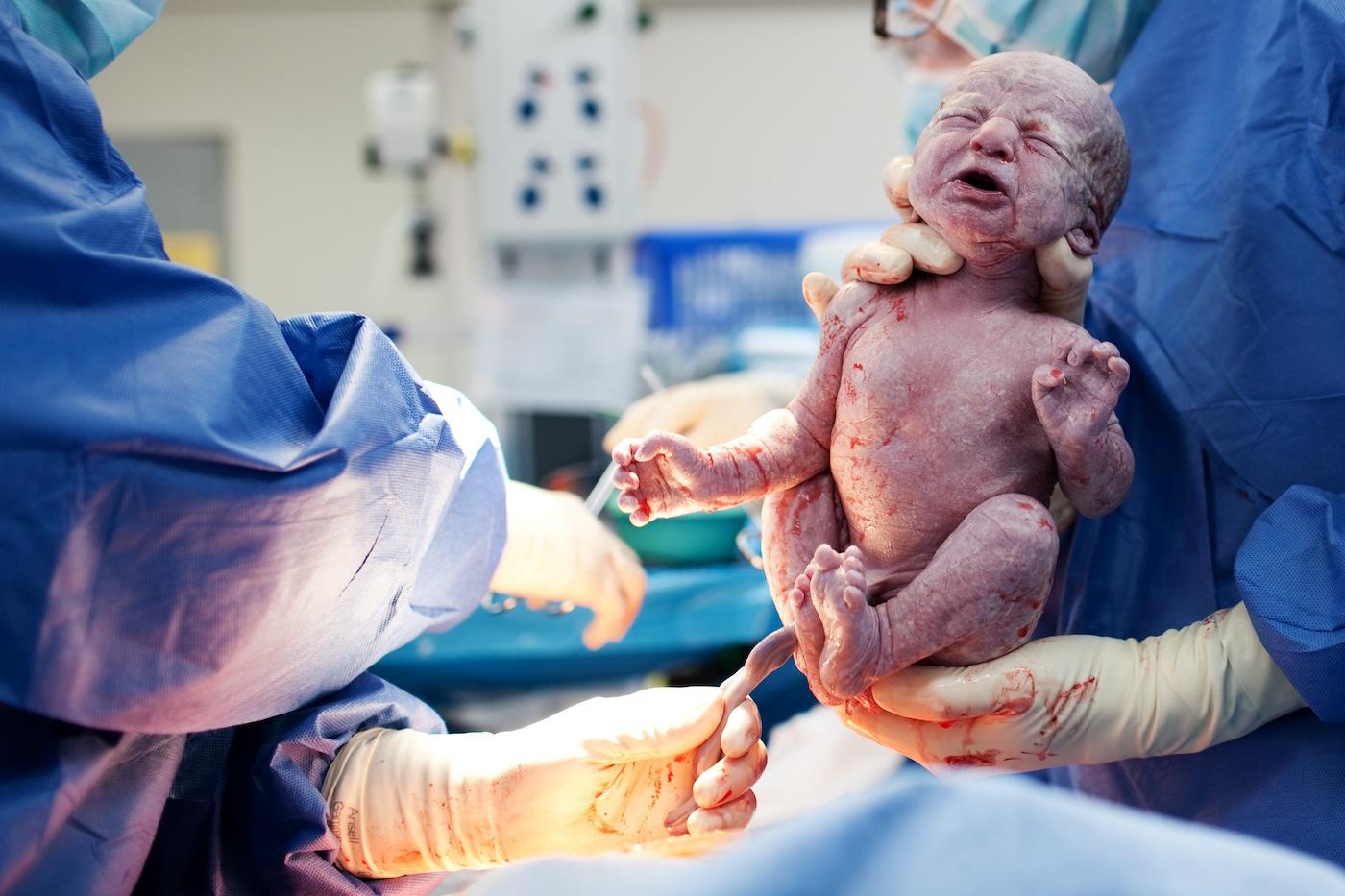
If you’re facing a c-section—planned or surprise—it’s completely normal to feel a mix of relief, nerves, curiosity, and “Wait…what actually happens in the OR?” The good news: C-sections are common, and your care team does this every day. Knowing the play-by-play can make the whole experience feel a lot less mysterious.
Here’s what a c-section is, why it’s done, what it typically looks and feels like step-by-step, and what recovery usually entails.
What is a c-section?
A c-section (aka cesarean delivery) is a surgical birth where your baby is delivered through incisions in your abdomen and uterus. Most commonly, the skin incision is a horizontal “bikini cut” low on the belly; sometimes a vertical incision is needed based on the situation. Some c-sections are planned or scheduled ahead of time, while others are unplanned—decided during labor, and sometimes an emergency. About 1 in 3 babies is born via c-section.
What is a gentle cesarean?
A gentle cesarean (sometimes called a “family-centered cesarean”) is still a surgical birth—but with extra attention to bonding and a calmer birth vibe, when it’s safe to do so.
Depending on your hospital and your medical situation, that might include:
- A support person present in the OR
- Skin-to-skin contact soon after birth if parent and baby are stable (The American Academy of Pediatrics recommends skin-to-skin to support bonding and breastfeeding).
- Delayed cord clamping when appropriate (WHO recommends delaying cord clamping not earlier than 1 minute).
- Lowering the drape or using a clear drape at birth (hospital-dependent)
A peer-reviewed pilot study found no significant neonatal transition risks when early skin-to-skin was done in the OR after cesarean birth (though protocols vary by hospital).
Why would I need a C-section?
Sometimes a C-section is the safest route—either because labor isn’t going as hoped or because something about the pregnancy or baby’s position makes vaginal birth riskier.
Common reasons include:
- Labor slows way down or stops progressing
- Baby isn’t positioned for a safe vaginal birth (like breech or transverse)
- Baby shows signs of distress (for example, concerning heart rate patterns)
- Placenta issues like placenta previa or placental abruption
- Multiples (depending on position and other factors)
- Certain maternal health conditions or infections (such as HIV or active genital herpes at delivery)
How to Prepare for a Scheduled C-section
If your c-section is scheduled, you’ll usually get a checklist from your hospital. Here’s what often happens:
- You’ll go over the plan and sign consent forms. Your provider will explain why a C-section is recommended and what to expect.
- You’ll get instructions about eating/drinking. Many hospitals ask you not to eat or drink for a set period before surgery (rules vary, and your care team will tell you what’s right for you).
- Anesthesia planning happens ahead of time. Most planned C-sections use spinal or epidural anesthesia so you’re awake for birth; general anesthesia is used in some situations (more often in emergencies).
- Day-of basics: You’ll typically get an IV, monitoring, and (often) a urinary catheter to keep the bladder empty during surgery.
Some questions to consider asking your provider in advance:
- Can my partner be in the OR?
- Can we do skin-to-skin quickly?
- Is delayed cord clamping an option if baby is doing well? (Policies vary—but asking early helps.)
What Happens During a C-section Step by Step
Every hospital has its own rhythm, but here’s the usual flow—from “let’s do this” to “hello, baby!”
1) You get anesthesia.
Most planned c-sections use spinal or epidural anesthesia, which numbs you from the chest or belly down (you’re awake, but you can’t feel pain in the surgical area). In urgent situations, general anesthesia may be used.
2) Your belly is prepped.
Your abdomen is cleaned with antiseptic, sterile drapes are placed, and often a curtain is set up so you don’t see the surgery (unless you request otherwise and the hospital can accommodate).
3) The incision is made.
Most people get that low horizontal “bikini” incision. In some circumstances, a vertical incision may be needed.
4) The uterus is opened.
Next, your provider makes an incision in the uterus (often horizontal, but not always).
5) Your baby is delivered.
This is the big moment: Your provider lifts your baby out through the uterine opening! Depending on your hospital’s setup and the situation, you may hear your baby cry almost immediately.
6) Your baby is checked and cared for.
A pediatric team member or nurse typically assesses your baby’s breathing and overall transition after birth.
7) The cord is clamped and cut.
In some cases, delayed cord clamping may be possible. WHO notes that delaying cord clamping (not earlier than 1 minute) can improve infant iron status. Your team will decide what’s safest in the moment.
8) The placenta is delivered.
After baby is out, the placenta is removed.
9) You’re closed up.
Your uterus and abdominal layers are stitched closed (and skin closure may be sutures or staples depending on hospital protocol).
10) Recovery and bonding begin.
You’re moved to a recovery area (or you stay in the OR briefly) while your team monitors your blood pressure, bleeding, and how you’re feeling as anesthesia settles. If all is well, this can also be when cuddles and feeding get going.
What does a c-section feel like?
This is the question everyone asks—because it’s hard to imagine!
With spinal or epidural anesthesia, you should not feel sharp pain. But you may feel pressure, pulling, or tugging as baby is delivered. Some parents describe it as “someone doing dishes in my belly” (odd, but accurate).
If you feel pain (not just pressure), say something right away—your anesthesia team can often adjust medication.
What are the risks of a c-section?
A c-section is major surgery, and like all surgeries it has risks. Some include:
- Infection
- Bleeding
- Blood clots
- Injury to nearby organs like bladder or bowel (uncommon, but possible)
- Anesthesia/medication reactions
- Higher risk of certain complications in future pregnancies, especially after multiple C-sections.
Your team’s job is to minimize these risks with sterile technique, careful monitoring, early movement when safe, and individualized care.
What are the benefits of a c-section?
The biggest benefit is also the simplest: When a vaginal birth isn’t the safest choice, a c-section can protect both parent and baby. WHO notes that medically necessary cesarean births help prevent maternal and newborn deaths. And for many families, a scheduled C-section can also bring a sense of predictability—no guessing when labor will start.
How long does a c-section take?
Many c-sections take about 45 to 60 minutes total, though baby is often born within the first 10 to 15 minutes. (The “closing up” part takes time—because your body deserves careful, layered repair.)
How long does it take to recover from a c-section?
In the hospital, many people stay about 2 to 3 days. Full recovery often takes around 4 to 6 weeks, though every body is different.
A few things to know ahead of time:
- Bleeding can continue for weeks up to 6 weeks after birth.
- Soreness is normal. You’ll likely feel incision tenderness, cramping, and fatigue—especially once you’re home and moving around more.
- (Gentle!) movement helps. Your care team will encourage safe, early movement to support circulation and reduce clot risk.
Learn more about c-section recovery!
Call your provider ASAP if you have heavy bleeding, fever, increasing incision redness/drainage, severe headache, chest pain, or shortness of breath—those can be signs something needs attention.
More on Labor and Delivery:
- Labor Induction: What Happens When You Give Birth a Nudge
- How to Write a Birth Plan (Plus, Free Templates!)
- Pain Relief During Labor: Your Best Options
- Labor Relaxation Techniques for an Easier Birth
***
REFERENCES- MedlinePlus: Cesarean Delivery
- MedlinePlus Medical Encyclopedia: C-section - series—Procedure, part 2
- Eunice Kennedy Shriver National Institute of Child Health and Human Development: What Is a Cesarean Section?
- American College of Obstetricians and Gynecologists: Cesarean Birth
- Early skin-to-skin contact after cesarean section: A randomized clinical pilot study, PLOS ONE, February 2017
- American Academy of Pediatrics: Delivery by Cesarean Section
- World Health Organization: WHO Statement on Caesarean Section Rates
- Cleveland Clinic: Cesarean Birth (C-Section)
- MedlinePlus Medical Encyclopedia: Cesarean Delivery
- MedlinePlus Medical Encyclopedia: C-section - series—Procedure, part 1
- MedlinePlus Medical Encyclopedia: C-section - series—Procedure, part 3
- American Society of Anesthesiologists: C-Section
- World Health Organization: Cord Clamping
- Johns Hopkins Medicine: Cesarean Section
- MedlinePlus Medical Encyclopedia: C-section - series—Procedure, part 2
Disclaimer: The information on our site is NOT medical advice for any specific person or condition. It is only meant as general information. If you have any medical questions and concerns about your child or yourself, please contact your health provider.





SHARE THIS ARTICLE