PARENTS
How One Montana Nurse Is Rebuilding the Village For the Parents Who Need It Most
Leesha Ford is the Executive Director of Toby's House, where she's bringing a mix of clinical expertise and compassionate care.

Written by
Happiest Baby Staff
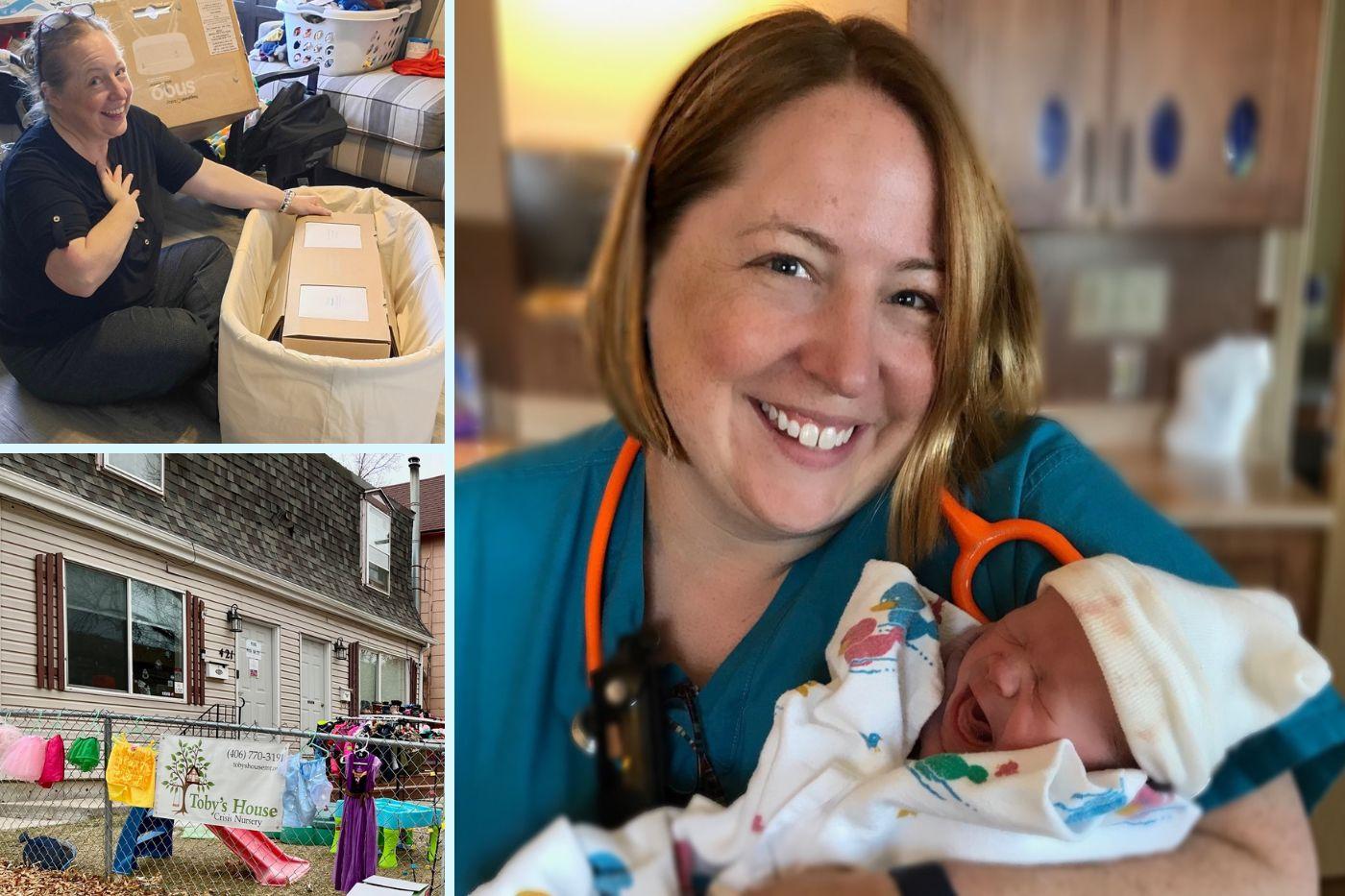
When a baby is crying and a parent is at their edge, what does a community do? For Leesha Ford, the answer meant building something that didn't yet exist in Montana.
With more than 18 years as a labor and delivery nurse, Leesha now serves as Executive Director of Toby's House Crisis Nursery in Great Falls, Montana. A certified Happiest Baby educator, nursing instructor, proud grandma, pug enthusiast, and avid quilter, Leesha brings equal parts clinical expertise and compassion to her work.
We caught up with Leesha to talk about what crisis nurseries do, the postpartum realities that don't get enough attention, and how SNOO has become an unexpected teaching tool on the nursery floor.
What’s the moment or experience that first made you feel called to support families in crisis?
I often say I’ve worked to help build a space I needed as a child. My parents divorced early in my life and time with my father could be very unpredictable and chaotic. Mental illness wasn’t really something we knew how to support people through at that time and while he loves me very much, he did not function well as a parent in those years. I wish there had been a place like Toby’s House Crisis Nursery that he could gotten support from during my visits with him, if even just to make his parenting journey easier.
As far as ‘one moment,’ where my heart became very much directed in on families in crisis was when an infant in our community had been found in the trunk of his mother's car. I would just think about what if there were just something small that families need to function, what might make a difference that keeps them from spiraling. In the years following his death, we had numerous infants and toddlers die from abuse and neglect in our community, and I knew there was so much more our community needed to do to prevent parents and caregivers from hitting their ‘edge.’ I began to think about how things snowball during a day and if someone is walking the ‘edge,’ something very small can seem more than they can bear, and I just wanted to help people back away from that edge.
How did your path move from labor and delivery nursing to Toby’s House Montana?
I worked as a nurse in labor and delivery, postpartum and the newborn nursery for over 18 years, and on my days off, I would attend a committee that worked on preventing child abuse and neglect when a community needs assessment had indicated it was a growing concern in our city. As a maternity nurse, I looked for ways to help new parents feel like good parents, to be able to feel skilled at calming their crying infant. It would break my heart hearing a parent say, ‘she doesn’t like me, she’s crying,’ because that simply isn’t true, a crying baby is trying to tell us, I’m feeling something and I need your help. I wondered why I was able to soothe a baby in a few moments and wanted to learn what I was doing that I could easily teach to new parents.
For someone new to the concept, what is a crisis nursery?
Each crisis nursery may vary in hours, services, and models, but the primary role it plays is as a place parents and caregivers can turn to when they are feeling stressed, overwhelmed, struggling, or experiencing a crisis that impacts their lives and livelihoods. Care is typically provided for young children and is voluntary—it isn’t a foster home or child protective services establishment that removes a child from caregivers.
In a time where many of us are far away from our ‘village’ of support, a crisis nursery exists for those that don’t have somewhere to turn for help. We see all kinds of caregivers—dads, moms, foster parents, and sometimes they are in challenging situations, such as when a grandparent who has custody is visiting our town for medical care and can’t take their grandchild to their appointment, and they just need help for an hour or two so they can take care of medical needs.
Other times we have a family experiencing postpartum depression, which affects the entire family, and the father is worried but can’t take more time off of work. We provide care for their infant for several hours or all day for a few weeks to months and help ensure they get connected with their healthcare providers, counseling, and support groups.
In rare, but heartrending situations, we will have a call from a parent at their edge, often crying, sometimes fighting with a loved one, or coping with other complex issues, and we give them immediate respite, even if we are closed. Respite isn’t just about refilling the tank, it is about frequently topping off the tank, before it gets empty to make sure no one is surviving on fumes. As we build trust and get to know the family, we find other ways to help their distresses. Sometimes it is financial, and we can provide help with diapers or formula, or wipes.
We have any financial justification or documentation required from families to access our assistance with childcare or resources. We call this a ‘low-barrier’ entrance. Our belief is that anyone can have a crisis, and that life doesn’t check your paystub before giving you something overwhelming in your day.
What do you wish more people understood about why parents seek help?
Often, we define what is a crisis in our own head first, and we think of the moment things emotionally break, and someone hurts their child. When we let families define their crisis, we reduce the barriers to getting help. Most parents are not thinking ‘I’m going to hurt my child’ instead they are feeling overwhelmed, burdened, distressed, and know their capacity to handle stress is falling. By having a place to reach out to as stressors accumulate before that breaking point, we can help families with the smaller issues before they become a mountain no one person could climb. We find that often families are working as hard as they can. There are any number of reasons that an immediate, acute, or chronic crisis can result in a family seeking help. A crying baby, a busy toddler, a write-up at work can set them up for a spiral that is hard to recover from!
What are the biggest pressures facing families in your community right now, and how are you seeing that show up in demand?
About 50% of families in our area are struggling to pay for enough diapers and wipes. This diaper poverty means that parents are buying diapers and wipes but are sacrificing other items. Often, they can’t afford medicine for their child’s fever, a thermometer, or basic items like snow boots and shoes. And in cases where it may be ’squeaky’—I call this the day or two when supplies are often short right before a paycheck—they may go a little longer between diaper changes, even when they know their child is wet. One unanticipated expense like replacing a dead battery or a day of lost income may mean they struggle to have enough diapers on hand. We are seeing more families than ever with need for help with concrete resources such as diapers and wipes, formula and baby clothing.
In our community childcare can be hard to find, hard to pay for, and that just compounds the stress on parents caring for young children. Our Head Start has dozens on the waiting list, and typically they are the families who have a critical need, and their children have a critical need for early education access. Stability without stable childcare is difficult to achieve. Often, we will help families for five or six months until a space opens at an appropriate early childhood partner.
From your nursing lens, what postpartum realities do you think deserve far more attention and support?
Postpartum Experiences affect the entire family system-including the infant’s development. Today’s parents seem more stressed than ever and typically have less family nearby to support them.
Do you remember those little flip charts with animals where it had three panels, and you could mix and match a head, a body and a tail-maybe you have a giraffe neck with a toucan’s head, and a dog’s back legs? Well, pregnancy, birth, postpartum are like that. You can mix and match just about anything for an endless combination of things for new families to process. This can be hormones, health, complications, family relationships, expectations vs reality, etc.
Aside from the newborn, I believe parents have the steepest neurodevelopment time in the first few weeks after a pregnancy—they are learning an entirely different set of skills, language, relational abilities, and everything they ever knew is changing, nothing feels super solid under them. And that’s layered with other panels of chaos in our world, and in a world of so much advice from TikTok, Facebook, Google, various parenting apps and a feeling that we have to know and do everything perfectly, parents end up feeling overwhelmed, unsure, and utterly exhausted.
This is the KEY. Sleep is when a new baby processes memories, learning experiences, and opens up learning channels…but the same is true for us as adults. We need sleep-even more so as new parents to learn all the things about this new little human, and how our relationship together changes when we add to our family. And while babies need to wake up every few hours for feedings, our adult brains are not necessarily programmed for 3-hour sleep cycles! As a crisis nursery, helping new parents is an honor. We know that sleep is the key ingredient that we can help with. So often we send someone home for a nap and a shower, and we see them a few hours later, looking and feeling more human again!
Second, today’s parents may have visiting family and friends but rarely do new parents have a true ‘village’ in the sense of support in those first months with a newborn. This is a ‘vibe’ we have lost-where the village anticipated a new family’s needs, and provided without being asked, today a new mom may feel like she shouldn’t need to ask for help, advice, or support. And so often it is felt that they are ‘failing’ when they are needing help from others, when instead that is the ’thriving’ part that a village vibe offers.
At least one in seven women experience postpartum depression, and likely it occurs even more often than we estimate. Often it settles in like a wet blanket in a household, and partners and infants are also affected. Many people focus on the infant when seeing new parents, and may forget to ask parents, ‘How is your world feeling right now?’ Normalizing conflicting and complex emotions and allowing for parents to share honestly about their mental health can go a long way into helping new families adjust to their new life and help lift the wet blanket for them.
Helping partners and families be aware of the signs and symptoms of postpartum depression is key, even if they are ‘low risk’. The other parent may be the only one seeing these signs. Like a frog in a boiling pot of water, this may be a slow boil, and it can be hard to understand why the first week or two was amazing, but now things are feeling overwhelmed. Asking for or accepting help isn’t failure, it is part of thriving as a parent, recognizing that our emotional and physical health is important to take the best care of our new baby.
I’ve heard you’re using Happiest Baby tools in your work! How have they been useful for you and the families you serve?
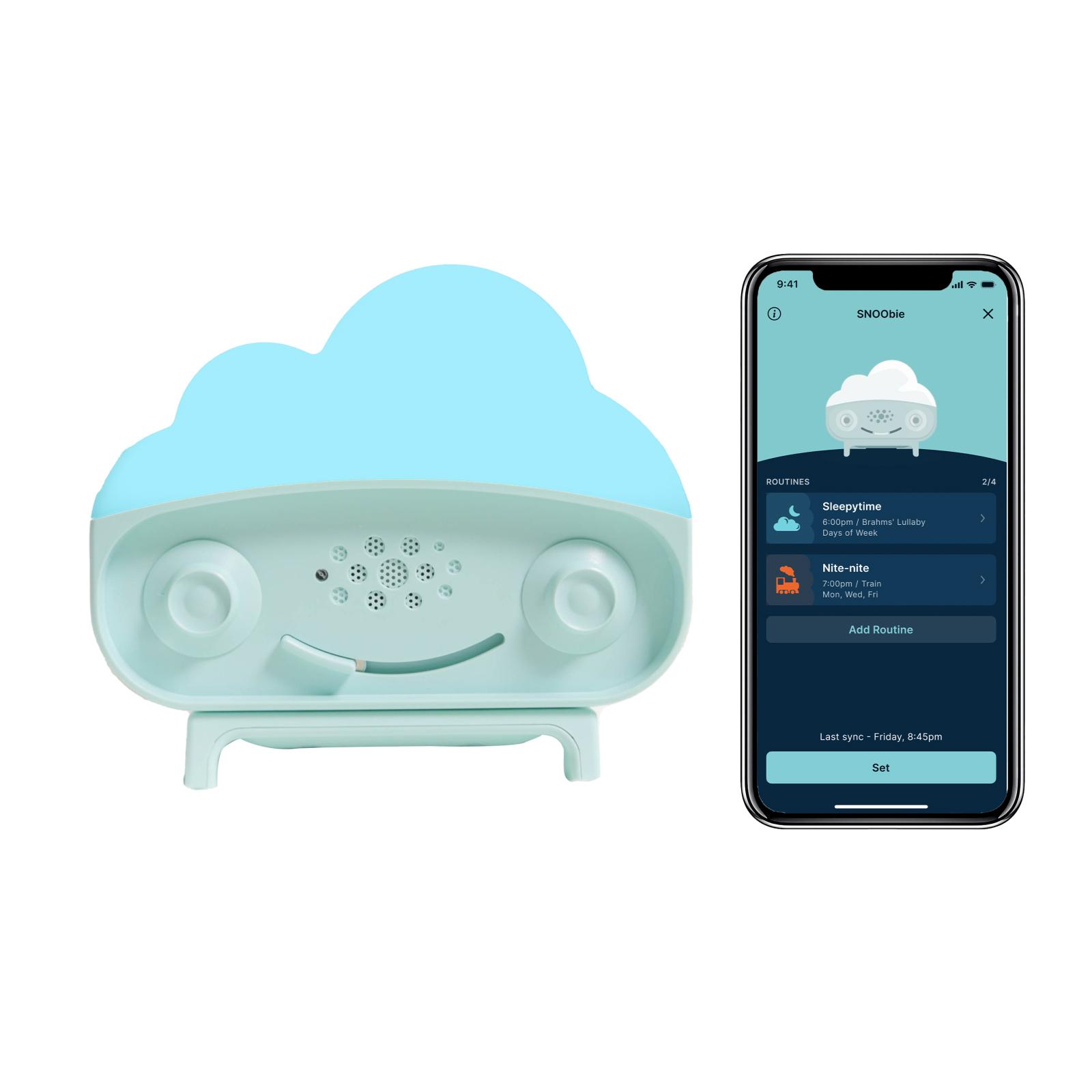
At Toby's House Crisis Nursery, we use our SNOO and SNOObies every day! Our SNOObies are in several rooms, and we use them for all naps and rests! We love that it has different colors and sound settings- that calm and soothe and encourage a type of ‘kid mindfulness’. We have noticed with kids who are feeling and expressing the stress their parents are going through or having a hard time coping with big feelings, the slow breathing setting with the colors fading and brightening as our SNOObie breathes, they adopt the same breathing pattern, and their bodies start to calm and relax. For our fussiest babies, we use the train track sound at a higher volume and then gradually turn down the volume as they settle and look around. Some of our children are on the spectrum, and we find that setting particularly helpful for them, as well.
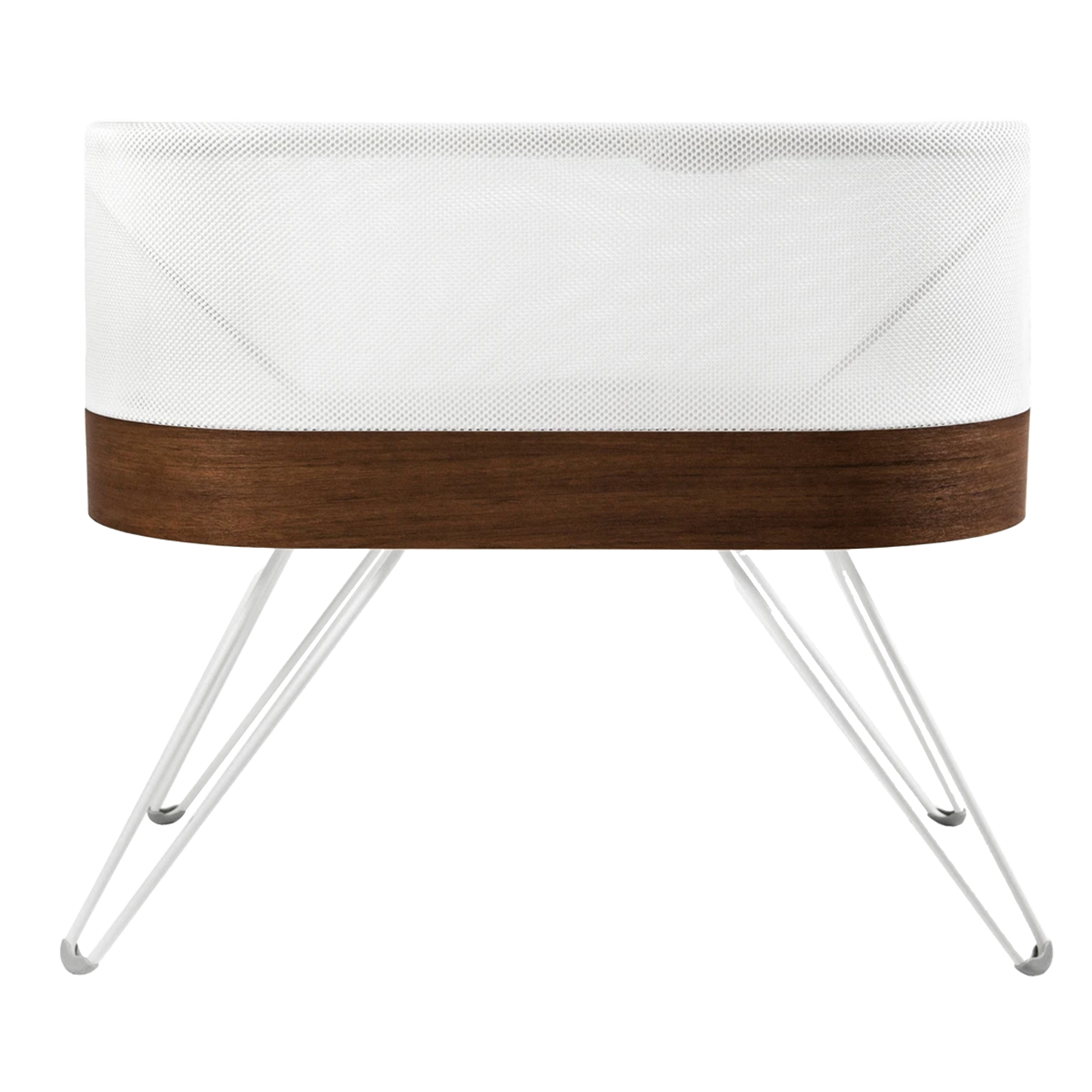
Our SNOO is used every day for our fussiest babies who may struggle to be laid down or are very sensitive to other noises and activities in the room. We love the option of being able to swaddle with arms in or out, depending on the age of infant we are working with. This versatility makes it easy for staff to use throughout the day. Just like in all homes, our little Crisis Nursery becomes chaotic around the dinner hour, and that happens to overlap with one of the times we know babies can be fussiest. So we have our SNOO in our front reception room, and use it when staff are making dinner, getting the older kids’ hands washed, and we love that our toddlers stop by the SNOO to see the baby, saying, this baby likes the SNOO, and proudly announce to the dinner table that the baby is sleeping! We help new parents understand how the SNOO works, and it is a great time to explain how important rest and sleep are for new parents—and their babies!
We use our SNOO to also talk about safe sleeping for infants. So many parents tell us ‘my baby hates its crib’ or ‘I gave up and just let them sleep on a Boppy.’ We can demonstrate how the clips secure the infant to prevent rolling, and show that the sleeping surface is firm but that an infant will still sleep in it, that perhaps their sleep furniture isn’t the issue, but the fact that the infant realizes they aren’t being held and that the baby needs to continue to feel as if they are in the womb to be able to rest. We also talk about what makes babies fussy, and can explain the 4th trimester, and have them see first-hand the impact of the SNOO features. The only way we could imagine it being more useful is if Happiest Baby could please create one for parents!
How did you first connect with Happiest Baby, and what motivated you to become a Happiest Baby educator?
As a night nurse, I took hundreds of phone calls from new parents with tiny newborns who were fussy and they needed help figuring out what was wrong. And I noticed that parents were the most distressed and difficult to console when a baby was crying. I was often called a ‘baby whisperer’ and could get nearly any baby to settle down within minutes. I wasn’t sure what I was doing that was different from other people, and couldn’t articulate what steps to take, and I felt like I was missing the explanation or a simple method I could teach new parents.
But the answer came a few months later, without me looking hard! I was watching Oprah in October 2008, and there was a doctor that Dr. Phil was featuring on how to calm a baby, and that was my first introduction to The Happiest Baby on the Block and the 5S’s. I felt like I had won a lottery. Finally, I could see the link between the 4th trimester, the techniques for soothing, and how to teach families how to switch the crying almost entirely off!
I became certified as an educator for Happiest Baby on the Block and taught the methods and provided videos to families. It felt a bit like a party trick—I could get any baby to stop crying in such a short time! But better than that, I could watch new parents who would say ‘my baby doesn’t like me, he just cries when I have him,’ reframe as they learned the technique and were able to soothe their fussy baby.
As an instructor, I was able to incorporate this crucial education for nursing students in their clinical labs. At the crisis nursery, we utilize safe sleep swaddles and our SNOO to help babies settle and incorporate the Happiest Baby on the Block into our ‘crying infant protocol’ which is to help childcare providers avoid and handle overwhelm with a crying baby. With parents struggling the first few months, we help them understand it isn’t them, it is the 4th trimester, and their baby is in a developmental stage needing more soothing. Helping parents learn how to calm their infant goes a long way in their self-efficacy and builds a positive self-concept as a new parent. We love to see parents gain new skills, babies be comforted and families rested and thriving!
Looking ahead, what’s next for Toby’s House?
As Montana’s first crisis nursery, Toby’s House is outgrowing the small rental property we have started in. Our dreams are coming true as we ‘build permanent hope’ in the summer of 2026. Jimmy and Debbie Filipowicz, a local couple who learned about our services and impact have inspired our community with a $500,0000 donation to build a permanent site for Toby’s House. Together with local businesses and donors, we are nearly to our funding goal, and construction has started on a 6,000 square foot, single-level accessible facility that will allow us to double our capacity and provide additional spaces for caregiver support and education. We are excited to be able to formally integrate Happiest Baby on the Block in our programming for new caregivers!
How can readers support Toby House's mission?
Anyone wanting to support our capital campaign can donate to Toby’s House here. Other ways to help include visiting our website—tobyshousemt.org—to contribute to our operational costs or find our needs lists where donors can help support in any number of ways!
We also hope people will find out what crisis nursery is nearest them by visiting the National Respite Network and support their local efforts, or if there is none, connecting people and ideas to support creating at least one in every state!
Disclaimer: The information on our site is NOT medical advice for any specific person or condition. It is only meant as general information. If you have any medical questions and concerns about your child or yourself, please contact your health provider.





SHARE THIS ARTICLE