BABY
The Newborn Heel Stick Test: What It Is, Why It's Done, and What to Expect
Here's everything you need to know about this quick, routine procedure.

Written by
Happiest Baby Staff
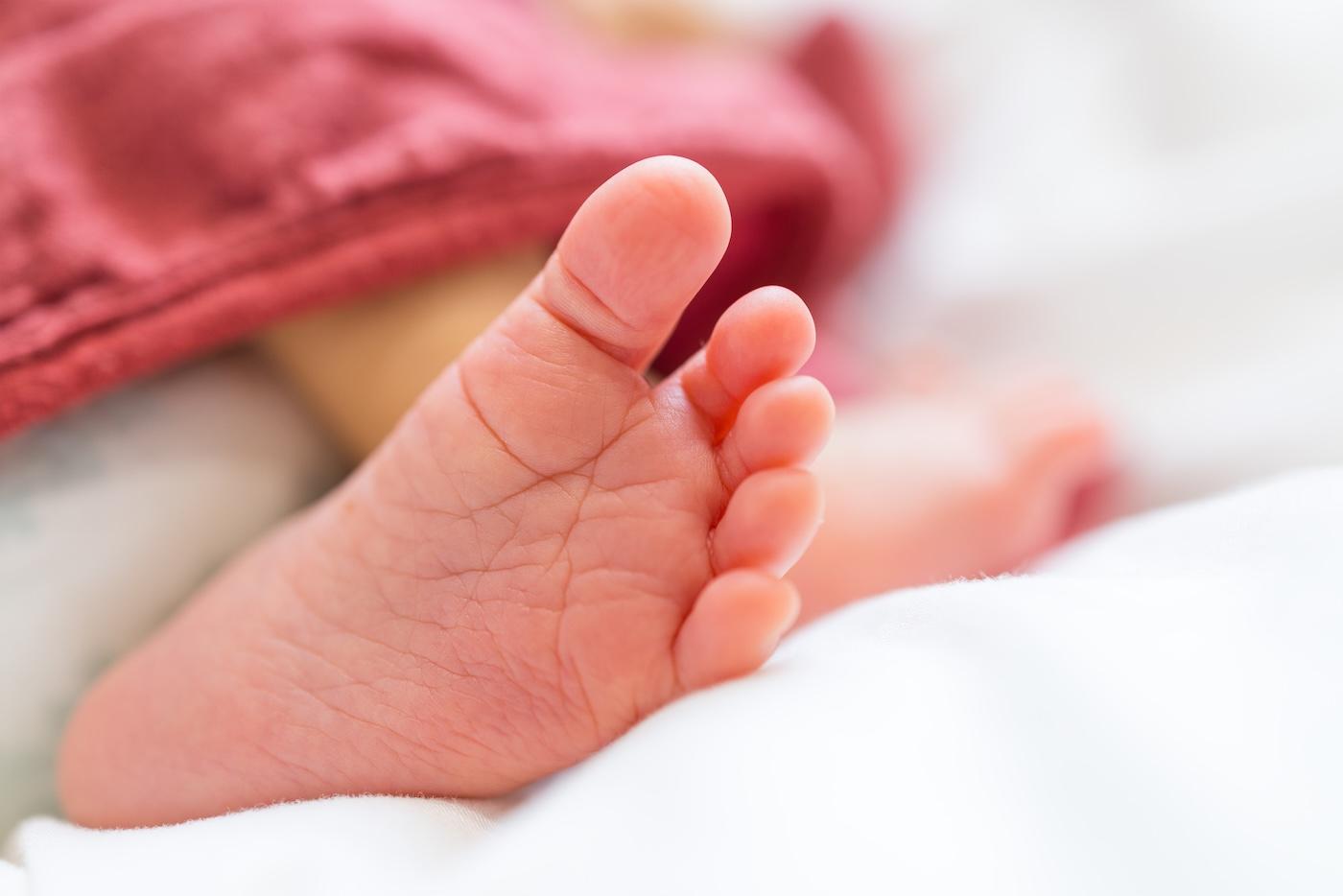
The first 48 hours after delivery are a whirlwind of skin-to-skin snuggles, feeding attempts, and seemingly endless nurse check-ins. And during one of these, a nurse will quietly approach with a tiny lancet and ask to prick your baby's heel. This is known as the heel stick test, and it's one of the most important things that will happen to your newborn in those early hours. Here's everything you need to know about this quick, routine procedure.
What is the newborn heel stick test?
The newborn heel stick test—also called the blood spot screening, newborn blood screening, or (somewhat outdated) "PKU test"—is a routine procedure in which a healthcare provider collects a few drops of blood from your baby's heel to screen for dozens of serious but largely treatable genetic and metabolic conditions. The blood is collected onto a special filter paper card, creating what are called "dried blood spots," and sent to a state laboratory for analysis.
Nearly every baby born in the United States undergoes this test. It's not optional—all 50 states mandate newborn blood screening, though the exact list of conditions screened can vary by state.
Why is the heel stick test done?
Early detection saves lives and prevents serious harm. Many of the conditions screened for look completely normal at birth. Without screening, a baby could appear perfectly healthy while a metabolic disorder quietly causes irreversible damage to the brain or other organs.
Take phenylketonuria (PKU) as one example: Babies with PKU cannot properly break down an amino acid called phenylalanine. Without early intervention, toxic levels build up and cause profound intellectual disability. Caught early through newborn screening, PKU can be managed with a specialized diet so effectively that the cognitive damage is entirely averted.
The heel stick is the first—and most powerful—public health program for genetic conditions that a baby will ever have.
What conditions does the heel stick screen for?
The federal government, through the Health Resources and Services Administration (HRSA), publishes a Recommended Uniform Screening Panel (RUSP)—a national guideline that divides screened conditions into "core" conditions (those every baby should be screened for) and "secondary" conditions (incidental findings). As of late 2025, the RUSP includes dozens of core and secondary conditions.
Common conditions screened for include:
- Phenylketonuria (PKU): An inherited disorder that prevents the body from metabolizing phenylalanine, which can cause intellectual disability if untreated
- Congenital hypothyroidism: A condition where the thyroid gland doesn't produce enough hormone, which can impair growth and brain development
- Sickle cell disease: An inherited blood disorder that affects red blood cells and can cause pain crises and serious infections
- Cystic fibrosis: A genetic condition affecting the lungs and digestive system
- MCAD deficiency (medium-chain acyl-CoA dehydrogenase deficiency): A disorder of fatty acid metabolism that can cause life-threatening episodes of low blood sugar
- Spinal muscular atrophy (SMA): A genetic condition affecting the motor nerve cells
Most states screen for all conditions on the federal RUSP; some screen for even more. To see exactly what your state tests for, you can check Baby's First Test, the nation's newborn screening education resource center.
When is the heel stick test done?
The heel stick is typically performed between 24 and 48 hours after birth. Timing matters: If blood is drawn too soon after birth, some metabolic markers haven't stabilized yet, which can affect accuracy. That's why testing done before 24 hours may need to be repeated.
Some states—including Texas—require a second screening at 7 to 14 days of age to catch conditions that may not show up on the first draw. If you're planning a home birth, ask your licensed midwife about their newborn screening protocol ahead of time.
What happens during the heel stick?
The procedure itself is quick. Here's the step-by-step:
- A nurse or healthcare provider will warm your baby's heel (often with a warm cloth) to increase blood flow.
- They'll clean the heel with an alcohol swab.
- Using a small sterile lancet, they'll make a quick puncture on the outer edge of the heel—never the center, to avoid the bone.
- A few drops of blood are collected onto a special filter paper card, creating several small blood spots.
- The heel is cleaned and bandaged, and the card is sent to the state lab.
- Your baby can stay swaddled during the procedure, and you're welcome to hold them throughout.
Will my baby be in pain?
Your baby will likely cry, but their discomfort is fleeting and leaves no lasting mark. The AAP notes that most infants feel brief discomfort from the heel stick, but it heals quickly without leaving a scar. Here's where you can really help: Studies show that when parents comfort babies during the procedure, babies are less likely to cry. A few evidence-backed ways to soothe your baby during the heel stick:
- Breastfeed during or right after the procedure—research shows breastfeeding is highly effective at reducing pain response in newborns
- Hold your baby skin-to-skin for comfort and reassurance
- Swaddle and cuddle in an upright position—swaddling has been shown to ease heel-stick discomfort
- Add some white noise or shushing—it can help calm your baby even faster
What do the results mean?
Results from the blood spot screening typically take about a week to come back. No news is usually good news—most providers will only reach out if there's an abnormal result. That said, it's always fine to call your pediatrician's office if you haven't heard anything by day seven, just to confirm.
If your baby's result comes back abnormal, try not to panic. An out-of-range result does not mean your baby definitely has the condition—it means more follow-up testing is needed. Sometimes a sample is collected too early, the blood spot wasn't adequate, or there's a lab issue. A repeat test is common and often comes back completely normal.
If a condition is confirmed, the benefit of early detection is huge. Treatment can begin immediately—before any symptoms appear—which can make a profound difference in your baby's long-term health and development.
Does insurance cover the heel stick test?
In most cases, yes. Conditions on the RUSP are part of comprehensive preventive health guidelines, meaning non-grandfathered health plans are required to cover these screenings without a co-pay, co-insurance, or deductible. For families on Medicaid or CHIP, coverage is also typically available.
The Bottom Line
The newborn heel stick test is a small prick with enormous implications. In the span of a few seconds, a few drops of blood give your baby's healthcare team the information they need to catch serious conditions before they cause harm—conditions that would otherwise be invisible until real damage has been done. It's one of the first—and most powerful—gifts of early medicine you can give your baby. So, when that nurse comes with the lancet, take a deep breath, hold your little one close, and know that this tiny moment is doing a big job.
More on Newborn Care:
- Newborn Circumcision Care 101
- Meconium: Your Newborn’s First Poop, Explained
- Newborn Screenings: What Parents Should Know
- Delayed Cord Clamping: What Parents Should Know
Disclaimer: The information on our site is NOT medical advice for any specific person or condition. It is only meant as general information. If you have any medical questions and concerns about your child or yourself, please contact your health provider.





SHARE THIS ARTICLE
MOST LOVED
Sleepytime Sidekicks