Hush little baby, don’t you cry
Emma Mahony meets the baby whisperer. Come on mothers, ssshhhh . . .
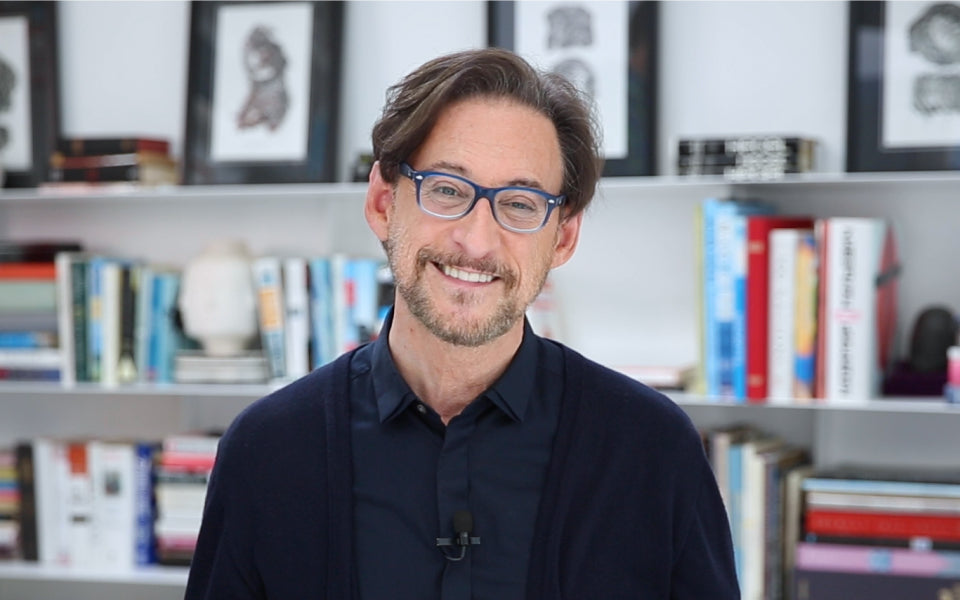
On the face of it, Harvey Karp looks like the last person you’d go to sort out your screaming baby. He is male, he comes from California, traditional home of the battily modish behavioural scientist, and he’s never actually had a baby of his own.
But Harvey has had a “big idea” about babycare, and it’s making him a fortune. Among those who have gone to his private clinic in California for advice about their squalling infants are Pierce Brosnan and Michelle Pfeiffer. And Madonna was once spotted screeching into his car park, having driven little Lourdes over from Hollywood for a touch of the Karp magic during an outbreak of particularly persistent bawling.
Karp calls the idea the “calming reflex” — in fact, a set of movements designed to pacify the most fractious infant. It has already won him a million-dollar advance for his book, The Happiest Baby, said to be the highest ever paid to a new author in parenting books.
He’s so busy he has closed the clinic to new patients for a year, though he made an exception for Madonna. “Of course,” he says, “she’s the biggest star in the world. And I get to tell my family about it.” Even so, she and the rest of his star clients have to get in line in the waiting room “like anyone else,” he says.
Karp is 50 and married his partner Nina, a spa owner, four years ago. He has an 18-year-old stepdaughter but no children of his own — yet. (They say they are looking forward to starting a family.) But boy, does he gush on the subject of babies. Is it natural enthusiasm or, as a cynic might suggest, easy sentimentality that comes only to someone who has never had kids of their own? “I loved every area of medical school, but I especially loved children,” says Karp, who is surely too well-groomed, with manicured beard and immaculate suit, to work with children. He looks much younger than his years — possibly because he is able to hand all those babies back. “I love the fact that children are so resilient, it’s a very optimistic specialty,” he explains. Karp claims to have calmed 5,000 crying babies in his 20 years of practice. He is slick and reassuring when compared with some our home-grown authors, such as the maternity nurse Gina Ford, with her old-fashioned, no-nonsense The Contented Little Baby Book (Karp has a DVD, video and a website offering “womb service”). And where Ford, Penelope Leach and Miriam Stoppard are happy to pronounce on all aspects of childcare, Karp has taken the one most distressing element and built an industry around it. He has a mission “to teach the world to calm their babies”.
It is difficult for the average mother to know quite what damage a crying baby inflicts upon a family. The first three months pass in such a haze of sleeplessness and strange hormonal feelings.
According to Karp’s figures, 25 per cent of all babies cry for two hours a day or longer in the first three months of their life: “Crying is a burden on the healthcare system, and a burden on families,” he says. “There are several studies that show that when babies cry a lot, mothers are more likely to develop depression, families are more likely to have marital problems, and babies more prone to being shaken.”
When Karp first started practising, in the early 1970s, anti-spasm medication and even Phenobarbital, an opium derivative, were offered to quieten babies. He worked with specialists at Harvard and UCLA and observed babies. “Before that they were a bit of a lump. But now we were saying, ‘No, they learn, they respond in a predictable way’, and I learnt to just sit there and observe. This may be the most important power a physician can have.” A combination of this observation, and studying other cultures where babies don’t cry, led to his discovery of a “calming reflex”, a trigger to turn off a baby’s crying.
He is an unashamed self-publicist, repeating again and again — to the point when you begin to wonder if a “calming reflex” could not be discovered for best-selling doctor-authors — that his breakthrough is unique and his methods, when followed correctly, are completely effective.
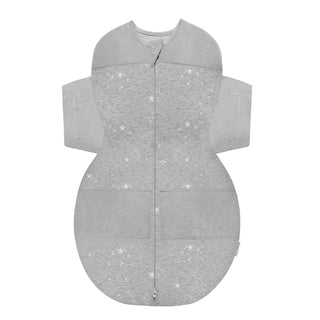
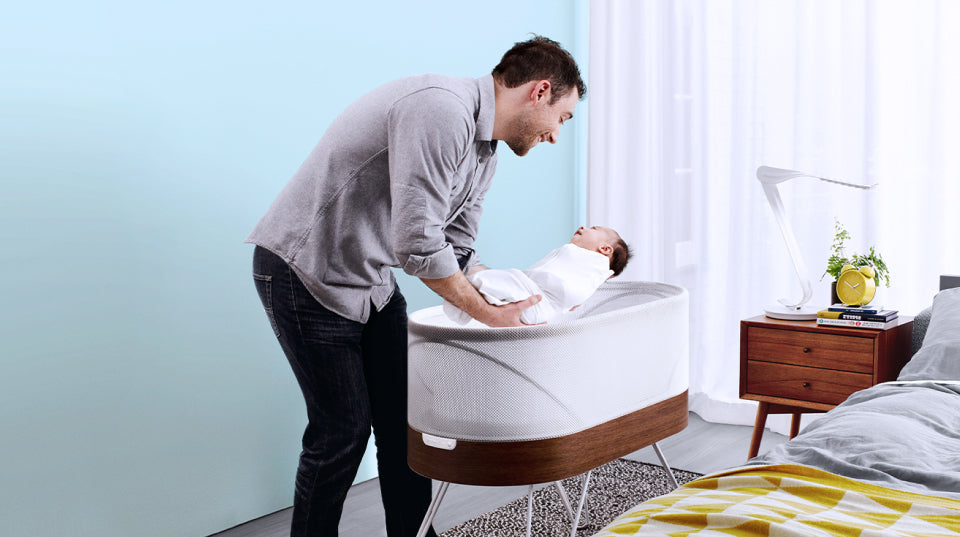
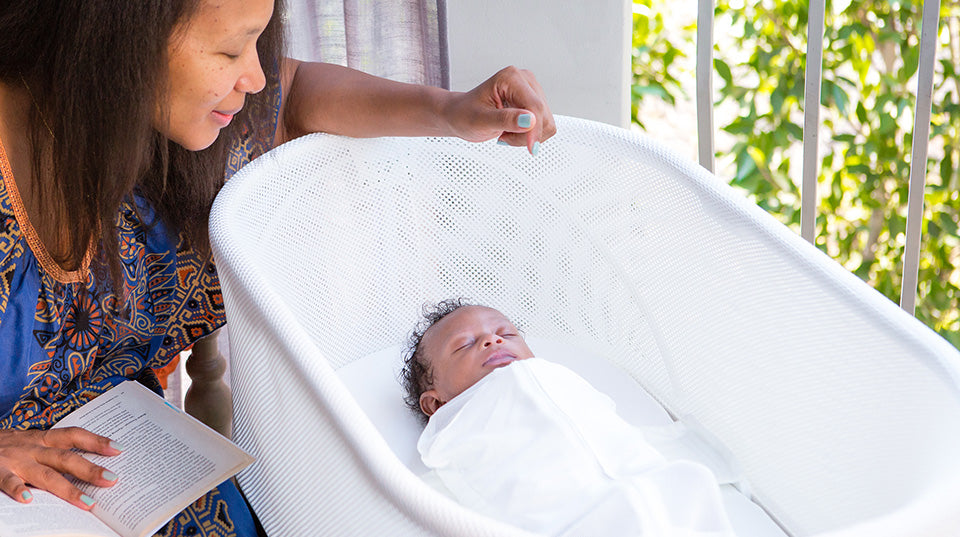
The five “S’s” which make up Karp’s technique look like nothing new: swaddling, placing the baby on his side or stomach, shushing, swinging and sucking. I asked a friend, Rikke, who is a paediatric nurse and mother of seven-week-old Lucas, to try them out. Lucas was sleeping no more than an hour every night, so she was willing to try anything.
The third “S”, an extremely loud “shushing” noise in the ear, felt very weird. Rikke couldn’t bring herself to shush too loudly, even though Karp insists that the noise of the blood in the womb is louder than lying on the floor and having your head Hoovered around. But even her feeble shushing, combined with all the other elements, suddenly made baby Lucas fall asleep.
Karp says that even if a mother only swaddles her baby he can still guarantee an extra hour’s sleep. The next day Rikke reported a full four-hour stretch with a swaddled Lucas.
What makes you warm to Karp — apart from his success on this random testing — is that his simple technique is not something he wants to keep to himself. He wants his methods taught at antenatal classes. Anyone can do it, he insists, even a frazzled father at two in the morning. Now that really would be revolutionary. As the old joke goes: what does every woman really want in bed? Eight hours.
Posted on July 06, 2002, in The Times of London


Post a Comment